Goa's Water Supply Crisis: Majority of Connections Receive Limited Daily Supply
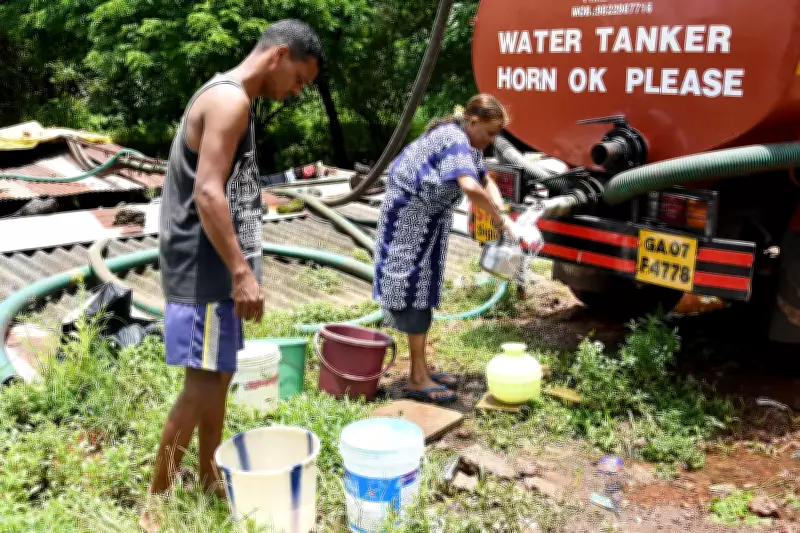
During the tenure of the current state government in Goa, ministers have made ambitious promises regarding water supply, initially committing to 24x7 availability and later scaling back assurances to at least eight hours of piped water per day. However, as the government's term approaches its conclusion, official data presented in the legislative assembly paints a starkly different picture of the ground reality.
Alarming Statistics Reveal Widespread Shortages
The assembly data reveals that a significant majority—53.5% of water connections across Goa—receive water supply for between just one and eight hours per day. In numerous cases, this supply duration falls below two hours, highlighting severe infrastructure and distribution challenges. Furthermore, 9.4% of consumers receive water for less than four hours daily, creating substantial hardship for households and businesses alike.
Even the assembly complex and its surrounding areas are not spared from this crisis, receiving water for only two hours each day. This situation underscores the pervasive nature of the water supply issues affecting both urban and rural regions of the state.

Bardez Taluka Emerges as Worst-Affected Region
Bardez taluka stands out as the most severely impacted area, with major parts receiving water only on alternate days. Specific localities including Verem, Reis Magos, and Sangolda residents face this alternate-day supply pattern, with water available for merely two hours during those days. The frustration among residents is evident from the 996 complaints registered from Bardez taluka between 2022 and the present regarding inadequate water supply.
Other regions including most of Tiswadi, Sattari, and Pernem talukas also experience limited treated water supply, typically not exceeding three hours per day. This widespread shortage affects daily life, sanitation, and economic activities across multiple districts.
Limited Areas Enjoy Continuous Supply
In contrast, only approximately 26% of water connections in Goa benefit from 24-hour daily supply. The fortunate areas include Canacona and Sanguem municipal areas, Cavelossim and Velsao in Mormugao, select villages in Quepem, and several villages in Salcete such as Raia, Rachol, Curtorim, Nuvem, and Nagao. This information comes from the official reply tabled during the recently-concluded assembly session by Subhash Phal Dessai, the Minister for Drinking Water.
However, even these better-served areas face challenges, as Salcete taluka recorded the highest number of complaints—2,682 since 2022—despite having villages with reported continuous supply. This discrepancy suggests that actual conditions may be less favorable than official records indicate.
Government Response and Infrastructure Challenges
Minister Phal Dessai attributed the complaints to localized issues rather than systemic water shortages. "The complaints being received in parts of the state are of localized nature on account of power failure, leakages, breakdowns, clogging of lines and planned shutdowns, and not primarily due to shortage of water," he stated in his assembly reply.
This explanation appears contradictory to another document tabled in the House, which revealed that Goa's installed water production capacity stands at 675 million liters per day (MLD), falling short by 20 MLD from the demand of 695 MLD. The minister did note that production capacity would increase by another 325 MLD upon completion of ongoing water treatment projects.
Critical Infrastructure Issues and Long-Term Solutions
A major contributing factor to the crisis is Goa's high non-revenue water rate of 40%. This includes water loss due to multiple factors:

- Pipeline leakages throughout the distribution network
- Theft and unauthorized consumption of water resources
- Non-functional and insensitive water meters
- Unbilled connections and administrative inefficiencies
- Water used for flushing lines during maintenance
Minister Phal Dessai acknowledged that some pipelines are "decades old" and require replacement. The government has initiated work on installing flow meters to create zonal divisions and pinpoint exact areas of water loss. However, comprehensive pipeline replacement will be a lengthy process.
"The replacement of old and aged water pipeline is a continuous process and is being taken in a phase-wise manner. Replacement of 217km pipeline is ongoing and the remaining portion of old pipelines is targeted to be replaced in next three to seven years," the minister's reply stated, indicating that residents may face continued water supply challenges for years to come.
The combination of aging infrastructure, high non-revenue water, and production capacity limitations creates a complex challenge for Goa's water management authorities as they attempt to fulfill their promises of reliable water supply to all residents.