

Andhra Pradesh Cabinet Sub-Committee Unveils Grand Plans for Godavari Pushkarams 2027
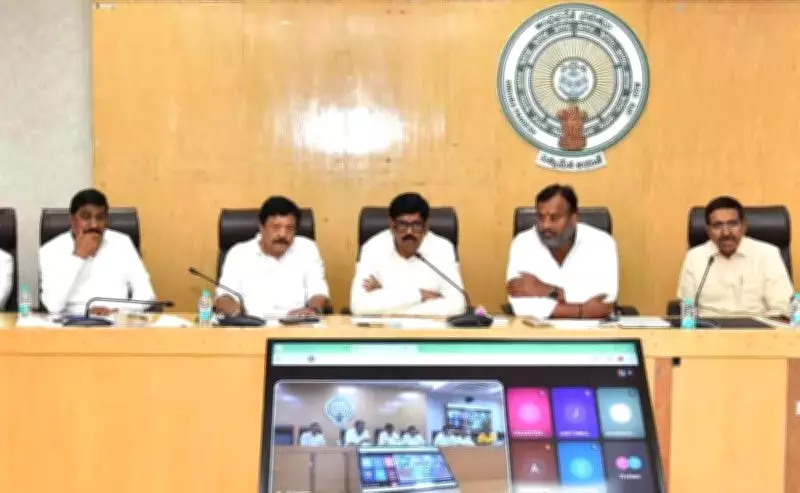
A high-level cabinet sub-committee in Andhra Pradesh has laid out ambitious plans to transform the upcoming Godavari Pushkarams into a religious spectacle rivaling the Maha Kumbh Mela in scale and grandeur. The meeting, held on Thursday at the state secretariat, was chaired by Endowments Minister Anam Ramanarayana Reddy and attended by several key ministers including P Narayana, Nimmala Rama Naidu, Kandula Durgesh, BC Janardhan Reddy, Satya Kumar Yadav, Gottipati Ravi Kumar, and Mandipalli Ramprasad Reddy.
Mega Event with Massive Devotee Footfall Expected
The committee has decided to organize the 2027 Godavari Pushkarams on an unprecedented scale, estimating a staggering footfall of over 10 crore devotees throughout the event. The Pushkarams are scheduled to take place from June 26 to July 7, 2027, spanning across six districts of Andhra Pradesh. This represents a significant expansion from previous iterations, with officials drawing direct comparisons to the world-renowned Maha Kumbh Mela in terms of planning and expected participation.
Extensive Infrastructure Development Planned
To accommodate the massive influx of pilgrims, the committee has approved the establishment of 373 bathing ghats spanning an impressive 4,516 metres across the six participating districts. The district-wise breakdown includes East Godavari with 102 ghats, West Godavari with 40, Konaseema with 175, Eluru with 36, Kakinada with 5, and Polavaram with 11 ghats.

The first ghat in Andhra Pradesh will be established at Gundala in Polavaram district, while the final points will include Antarvedi and Balusutippa in Konaseema, Govalanka in Kakinada, and Narsapuram in West Godavari. This extensive network of bathing facilities is designed to distribute the pilgrim flow and prevent overcrowding at any single location.
Peak Periods and Crowd Management Strategies
The committee anticipates nearly 10 crore devotees per day during peak periods, which include the opening day, weekends, and Amavasya. The most auspicious day is expected to see an extraordinary 22.5 million devotees converging at the river banks. To manage this unprecedented crowd, authorities plan to implement advanced technologies including artificial intelligence systems and coordination with Real Time Gross Settlement (RTGS) mechanisms for traffic management and crowd control.
Minister Anam Ramanarayana Reddy revealed that approximately 90% of the crowd is expected to be concentrated in just three districts, though he did not specify which ones. This concentration will require particularly robust infrastructure and management systems in those areas.
Accommodation and Temple Renovation Initiatives
To encourage devotees to extend their stay to 2-3 days, the committee has proposed developing "Tent Cities" and promoting "Home Stays" throughout the region. Specific locations such as Bridgelanka and Pichukalanka near Rajahmundry have already been identified for tent city setups, providing pilgrims with affordable accommodation options close to the main event areas.
In preparation for the massive event, Minister Reddy has directed officials to undertake comprehensive renovation of 43 temples and minor repairs in 391 additional temples across the region. These improvements aim to enhance the spiritual experience for devotees while ensuring structural safety during the expected crowds.
Financial Allocation and Preliminary Activities
Tourism Minister Kandula Durgesh announced that an initial allocation of ₹60 crore for preliminary works has already been completed, signaling the government's serious commitment to the event's success. He further revealed plans for a grand curtain-raiser event in Rajahmundry this coming June, which will serve as both a promotional activity and an opportunity to test some of the planned infrastructure and management systems.
The 2027 Godavari Pushkarams represent one of the largest religious event planning initiatives in recent Indian history, with the Andhra Pradesh government pulling out all stops to create a memorable and safe experience for the millions of expected devotees while positioning the state as a major spiritual tourism destination.






