

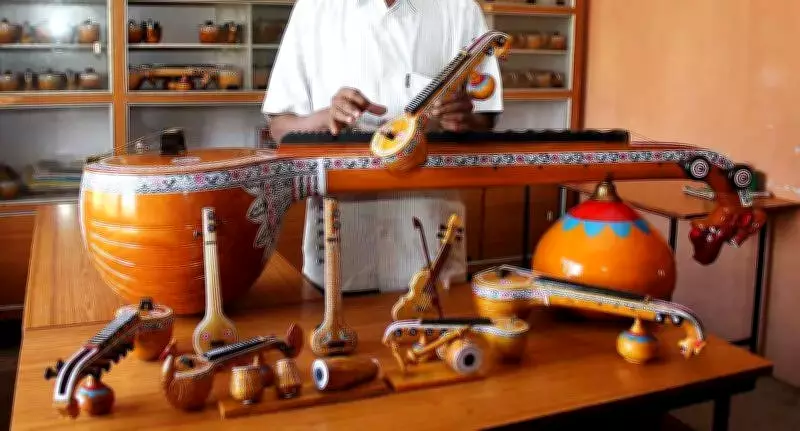
Andhra Pradesh Government Steps In to Secure Jackfruit Wood for Bobbili Veena Artisans
The Andhra Pradesh state government has taken decisive action to address a critical shortage of jackfruit tree wood, a vital material used in crafting the world-renowned Bobbili Veena. This intervention aims to alleviate the scarcity that had previously forced local artisans to source the wood from neighboring Odisha at significantly higher costs, thereby threatening the sustainability of this traditional craft.
Essential Material for Acoustic Excellence
Jackfruit wood, locally referred to as Panasa, is prized for its exceptional acoustic properties, durability, and lightweight nature. These characteristics are indispensable for producing the rich, resonant tonal quality of the single-piece Ekandi Veena, a hallmark of the Bobbili tradition. The wood's unique attributes directly contribute to the instrument's superior sound, making it irreplaceable in the artisans' meticulous craftsmanship.
Political Advocacy Leads to Swift Action
The pressing issue was brought to the attention of Deputy Chief Minister and Forest Minister Pavan Kalyan by Bobbili MLA RVSK Ranga Rao, popularly known as Baby Nayana. Responding promptly, Deputy CM Kalyan directed forest officials to procure the necessary jackfruit wood from the Saluru forests located in the Parvathipuram district. This strategic move ensures a local and reliable supply chain for the artisans.

Timely Supply and Cost Savings
The much-needed wood supply is scheduled to reach the artisans by the first week of March. The distribution will be inaugurated either during Deputy CM Pavan Kalyan's planned visit or through a virtual ceremony, symbolizing the government's commitment to supporting this cultural heritage. Officials have confirmed that the procurement process will operate on a no-profit, no-loss basis, effectively eliminating middlemen and resulting in substantial cost reductions for the artisans.
This initiative is expected to save artisans approximately 40–50% on raw material expenses. Previously, one foot of Panasa wood cost around ₹600, but with government intervention, artisans will now acquire it at nearly half the price. This financial relief is crucial for the approximately 35 families from Gollapalli and Vadada villages who are actively engaged in crafting the GI-tagged Bobbili Veena, ensuring their livelihoods remain viable.
Logistical Details and Future Planning
Forest department assessments indicate that artisans require over 2,000 feet of jackfruit wood annually to meet production demands. To address immediate needs, officials have already procured 560 feet of wood, which is sufficient to sustain the artisans for the next six months. A revolving fund of ₹5 lakh has been allocated to oversee the ongoing procurement, cutting, and distribution processes. This fund will be managed jointly by the in-charge of the Veenala Kendram and forest officials, ensuring transparency and efficiency in the supply chain.
This government-led initiative not only preserves a cherished cultural artifact but also empowers local artisans by reducing operational costs and securing a sustainable source of essential materials. The Bobbili Veena, with its Geographical Indication tag, stands as a testament to Andhra Pradesh's rich artistic heritage, and this support ensures its legacy continues for future generations.






