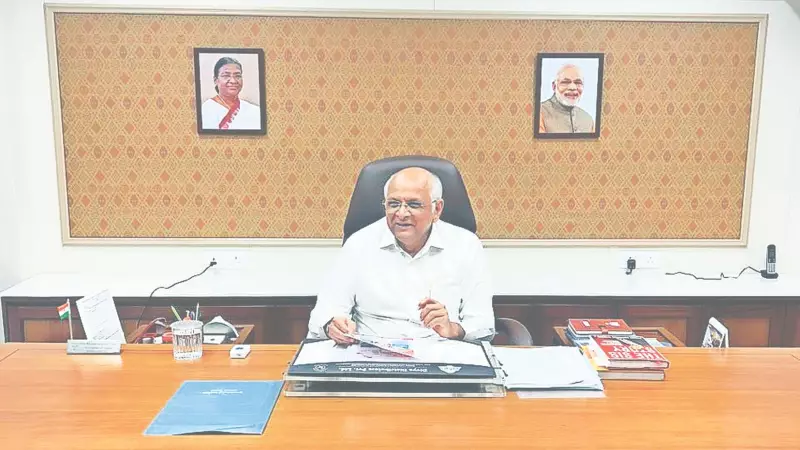
In a comprehensive vision for the state's future, Gujarat Chief Minister Bhupendra Patel has announced a major shift from ad-hoc hiring to a structured, decade-long recruitment strategy. This move coincides with Gujarat's ambitious preparations to host the 2030 Commonwealth Games in Ahmedabad, aiming to set a global benchmark for development and governance.
Marking three years in office, Patel is steering these transformative initiatives, heavily influenced by recommendations from the Gujarat Administrative Reforms Commission (GARC). The state is leveraging technology and long-term planning to build infrastructure, streamline administration, and ensure balanced regional growth.
From Reactive Hiring to a 10-Year Strategic Calendar
The Gujarat government is decisively moving away from filling vacancies only when they become critical. Instead, it is implementing a binding 10-year recruitment calendar. This forward-looking system is aligned with projected retirements and sanctioned posts across departments, ensuring a steady and predictable inflow of personnel.

The recent aggressive recruitment drive has already seen significant appointments. On December 23, over 11,000 appointment letters were given to Lok Rakshak Dal personnel. In the last six months, more than 14,500 teachers have been hired, and over 9,000 Integrated Child Development Services (ICDS) workers joined in the past three months.
To tackle persistent vacancies in critical sectors like healthcare, the government is considering creating a specialised board, as suggested by GARC. The goal is to reduce vacancy levels to below 10% within a defined timeframe. For urgent frontline roles—such as lab technicians and pharmacists—accelerated backlog clearance models are being explored to fill positions quickly.
Furthermore, the entire recruitment process is being modernised. The state is assessing end-to-end digital systems for vacancy posting, examinations, and appointments. Integration with secure platforms for real-time document verification aims to slash timelines and enhance transparency.
Ahmedabad 2030: Building a Legacy Beyond the Games
With Ahmedabad set to host the 2030 Commonwealth Games, Chief Minister Patel outlined a plan that extends far beyond the sporting event itself. The focus is on creating a world-class urban governance model and infrastructure that will benefit citizens long after the Games conclude.
The priority is developing robust, high-capacity infrastructure that seamlessly connects modern public transport with international-standard sports facilities. The state is working with the United Nations Environment Programme to align its Air Quality Index with global health benchmarks and is prioritising river rejuvenation for both ecology and water-based sports.
Patel expressed confidence drawn from successfully managing large crowds at major concerts and festivals. Detailed economic impact assessments are underway to ensure investments are financially responsible and sustainable. "Gujarat is working to ensure that the road to 2030 becomes a global benchmark — not just for hosting a sporting event, but for showcasing the idea of a truly Viksit Gujarat," the CM stated.
AI, Governance Reforms and Ensuring Balanced Development
The administration is deeply integrating technology to improve governance. Artificial Intelligence is being applied in agriculture for crop monitoring, in healthcare for analysing hospital performance under PMJAY, and in revenue administration for early detection of land encroachments.
Platforms like the CM Dashboard use AI-driven alerts for proactive interventions. The SWAGAT grievance redressal system, launched in 2003, now uses AI to analyse patterns and identify recurring issues. In the past year until December 25, the platform received 44,153 applications, with over 94% disposed of.
Addressing rapid urbanisation, Patel emphasised following Prime Minister Narendra Modi's vision of providing urban-like amenities in rural areas. The government is strengthening rural infrastructure—all-weather roads, water, electricity, and digital connectivity—and boosting non-farm employment through ITIs and Green GIDC clusters.

For inclusive regional development, the state has launched the GRIT (Gujarat Rajya Institution for Transformation) initiative. It has identified five major economic regions, with masterplans launched on October 9, 2025, encompassing over 600 projects aligned with the Viksit Gujarat@2047 vision.
Women's empowerment remains a cornerstone, with nearly 30% of startups supported through the WEstart program being women-led. Schemes like the Mukhyamantri Mahila Utkarsh Yojana provide interest-free loans to women's Self-Help Groups, and the state boasts 5.96 lakh 'Lakhpati Didis'.
Through these multifaceted efforts in recruitment, mega-event planning, technological adoption, and regional balancing, the Bhupendra Patel government is charting a detailed course to position Gujarat as a model of developed statehood by the end of this decade.