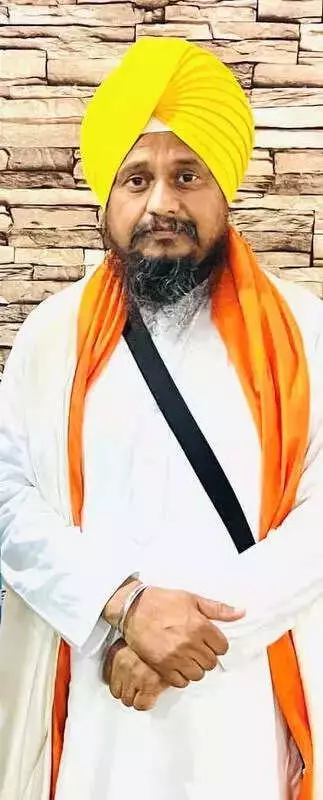
In a significant critique, Giani Harpreet Singh, the former acting Jathedar of the Akal Takht and president of the reorganized Shiromani Akali Dal (SAD), has raised serious concerns about the concentration of power within major Sikh institutions. His remarks came after inaugurating the national office of the reorganized SAD in Amritsar, marking the first anniversary of the December 2 'hukamnama' (edict) issued from the Akal Takht.
A Call to Liberate Sikh Institutions from Dynastic Control
Without directly naming anyone, Giani Harpreet Singh pointedly referred to "one family" exerting control over both the Shiromani Akali Dal and the Shiromani Gurdwara Parbandhak Committee (SGPC). He described this as a grave problem for the Sikh community, or the Panth. "When leadership remains confined to one family or a narrow circle, the Panth stops producing new thinkers," he stated, emphasizing that decisions become personalized rather than being guided by collective Panthic wisdom.
He argued that this centralization has severely damaged the intellectual, religious, and political growth of the community. "The Panth is paying a heavy price for this shrinking of space," he asserted, calling for the SGPC, like the SAD, to be freed from such familial command to regain its independent and sacred character.

SGPC's Failures and the Need for Revival
When questioned about the SGPC's role as an independent body, Singh was unequivocal. He stated that the SGPC must reclaim its original identity as a true Panthic institution, not a religio-political extension of any particular group. For this, it needs the freedom to revive academic bodies, encourage Sikh scholars, and engage with national intellectual platforms. "Without liberation from stagnation and interference, the SGPC cannot meet the needs of the present time," he warned.
He cited a specific example of this failure: the inadequate observation of the 350th martyrdom anniversary of Guru Tegh Bahadur. Singh claimed the SGPC missed a crucial opportunity to convey the profound message of the Guru's sacrifice globally. He outlined what should have been done: printing the Guru's 'bani' and biography in major world languages, holding international seminars, and campaigning for the United Nations to recognize the day as Human Rights Day.
He attributed this failure directly to the SGPC being under the influence of a wealthy family, one of whose members is an absconder from the Akal Takht. Singh stressed the necessity of freeing the SGPC from this influence to allow it to function according to 'Gurmat' principles and work sincerely for community welfare.
On Elections, Haryana Committee, and Accountability
Addressing the issue of SGPC elections, Singh accused the government of favoring the "encroaching family" by delaying gurdwara elections for years. He labeled this a direct interference in Sikh religious affairs and demanded immediate elections. On the separate Haryana gurdwara body, he called it a clear violation of law, especially since members elected from Haryana still hold positions in the SGPC.
His suggestion was to amend the Gurdwara Act to bring Punjab back under its sole jurisdiction, as was the case before the Partition. He advised against making the issue of seats for Rajasthan and Himachal Pradesh a national problem.
Finally, Singh placed the primary responsibility for the "fall" on the head of the "fugitive group," accusing him of denying his own confessions before the Akal Takht. He expressed shock that an associate, expelled from the SAD by Akal Takht orders, was openly announcing political candidates, which he sees as a direct challenge to the Takht's authority. To safeguard Panthic traditions, he urged the community to ignore such individuals who defy the sovereign command of the Akal Takht.