

Haryana's BPL Card Cancellation Sparks Political Firestorm
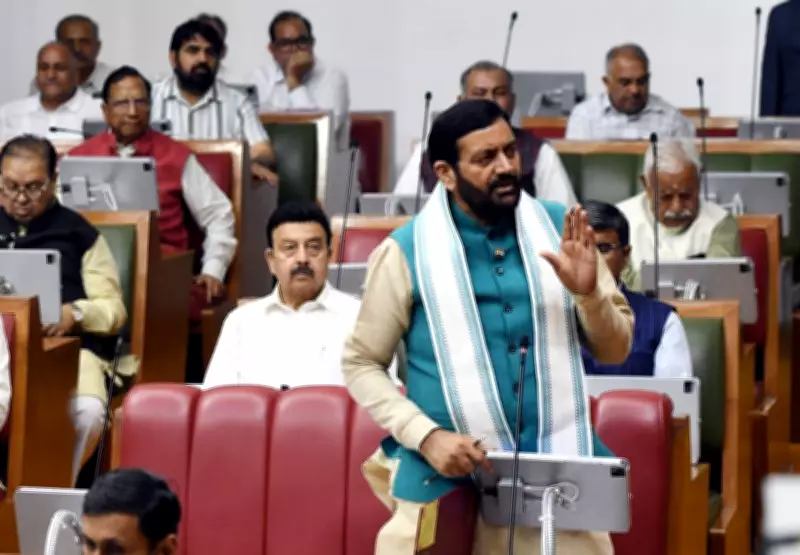
In a move that has ignited a fierce political debate, the Haryana government has cancelled more than 12 lakh Below Poverty Line (BPL) cards, attributing the action to the weeding out of ineligible beneficiaries and rising income levels among the populace. Chief Minister Nayab Singh Saini informed the state legislative Assembly on February 27, 2026, that these cancellations were necessary to ensure that only deserving families receive benefits, a statement that has drawn sharp criticism from the opposition Congress party.
Political Allegations and Electoral Context
The Congress has vehemently accused the ruling Bharatiya Janata Party (BJP) of manipulating BPL card issuance for electoral gains. According to the opposition, the BJP allowed a surge in card distributions before the 2024 Lok Sabha and Assembly elections, only to cancel them post-polls. Data reveals a telling pattern: in March 2024, Haryana had 44.9 lakh ration cards, including 41.97 lakh BPL cards. By May 2024, ahead of the Lok Sabha elections on May 25, the number jumped to 46.25 lakh, with an increase of 1.36 lakh BPL cards.
This upward trend continued as the state approached Assembly elections in October 2024, with the BJP facing anti-incumbency after a decade in power and a change in leadership from Manohar Lal Khattar to Nayab Singh Saini. By October 2024, BPL/AAY cards had soared to 52 lakh, marking a 15.8% increase from earlier figures. BPL cards alone rose from 41.97 lakh to 49.08 lakh. The BJP narrowly won the elections with a 0.85% margin over the Congress, and Saini assumed office on October 17, 2024.

Post-Election Decline and Government Rationale
Following the elections, a significant decline in beneficiary lists began. By the end of January 2026, the total number of BPL/AAY cards had plummeted to 39.88 lakh, a reduction of 12.13 lakh from the October 2024 peak. BPL cards alone saw a drop of 12.14 lakh, over 24%, while Antyodaya Anna Yojana (AAY) cards increased marginally by 899. The government attributes this decline to the integration of the Parivar Pehchan Patra (PPP) database with the Public Distribution System (PDS) in January 2023, which automated card generation based on income criteria of up to Rs 1.80 lakh per annum.
Under the Haryana Parivar Pehchan Act, 2021, families must provide income details for eligibility determination, with verification conducted through physical or electronic means. Chief Minister Saini defended the cancellations, stating that the process has been streamlined to exclude ineligible individuals. He emphasized that economic improvements, such as job creation and poverty alleviation schemes like the Mukhya Mantri Parivar Uthan Yojana, have lifted many families out of the BPL category.
Broader Implications and Pension Card Scrutiny
The controversy extends beyond BPL cards to include pension benefits. Saini highlighted that nearly 1.3 lakh old-age pension cases showed discrepancies in age, income, and other criteria, prompting verification efforts to ensure only eligible beneficiaries receive pensions. This move underscores the government's focus on fiscal prudence and targeted welfare, but critics argue it may disproportionately affect vulnerable populations.
As Haryana navigates this contentious issue, the debate highlights broader challenges in welfare distribution, political accountability, and economic development. The state's approach could set a precedent for other regions grappling with similar issues of beneficiary identification and resource allocation.






