Farmers' Fury Erupts in Haryana Grain Markets Over Procurement Delays
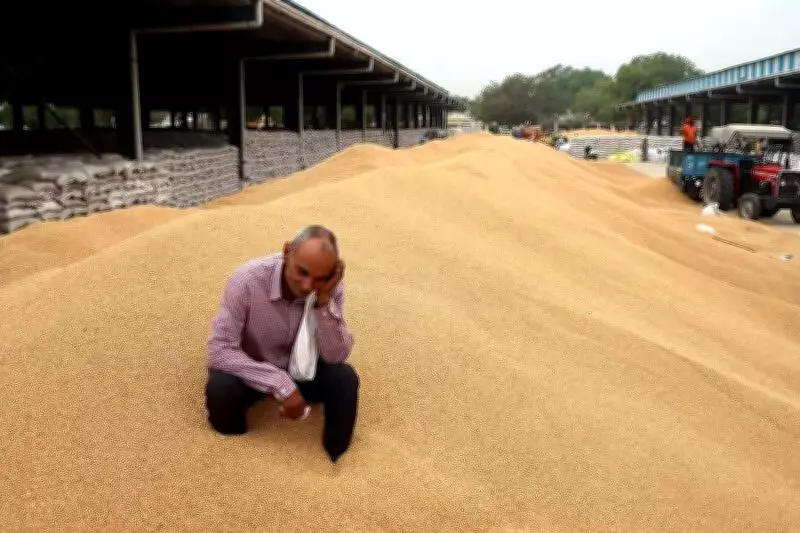
Tension gripped the Dubaldhan Majra grain market in Haryana on Friday as frustrated farmers and commission agents locked the gates in a dramatic protest against painfully slow lifting operations and mounting stocks left exposed in the open. The blockade was lifted only after Beri Sub-Divisional Magistrate Renuka Nandal intervened, promising swift resolutions. Her assurances included opening two additional lifting points and expanding the mandi area by paving the premises to create more space.
Systemic Bottlenecks and Farmer Distress Persist
Despite these official promises, severe bottlenecks continue to plague procurement centers across Jhajjar and Rohtak districts. Mamta Kadian of the Bharatiya Kisan Union (Jhajjar unit) explained that this year's bumper production has completely overwhelmed the small, inadequate market centers. The crisis is further exacerbated by acute shortages of labor and essential gunny bags, deepening the distress among the farming community.
Farmers on the ground shared harrowing accounts of their struggles. Joginder and Jayanarayan highlighted persistent harassment by commission agents and significant technical delays with the mandatory biometric verification system, which stalls truck movements for hours. Others, like Ramher and Dharampal, criticized fundamental flaws in the registration process that prevent them from selling produce exceeding their originally declared quantities, leaving valuable crops stranded.

Payment Issues and Excessive Deductions Spark Outrage
Additional concerns have arisen regarding the cumbersome online payment system. Farmers report that payments are often split across multiple family member accounts, making withdrawals a logistical nightmare. In Rohtak, protests have also erupted over excessive and disputed deductions. While aggrieved farmers claim a hefty Rs 16 is being docked per quintal, market officials maintain the official figure is only Rs 11, pointing to a significant trust deficit.
Deepak Lauchak, Secretary of the Rohtak Grain Market, provided stark numbers that illustrate the scale of the crisis. He reported a staggering 18.5 lakh quintals of arrivals this procurement season, with a mere 25% lifted so far. On infrastructure, Lauchak clarified that providing protective tarpaulin sheets is the contractual responsibility of commission agents under their licensing terms, shifting the onus away from market committees.
Infrastructure Collapse and Widespread Impact
The procurement crisis has now spread to smaller markets in Beri, Saghi, and Kiloi, where a complete lack of covered storage space is forcing farmers to store their precious harvest in open fields. Sumit Kumar of the Akhil Bharatiya Kisan Sabha squarely blamed administrative delays and the glitch-prone biometric verification system for bringing truck movements to a crawl. The situation turned more dire as intermittent evening showers intensified, significantly increasing the threat of damage to lakhs of quintals of exposed grain.
Political Firestorm Erupts Over Government Handling
The issue has ignited a major political firestorm. Leader of the Opposition and former Chief Minister Bhupinder Singh Hooda launched a scathing attack on the BJP state government. He alleged that farmers are being treated "like criminals" due to an oppressive multi-layered verification process. Hooda slammed the cumbersome procedures—involving online portals, gate passes, biometric checks, and tractor inspections—claiming these bureaucratic hurdles have deliberately stalled procurement during the peak arrival season.
The data underscores the systemic failure. In Jhajjar district alone, arrivals have surged to 10.58 lakh quintals this year, up significantly from 8.3 lakh quintals last year. Yet, authorities have managed to evacuate only 36% of the stock to date, leaving farmers in a precarious financial and emotional state as they watch their hard-earned produce rot.