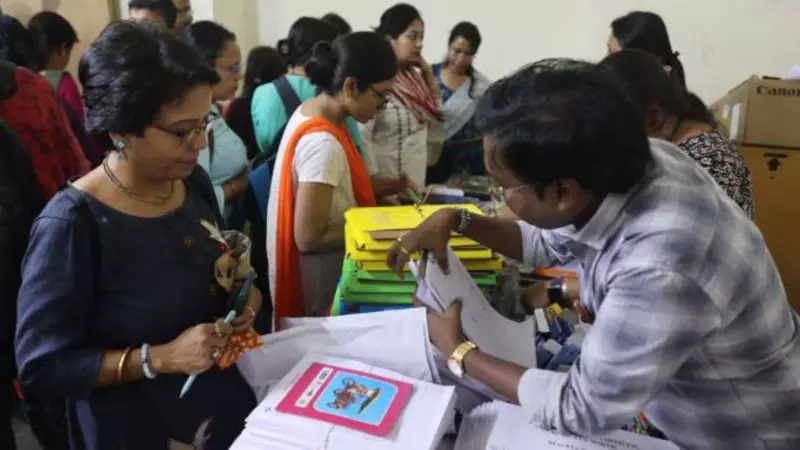
The Kerala government has stepped in to assist nearly 20 lakh citizens who found their names missing from the draft electoral rolls published recently. This move comes after a significant number of voters, primarily young adults, were excluded during the ongoing Special Intensive Revision (SIR) process.
Government Initiates Support Measures
Acting on a Cabinet decision, the state administration on Saturday, December 28, 2025, directed district collectors to establish help desks at all village offices under the Revenue Department. The primary objective of these desks is to facilitate the enrollment of eligible individuals who were dropped from the draft rolls. The order explicitly states that these desks will aid people excluded from the draft to get enrolled in the final voters’ list.
In a bid to ensure no eligible voter is left out, officials have also been instructed to conduct special outreach programs. They will visit tribal settlements and coastal villages, assisted by volunteers, to identify and track eligible persons for inclusion.

The Scale of the Exclusion and the Path to Re-enrollment
The draft electoral rolls, published by the Election Commission of India (ECI) on December 23, contain 2.54 crore voters. This figure is notably lower than the 2.78 crore forms distributed in Kerala during the first phase of the SIR. The discrepancy stems from the dropping of 24.08 lakh enumeration forms that were categorised as uncollectible, forming the ADS (Absent, Dead, or Shifted) list.
However, a distinct group within this exclusion has been identified. State Chief Electoral Officer (CEO) Rathan U Kelkar clarified that while there will be no hearing for the 24.08 lakh on the ADS list, a separate process exists for another large segment. Approximately 19.32 lakh voters, aged between 18 and 40, who are present in the draft rolls, must establish their connection to the 2002 voters’ list.
"The hearing will be conducted only for 19 lakh," Kelkar stated, correcting a misinterpretation of the government order. These individuals must appear for hearings to prove their link—often through familial relationships—with those whose names were on the 2002 list. They need to furnish relevant documents for this purpose.
Clarification on Procedures and Timelines
CEO Rathan U Kelkar provided crucial details on the operational plan. The hearing module became active on Saturday, with proceedings scheduled to commence from the first week of January 2026. The ECI has appointed 1,000 Electoral Registration Officers (EROs) to conduct these hearings.
"If an ERO conducts hearings of 100 persons a day, we can cover one lakh voters in a day, and we expect the entire process to be over in twenty days or a month," Kelkar explained. He added that those who had already submitted necessary documents to Booth Level Officers (BLOs) would not need to undergo this hearing process for mapping with the 2002 list.
For the 24.08 lakh individuals on the ADS list, the path to becoming a voter is different. They are entirely outside the current draft rolls and must submit fresh applications using Form 6. Similarly, any person dropped from the draft rolls who wishes to be included must file a new application under Form 6.
The state's intervention through help desks aims to streamline this often-complex bureaucratic process, ensuring that young and new voters, a critical demographic, are not disenfranchised due to procedural hurdles in the lead-up to future elections.