

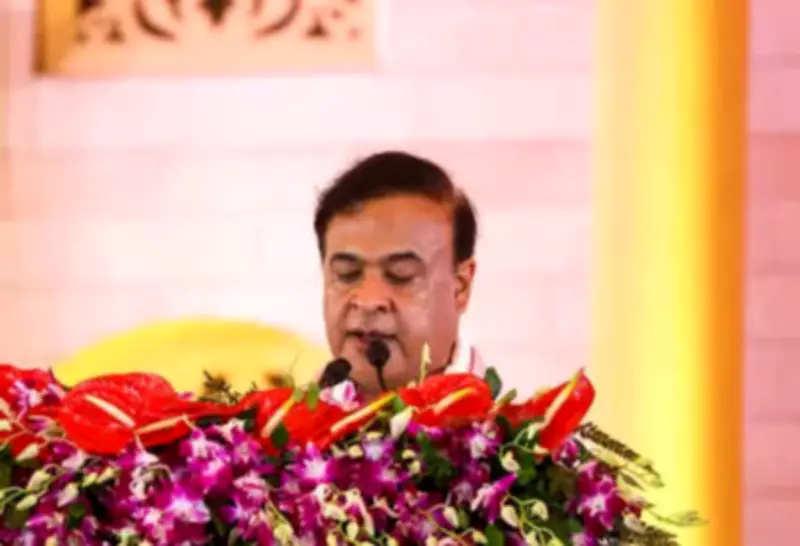
In the mid-1980s, as Assam's six-year-long anti-foreigners' movement gained momentum, a young Himanta Biswa Sarma ran errands for stalwarts of the All Assam Students' Union (Aasu), carrying files, fetching tea, and listening intently to debates on the state's future. Few could have imagined that this peripheral figure would become chief minister of Assam twice and emerge as the BJP's brightest star and a powerful strategist.
Political Initiation Through Aasu
Sarma's political initiation came through his Aasu days. Those tumultuous years gave him political grounding and access to networks that shaped his career. He worked closely with Aasu leaders like Prafulla Kumar Mahanta and Bhrigu Phukan, who later formed the Asom Gana Parishad (AGP) and government.
Rise in Student Politics
His first significant rise came in 1991–92 when he was elected general secretary of the All Guwahati Students' Union, marking his formal entry into organized student politics. He was soon expelled from Aasu for his growing association with then chief minister Hiteswar Saikia, who made him join the Congress.

In 1996, Saikia handpicked Sarma to contest the assembly election from Jalukbari. He debuted with a defeat to his former Aasu leader Bhrigu Kumar Phukan but bounced back in 2001, defeating Phukan and beginning a streak of six consecutive wins from the constituency.
Ministerial Career and Shift to BJP
Between terms, Sarma practiced law in the Supreme Court and Gauhati High Court. When Tarun Gogoi became chief minister in 2001, Sarma became one of the most powerful ministers due to his work, rising from minister of state to cabinet minister. His reform-focused administration in health and education earned praise, but his ambition clashed with Gogoi's succession plans, especially regarding Gogoi's son. By 2014, Sarma resigned, setting the stage for a spectacular shift.
In 2015, Sarma joined the BJP, a move that recalibrated the party's trajectory in Assam and the region. In 2016, BJP formed its first government in Assam, ending Congress's 15-year rule. Sarma became the most powerful minister in then chief minister Sarbananda Sonowal's cabinet, reuniting them after nearly three decades since their Aasu days.
Master Strategist for Northeast
On the day Sonowal took oath as CM, Amit Shah formed the North-East Democratic Alliance (NEDA) and named Sarma as its convenor. Sarma masterminded Pema Khandu's switch to BJP in Arunachal Pradesh, forming the party's second government in the Northeast in 2016. This was followed by victories in Manipur (2017) and Tripura (2018), expanding the BJP's footprint in Nagaland and Meghalaya.
Chief Ministerial Tenure
In 2021, Sarma succeeded Sonowal as chief minister. His tenure has been marked by bold, often controversial policies: eviction drives, crackdown on child marriage, closure of government-run madrasas, and moves against polygamy. Supporters hail him as decisive, while critics accuse him of deepening social divides.
On Tuesday, Sarma took oath for his second consecutive term, becoming the first non-Congress leader in Assam's history to achieve back-to-back tenures. This followed his leadership of the BJP to its first single-party majority in the state and the NDA's highest tally of 102 seats in the 126-member house.






