

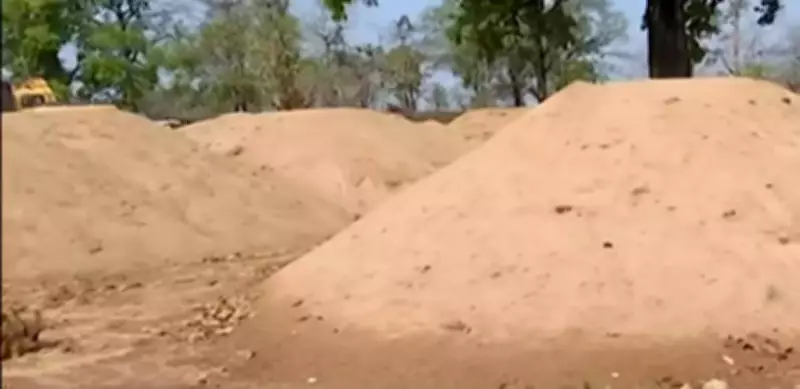
Illegal Sand Mining Epidemic Engulfs Koraput's Saberi Riverbed
The Saberi riverbed in Koraput district's Boipariguda tehsil, situated along the sensitive Odisha-Chhattisgarh border, has transformed into a notorious hub for extensive illegal sand mining operations. Growing public outcry is demanding immediate intervention from authorities, with calls to expand enforcement efforts to other vulnerable river stretches across the district that face similar threats.
Daylight Operations and Alleged Collusion
According to local sources, sand smuggling activities are being conducted brazenly in broad daylight. Long convoys of tipper trucks are routinely seen transporting illegally extracted sand, flagrantly violating established norms and regulations. "In the middle of the day, sand-laden tippers are moving through busy areas without any fear, yet the administration and the mines department remain conspicuously silent," stated Ajit Patra, a prominent Koraput-based social activist.
The Talur mouza section of the Saberi river has emerged as the epicenter of these illicit operations, where indiscriminate and unchecked sand extraction is causing severe environmental degradation. This pattern is not isolated; reports indicate similar illegal mining activities are occurring in other rivers throughout Koraput district, suggesting a widespread and systemic problem.

Systemic Loopholes in Enforcement
Local residents have expressed deep concerns regarding the effectiveness and integrity of enforcement agencies. Allegations have surfaced that illegally transported sand, once seized, is often regularized through nominal fines and so-called "spot auctions." This process allegedly allows the same operators to continue their illegal business with minimal disruption.
"The very individuals involved in illegal transport are being permitted to purchase and sell the seized sand, which highlights glaring loopholes in the enforcement mechanism," explained frustrated locals. Activist Ajit Patra went further, alleging a possible understanding or collusion between organized sand mafias and certain officials. He claims spot auctions are being systematically misused to circumvent minor mineral regulations and environmental protections.
"While seized sand is supposedly stored at designated locations outside riverbanks, fresh sand continues to be extracted directly from within the riverbeds. Hundreds of trucks and tippers are reportedly being issued royalty slips on a daily basis, effectively legitimizing what is fundamentally illegal mining," Patra elaborated.
Ecological Fallout and Official Response
Environmental expert Bidyut Mohanty issued a stern warning about the long-term consequences. Unchecked sand extraction is inflicting significant damage to river ecosystems and local biodiversity, posing serious and potentially irreversible ecological risks. "Despite the enormous scale of these operations, there has been little to no visible intervention from the concerned authorities," Mohanty lamented.
In contrast, officials from the office of the deputy director of mines (Minor Minerals) have expressed ignorance about the alleged rampant illegal mining. Satyajit Rout, the deputy director of mines based in Jeypore, stated, "An auction was conducted for the transportation of previously seized sand. However, if fresh sand is indeed being mined and transported illegally, the matter will be verified and necessary action will be taken." This statement underscores the gap between ground realities and official awareness.
The situation in Koraput presents a critical challenge, balancing economic activities with environmental preservation and lawful governance. The demand for decisive action to curb this illegal trade and protect the district's riverine ecosystems is becoming increasingly urgent.






