The visit of Indore District Collector Ashish Singh to the local office of the Rashtriya Swayamsevak Sangh (RSS) has ignited a significant political controversy in Madhya Pradesh. The incident, which occurred during official working hours, has drawn sharp criticism from the opposition Congress party, which has accused the senior bureaucrat of blurring the lines between administrative duty and political affiliation.
The Controversial Visit and Immediate Backlash
On the afternoon of Tuesday, November 21, Collector and District Magistrate Ashish Singh visited the RSS office located in the Navlakha area of Indore. The visit was reportedly in his official capacity. However, the move quickly attracted scrutiny and condemnation.
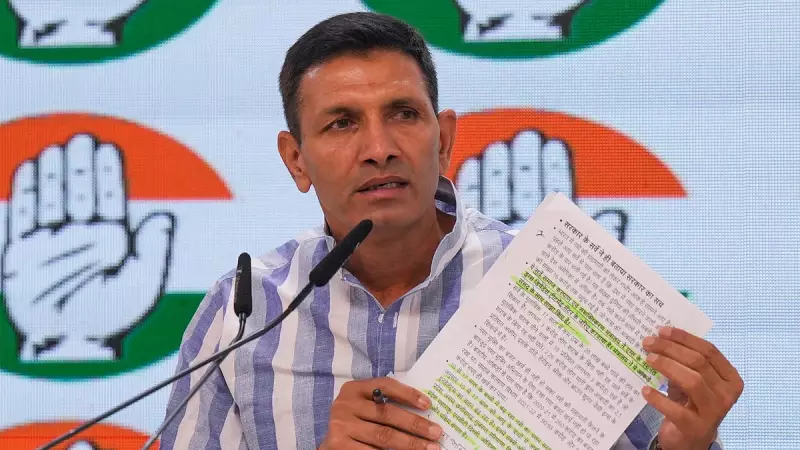
The Madhya Pradesh Congress Committee (MPCC) was swift to react. State Congress media department chairperson Mukesh Nayak launched a direct attack, labeling Collector Singh a "BJP worker" and accusing him of violating the model code of conduct for government officials. Nayak demanded immediate disciplinary action against Singh, questioning the propriety of a district's top administrative officer visiting the headquarters of a political organization's ideological mentor during office hours.
The controversy was amplified when visuals and photographs of the Collector at the RSS office began circulating on social media and news platforms. This visual evidence provided fodder for the opposition's allegations, turning the incident into a public debate about the neutrality of the state's bureaucracy.
Administrative Justification and Political Rebuttal
In response to the growing criticism, officials from the district administration offered a justification for the visit. They stated that Collector Ashish Singh was at the RSS office to conduct an inspection related to the 'Prabudh Nagar' project, a local development initiative. According to this explanation, the visit was purely administrative, as the RSS office fell within the area of the project being reviewed.
However, the Congress party firmly rejected this explanation. Leaders argued that if the visit was indeed for an official inspection, it should have been conducted in a transparent manner with prior official communication, not as a discreet visit. They contended that the explanation was a mere cover for an act that demonstrated the collector's political leanings and his willingness to serve the interests of the ruling BJP's ideological fountainhead.
This incident is not occurring in a vacuum. It comes at a time when the political atmosphere in Madhya Pradesh remains charged following the recent state assembly elections. The Congress's aggressive stance is seen as an attempt to highlight and challenge what it perceives as the increasing politicization of the state's administrative machinery.
Broader Implications for Bureaucratic Neutrality
The row over the Indore Collector's actions touches upon a fundamental principle of Indian governance: the political neutrality of the civil services. The controversy raises critical questions about the conduct expected from senior IAS officers and the boundaries they must maintain to uphold the impartiality of their office.
Critics of the visit argue that regardless of the stated purpose, the perception of a high-ranking official visiting a politically affiliated organization is damaging. It erodes public trust in the fairness of the administration. The Congress's demand for action is rooted in this principle, aiming to set a precedent that such actions will not go unchallenged.
As of now, the state government has not made any official statement regarding the incident or the Congress's demands. The silence from the BJP-led government is being closely watched. The outcome of this episode will be a test of how the state administration handles allegations of partisanship within its bureaucratic ranks.
The incident in Indore underscores the ongoing and often tense interplay between politics and administration in India. It serves as a reminder of the intense scrutiny public officials face and the high standards of conduct demanded from them to preserve the integrity of democratic institutions.