

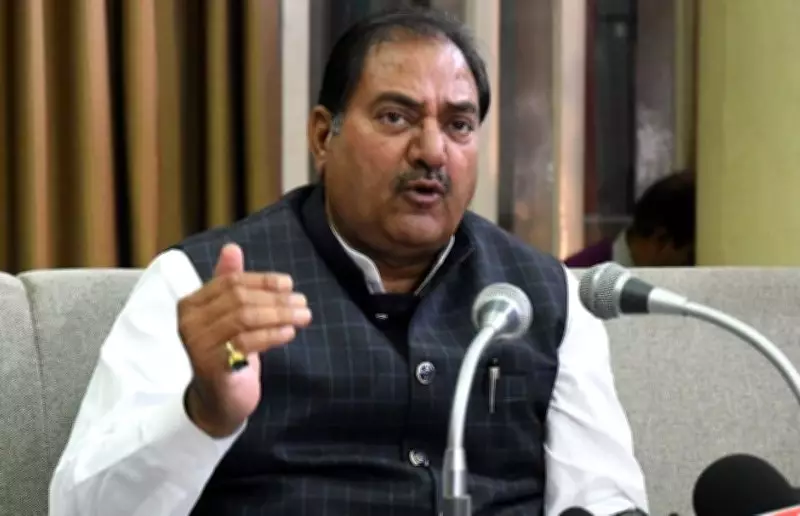
INLD Chief Om Prakash Chautala Slams Haryana CM Nayab Singh Saini as 'Dummy Chief Minister'
In a sharp political attack, Haryana's Indian National Lok Dal (INLD) President Om Prakash Chautala has labeled Chief Minister Nayab Singh Saini a "dummy chief minister", alleging that real power in the state lies with the Bharatiya Janata Party's (BJP) central leadership. Chautala made these remarks while announcing the establishment of grievance cells for mandis (agricultural markets) across Haryana, aiming to address farmers' concerns directly.
Political Accusations and Power Dynamics in Haryana
Chautala criticized Saini's administration, claiming that the chief minister lacks autonomy and is merely a figurehead controlled by higher-ups in the BJP. This accusation comes amid ongoing political tensions in the state, with the INLD positioning itself as a vocal opposition force. The INLD chief emphasized that his party is committed to holding the government accountable and fighting for the rights of Haryana's citizens, particularly farmers who are crucial to the state's economy.
Launch of Grievance Cells for Mandis to Support Farmers
Simultaneously, Chautala announced the formation of grievance cells dedicated to mandis, which will serve as platforms for farmers to report issues related to crop sales, pricing, and market operations. These cells are part of the INLD's broader strategy to engage with agricultural communities and highlight perceived failures in the current government's policies. Chautala stated that the initiative aims to ensure transparency and fairness in mandi transactions, addressing long-standing grievances that affect farmers' livelihoods.

The move is seen as an effort to bolster the INLD's support base among rural voters ahead of potential electoral challenges. By focusing on mandis, which are central to Haryana's agrarian economy, the party seeks to capitalize on discontent and position itself as a champion for farmers' welfare.
Broader Implications for Haryana's Political Landscape
This development underscores the intensifying political rivalry in Haryana, with the INLD leveraging agricultural issues to challenge the BJP-led state government. Chautala's comments reflect a broader narrative of opposition parties accusing the BJP of centralizing power and undermining local leadership. As the state navigates these political dynamics, the establishment of mandi grievance cells could influence public perception and voter sentiment in the coming months.
Observers note that such initiatives may prompt responses from the ruling party, potentially leading to policy adjustments or counter-measures to address farmers' concerns. The situation highlights the ongoing struggle for political dominance in Haryana, with agriculture remaining a key battleground for parties vying for support in this predominantly rural state.






