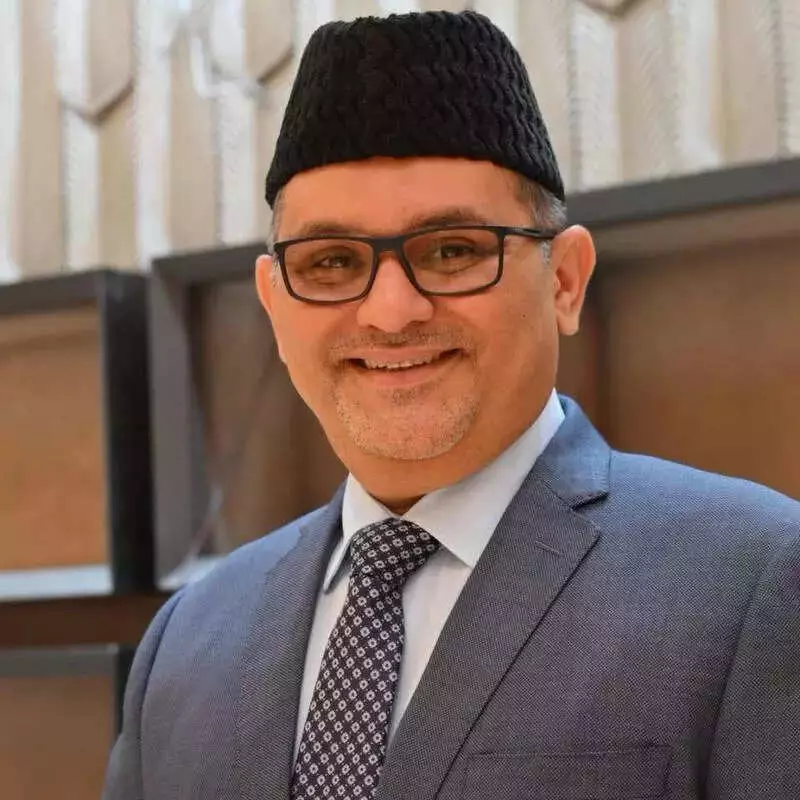
A prominent leader from the Indian Union Muslim League (IUML) has stepped in to clarify remarks made by his teenage daughter regarding the contentious issue of women's entry into mosques. Panakkad Munavvarali Shihab Thangal, the national secretary of the Muslim League, stated that his 16-year-old daughter's comments were a spontaneous response lacking the required religious scholarship.
The Incident at the Literature Festival
The episode unfolded at a recent literature festival held in Kochi. During a program, Fathima Nargis, Thangal's daughter, was asked a question about women's access to mosques for prayers. In her response, the young girl expressed clear support for allowing women to enter. She argued that the current restriction is a result of cultural practices created by people and is not mandated by religion itself. "That should be changed. That is also part of women's evolution and I think it will be changed," she told the audience.
Father's Clarification and Taking Responsibility
The remarks quickly drew strong reactions from sections within the Sunni Muslim community in Kerala, which traditionally restricts women's entry into mosques for prayers. In response to the growing discussion, Shihab Thangal took to Facebook to issue a clarification. He emphasized that his daughter's answer was given to an unexpected question without the deep religious understanding such a complex topic demands.

Thangal stated that her views do not align with mainstream Muslim religious beliefs on the matter. "On a matter that Kerala's traditional Muslim scholarly community clearly defined based on profound knowledge, I wish to clarify and correct her response here, taking full responsibility as a father," he wrote in his post. He framed her comments as the perspective of a child who lacks the necessary learning in Islamic jurisprudence.
Appeal to Avoid Controversy
Echoing a similar sentiment, IUML supremo Panaakkad Sadikkali Shihab Thangal also addressed the situation. He urged people not to turn the statements of a 16-year-old girl into a major controversy. The leadership's intervention highlights the sensitivity of the topic within the community and their attempt to balance personal family matters with public religious discourse.
The incident has once again brought the debate on women's access to religious spaces in Islam into the spotlight in Kerala. While the young girl's comments reflected a progressive, personal opinion, the swift clarification from senior leaders underscores the established traditional positions held by major sections of the community's scholarly leadership.