Jalpaiguri's New Citizens Face Voter List Crisis Ahead of Assembly Polls
In a concerning development for India's democratic process, approximately 9,500 former enclave-dwellers in Jalpaiguri district, who officially became Indian citizens on August 1, 2015, are confronting a significant bureaucratic hurdle. The voter rolls released on February 28 following a Special Intensive Revision (SIR) have marked these individuals as "under adjudication," casting doubt on their voting rights with barely a month remaining before crucial assembly elections.
A Legacy of Uncertainty
These residents, who gained Indian nationality through the historic bilateral treaty with Bangladesh eleven years ago, now fear for their future in the country they chose to call home. The situation stems from the Election Commission's decision to use the 2002 electoral rolls as the reference point for the SIR process. This created an immediate paradox: how could individuals who were officially Bangladeshi nationals in 2002 validate their current Indian citizenship?
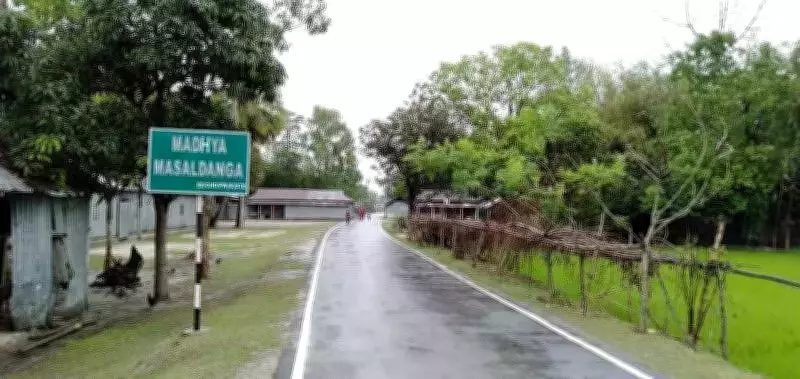
"We were told we would be treated as a special case and the enclave exchange list would be considered. But 80% of us failed to make the voters' list," revealed Jainal Abedin, a resident of Madhya Mashaldanga, highlighting the widespread nature of the problem.
The Historical Context of Enclave Exchange
The roots of this issue trace back to August 1, 2015, when India and Bangladesh exchanged 162 enclaves, finally resolving a centuries-old geographical anomaly. Under the Land Boundary Agreement, 15,856 residents living in 51 Bangladeshi enclaves within Indian territory became Indian citizens, while 921 Indians from enclaves in Bangladesh moved in the opposite direction. During this complex exchange process, both governments, along with the Bharat Bangladesh Enclave Exchange Coordination Committee (BBEECC), meticulously documented the dwellers who were to receive Indian citizenship.
Despite explicit assurances from the Election Commission that this official list would serve as the primary document for voter registration, thousands of these new citizens now find themselves in administrative limbo with the "under adjudication" status.
Geographical and Political Impact
The affected voters are concentrated in three key constituencies: Dinhata, Mathabhanga, and Mekhliganj, with Dinhata being the primary area of concern. Importantly, all these individuals successfully became voters after 2015 and have actively participated in multiple elections, including the 2019 and 2024 parliamentary polls and the 2021 assembly elections. Their sudden exclusion from the voter rolls represents not just an administrative failure but a potential disenfranchisement of an entire community that has demonstrated its commitment to India's democratic process.
Desperate Measures and Official Responses
With time running out before the assembly polls and finding no immediate solution through Indian channels, some of these voters are considering an unprecedented step: asking the Bangladeshi government to intervene. "We were Bangladeshi nationals before the Land Boundary Agreement. The stalemate has left us desperate," explained Abedin, capturing the profound frustration and anxiety within the community.
However, there appears to be some movement toward resolution. Diptiman Sengupta, who led the enclave exchange movement under BBEECC, reported that the Cooch Behar District Magistrate provided assurances on Monday. "The DM said it was their responsibility to ensure these dwellers weren't left out and they were prioritising it," Sengupta stated, indicating that all "adjudicated" voters would eventually be included in the electoral rolls.
This situation underscores the ongoing challenges in implementing the Land Boundary Agreement fully and highlights how bureaucratic processes can inadvertently undermine the rights of citizens who have already navigated complex geopolitical transitions. As election preparations intensify, all eyes will be on whether these 9,500 former enclave-dwellers can exercise their fundamental democratic right to vote in the upcoming assembly polls.