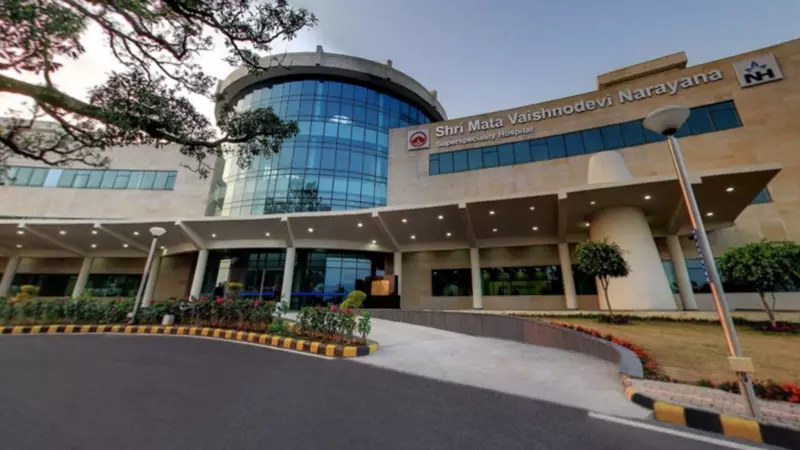
A significant protest erupted in Jammu on Saturday, with demonstrators demanding the removal of Kashmiri Muslim students admitted to the prestigious Shri Mata Vaishno Devi Institute of Medical Excellence (SMVDIME) near Katra. The agitation, led by a coalition of nearly 60 Hindu right-wing organisations, also saw the burning of effigies of Jammu and Kashmir Lieutenant Governor Manoj Sinha.
Core Demands of the Agitating Groups
The protesters, gathered under the banner of the Shri Mata Vaishno Devi Sangarsh Samiti, staged their demonstration outside Lok Bhawan. Their primary demand is for the Shri Mata Vaishno Devi Shrine Board, chaired by Lt Governor Manoj Sinha, to cancel the inaugural admission list for the SMVDIME. They are advocating for seats at the medical college to be reserved exclusively for Hindu students, suggesting that Muslim students from Kashmir be relocated to other institutions.
Colonel (retd) Sukhvir Mankotia, the convener of the Samiti, spearheaded the protest. He stated that the agitation would persist until their demands are met. "We are not against students of any particular religion, but only want the MBBS seats in SMVDIME reserved for Hindu students as the medical college has been set up on the basis of donations made by pilgrims visiting the Shri Mata Vaishno Devi Shrine," Mankotia explained.

Wide-Ranging Participation and Political Context
The protest saw participation from members of several prominent organisations, including:
- The Bharatiya Janata Party (BJP)
- The Rashtriya Swayamsevak Sangh (RSS)
- The J&K Sanatan Dharam Sabha
- The Bajrang Dal
- Shiv Sena
Notable figures present included J&K Sanatan Dharam Sabha president Parshotam Dadeechi, BJP Mahila Morcha’s J&K chief Neha Mahajan, and Jammu Chamber of Commerce and Industry president Arun Gupta.
The controversy stems from the admission list released in November by the J&K Board of Professional Entrance Examinations for the first batch of 50 students at SMVDIME. The list, based on NEET merit, showed that 44 of the selected candidates were Muslims from Kashmir, while only six were Hindus from Jammu. Furthermore, only three of those six Hindu candidates eventually took admission.
Official Response and Defence of Merit-Based Admissions
Former Chief Minister Omar Abdullah strongly countered the protestors' demands, labelling them as baseless. He reminded the public that the J&K Assembly, while passing the Shri Mata Vaishno Devi University Act and allocating land, had explicitly stated that admissions would be conducted purely on merit.
"Where was it written that boys and girls from a particular religion will be kept out? It was said that admissions will be based on merit and not religion," Abdullah asserted. He challenged the protestors, stating that if they wished to admit students without merit, they must seek permission from the Supreme Court. He emphasised that secularism remains enshrined in the Constitution, and any move against it would require removing that foundational principle.
The institute does not hold minority status, and the admissions were conducted strictly as per the prevailing rules and merit list. The protest highlights the ongoing tensions in the region regarding resource allocation and identity politics, setting the stage for a continued debate on education, religion, and equity in Jammu and Kashmir.