

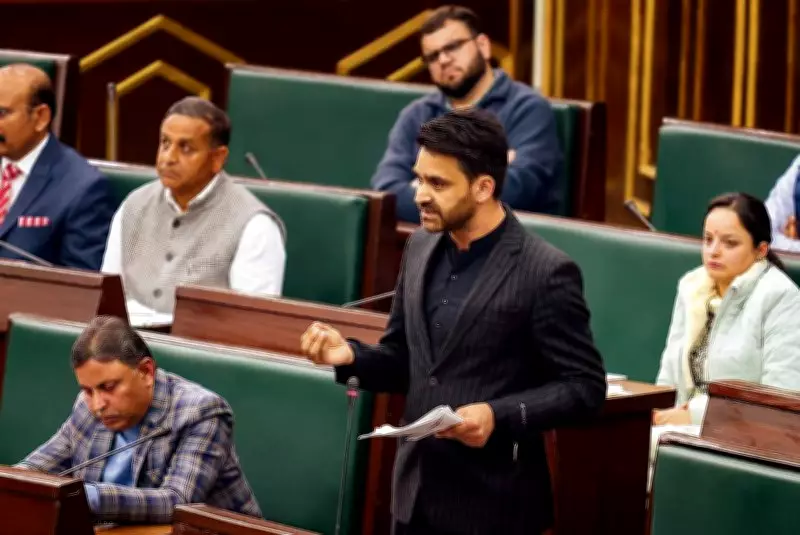
Jammu and Kashmir Assembly Sees Heated Clash Over Central Loan Scheme
The legislative assembly of Jammu and Kashmir was plunged into turmoil as a fierce debate erupted over the central government's newly announced interest-free loan scheme for the Union Territory. The session, marked by raised voices and sharp exchanges, highlighted deep-seated concerns among opposition members regarding the financial implications and governance framework of the initiative.
Opposition Parties Voice Strong Objections
Members from various opposition factions launched a scathing critique of the scheme, arguing that it represents an overreach by the Centre into the fiscal affairs of Jammu and Kashmir. They contended that the interest-free loan, while ostensibly aimed at boosting development, could potentially erode the UT's financial independence and create dependencies that undermine local decision-making. Key points of contention included the lack of detailed guidelines on fund allocation and the absence of consultations with state-level stakeholders prior to the announcement.
Allegations of Undermining Fiscal Autonomy
During the assembly proceedings, opposition legislators emphasized that the scheme might compromise the principles of cooperative federalism. They expressed fears that such central interventions could set a precedent for reduced autonomy in other policy areas, impacting Jammu and Kashmir's ability to tailor economic strategies to its unique needs. Critics also raised questions about the transparency of the loan's disbursement process and its alignment with the UT's long-term development goals.

Government Defends the Initiative
In response, representatives from the ruling coalition defended the interest-free loan scheme, describing it as a vital measure to accelerate infrastructure projects and stimulate economic growth in Jammu and Kashmir. They assured the assembly that the funds would be utilized efficiently and in accordance with established protocols, aiming to address regional disparities and enhance public welfare. The debate underscored the ongoing tensions between central oversight and regional self-governance in the UT's political landscape.
Broader Implications for UT Governance
The uproar in the assembly reflects broader anxieties about the evolving relationship between the Centre and Union Territories post the abrogation of Article 370. As Jammu and Kashmir navigates its new administrative status, such disputes over financial schemes are likely to persist, shaping future discussions on autonomy, development, and democratic accountability in the region.






