

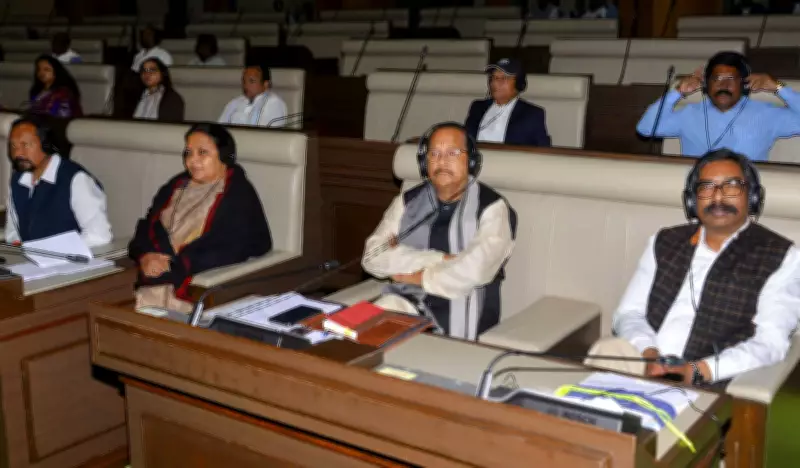
JPSC Age Limit Controversy Takes Center Stage in Jharkhand Assembly
The second day of the ongoing Budget Session in the Jharkhand Assembly was dominated by intense demands to amend the age limit criteria for the 2026 JPSC Civil Services Examination. The issue resonated both inside the legislative chamber and among civil services aspirants outside, creating a significant point of discussion for lawmakers.
Zero Hour Focus on Aspirants' Concerns
During the crucial Zero Hour, Silli MLA Amit Kumar and Poriyahat MLA Pradeep Kumar raised the pressing matter, urging immediate government intervention. The Jharkhand Public Service Commission (JPSC) has currently set the age cut-off year as 2026 for the upcoming examination, but students and their representatives are demanding a revision to 2018.
"A substantial number of dedicated aspirants will be unfairly deprived of appearing in this crucial examination due to this restrictive decision," emphasized Amit Kumar, highlighting the widespread concern among the state's youth.

In response to these urgent appeals, Parliamentary Affairs Minister Radha Krishana Kishore provided reassurance to the House. "Chief Minister Hemant Soren and the government are treating this matter with the utmost seriousness. An appropriate decision addressing these valid concerns will be taken promptly," he assured the assembled members.
Multiple Governance Issues Surface
When the House convened at 11 am, MLA Saryu Roy immediately raised another critical issue during Question Hour. He highlighted an acute manpower shortage within state agriculture board-run Bazar Samitis, revealing a startling discrepancy between sanctioned positions and actual staffing.
"Out of 900 officially sanctioned posts, the government has admitted that only 105 personnel are currently working," Roy stated, seeking clarification on whether the administration intends to gradually phase out these essential market committees.
Agriculture Minister Shilpi Neha Tirkey responded by explaining that the government is actively engaged in framing detailed rules and regulations for the Bazar Samitis to address these structural challenges.
PDS Distribution and Infrastructure Challenges
JMM MLA Hemlal Murmu further highlighted systemic issues, pointing to severe manpower shortages and persistent problems with the biometric authentication system in remote areas. He specifically cited poor internet connectivity as a major hurdle preventing smooth Public Distribution System (PDS) operations across the state.
Minister Irfan Ansari addressed these concerns by reporting progress on staffing vacancies. "We have filled 255 out of 260 vacant positions for block supply officers on a priority basis to strengthen distribution networks," he announced.
Additionally, Ansari revealed technological upgrades underway: "e-PoS machines are being systematically upgraded to 4G connectivity to resolve persistent network-related issues that have hampered efficient service delivery."
Heated Debate on Governor's Address
The second half of the session witnessed a vigorous debate on the Governor's address, with active participation from both treasury and opposition benches. Leader of Opposition Babulal Marandi launched sharp criticism against the ruling administration, accusing them of misleading the public with exaggerated claims of achievement.
"Incidents of land grabbing, displacement of tribal communities, and ongoing concerns over law and order continue to trouble our state deeply," Marandi asserted during his address.
He further alleged irregularities in the appointment process for the Director General of Police (DGP), prompting Chief Minister Hemant Soren to intervene. The Chief Minister clarified that since the matter is currently sub judice before the Supreme Court, it should not be discussed within the legislative assembly to maintain judicial propriety.

Session Adjustments and Forward Outlook
The Chief Minister is scheduled to deliver his comprehensive reply to the debate on the Governor's address this Friday. Meanwhile, in a practical administrative adjustment, the Assembly unanimously passed a proposal to convene the House on February 21 instead of February 23. This rescheduling accounts for the upcoming civic body elections, ensuring legislative proceedings do not conflict with electoral responsibilities.
The day's proceedings demonstrated the Assembly's engagement with diverse yet interconnected issues affecting Jharkhand's governance, from examination policies and agricultural administration to public distribution challenges and broader political accountability.





