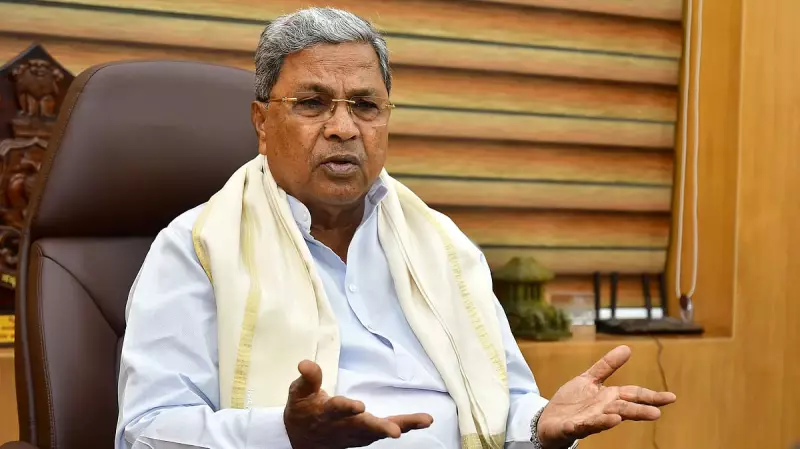
Karnataka Chief Minister Siddaramaiah has formally urged Prime Minister Narendra Modi to suspend the implementation of the VB-G RAM G Act. In a significant move highlighting federal tensions over rural employment schemes, the Chief Minister dispatched a detailed letter to the Prime Minister on 30 December 2025.
The Core Argument: A "Not Absolute" Guarantee
At the heart of Siddaramaiah's communication is a critical argument concerning the legal guarantee of work days. The Chief Minister contended that the promised 125 days of work—which includes the standard 100 days under the Mahatma Gandhi National Rural Employment Guarantee Act (MGNREGA)—is not an unconditional assurance. He pointed out that this guarantee is contingent upon a centrally determined "normative" funding allocated specifically to "notified" areas within each state.
This system, according to the Karnataka CM, makes the right to work relative rather than absolute. The funding mechanism, he argued, ultimately dictates the actual number of work days that can be provided on the ground, regardless of the legal framework's promises.

Implications for Karnataka and Federal Dynamics
The letter brings to the forefront the ongoing debate about the financial architecture of central welfare schemes and their implementation by states. Siddaramaiah's appeal suggests that the current funding model under the VB-G RAM G Act may be insufficient or too restrictive to meet the legal mandate effectively, especially in states with high demand for rural employment.
By seeking the Act's suspension, the Karnataka government is escalating a dialogue on fiscal federalism. It underscores a demand for greater flexibility or increased central resources to fulfill the employment guarantee without being bound by what the state perceives as limiting normative costs.
What Happens Next?
This direct appeal from a senior Congress Chief Minister to the BJP-led central government sets the stage for a potential political and administrative tussle. The Prime Minister's Office and the concerned ministries will now need to examine the merits of Karnataka's claim. The outcome could influence how other states approach the implementation of similar centrally sponsored schemes.
The move also places the spotlight back on the MGNREGA scheme, a critical social safety net, and its integration with newer legislative frameworks. Whether this leads to a review of funding norms or remains a point of contention will be closely watched by policymakers and stakeholders across the country.