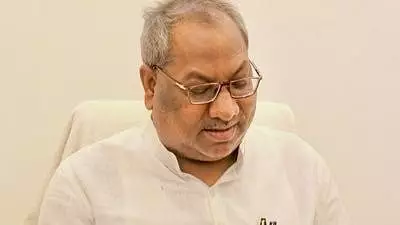
Karnataka Chief Minister DK Shivakumar on Wednesday allocated portfolios to his 13 cabinet ministers, retaining the crucial finance department for himself. In a significant move, the home department has been given to senior Congress leader and former minister Priyank Kharge, son of party president Mallikarjun Kharge.
Portfolio Allocation Details
The newly inducted ministers were sworn in on Tuesday, and the portfolio allocation was finalized after several rounds of discussions. The cabinet expansion aims to balance regional and caste equations ahead of the 2028 assembly elections.
Key Portfolios
- DK Shivakumar: Finance, Bengaluru Development, and other departments not allocated to specific ministers.
- Priyank Kharge: Home, including internal security and law and order.
- MB Patil: Revenue and District In-charge.
- KJ George: Energy and Public Works Department.
- Shivanand Patil: Health and Family Welfare.
- Eshwar Khandre: Forest, Ecology, and Environment.
- K Venkatesh: Transport and Muzrai.
- Laxmi Hebbalkar: Women and Child Development.
- D Sudhakar: Horticulture and Sericulture.
- B Nagendra: Youth Empowerment and Sports.
- MC Managuli: Social Welfare and Backward Classes.
- K S Puttannaiah: Agriculture and Farmers Welfare.
- Prasanna Kumar: Rural Development and Panchayat Raj.
Political Significance
The allocation is seen as a balancing act between various factions within the state Congress unit. By retaining finance, Shivakumar ensures control over the state's purse strings, while giving home to Kharge signals trust in the party high command's family. The cabinet includes representation from different communities and regions, including SC/ST, OBC, and minorities.

Reactions
Political analysts believe the portfolio distribution will help the government focus on development and welfare schemes. Opposition parties have criticized the move, alleging that key portfolios were given based on loyalty rather than merit. However, the ruling party maintains that the team is capable and will deliver on promises made during the elections.
The new ministers are expected to take charge immediately and start working on their respective departments. The state is facing challenges such as drought, unemployment, and infrastructure gaps, which the government aims to address through coordinated efforts.