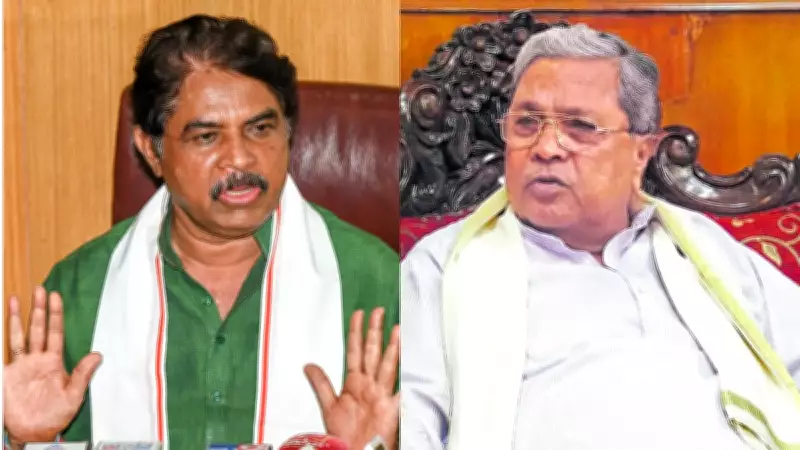
Karnataka Chief Minister's Iran Comments Ignite Political Firestorm
A significant political controversy has erupted in Karnataka following Chief Minister Siddaramaiah's public comments regarding international military actions. The Chief Minister took to social media to express strong condemnation of what he described as an "unnecessary and deeply troubling" attack by the United States on Iran.
Chief Minister's Controversial Statement
In his statement posted on March 2, 2026, Siddaramaiah specifically criticized what he perceived as a contradiction in US foreign policy, stating that while speaking of peace, the nation had "chosen the path of war." The Chief Minister went further to express his condolences on the reported killing of Iran's Supreme Leader, Ayatollah Ali Khamenei, and offered prayers for his soul.
The Chief Minister's remarks represented a direct commentary on sensitive international military actions and diplomatic relations between major global powers. His statement immediately drew attention for its strong language and direct criticism of US foreign policy decisions.
BJP Leader's Sharp Rebuttal
The response from political opponents was swift and pointed. BJP leader R. Ashoka issued a strong rebuttal on March 3, 2026, directly addressing the Chief Minister's comments. Ashoka emphasized that "Karnataka expects maturity from its Chief Minister, not impulsive commentary on sensitive international matters."
Ashoka's statement highlighted a fundamental principle of India's foreign policy architecture, noting that "India's foreign policy is determined in New Delhi with strategic depth and national interest as its guiding principle." He emphasized that foreign policy decisions are "not shaped" by individual state leaders or their personal political positions.
Broader Implications for State-Federal Relations
This exchange has raised important questions about the appropriate boundaries for state-level political leaders when commenting on international affairs. The controversy touches on the delicate balance between state autonomy and federal authority in matters of foreign policy and international relations.
Political analysts note that such public disagreements between state and national political figures on foreign policy matters are relatively rare in Indian politics, where there has traditionally been greater consensus on international affairs. The incident has sparked broader discussions about the role of state chief ministers in shaping or commenting on India's international engagements.
Key Points of Contention:- The appropriateness of state leaders commenting on sensitive international military actions
- The balance between state autonomy and federal authority in foreign policy matters
- The potential impact of such statements on India's international diplomatic relations
- The political implications for both the ruling party and opposition in Karnataka
The controversy continues to develop as political observers watch for further responses from both state and national political figures. The incident has highlighted the complex interplay between domestic politics and international relations in India's federal structure.