

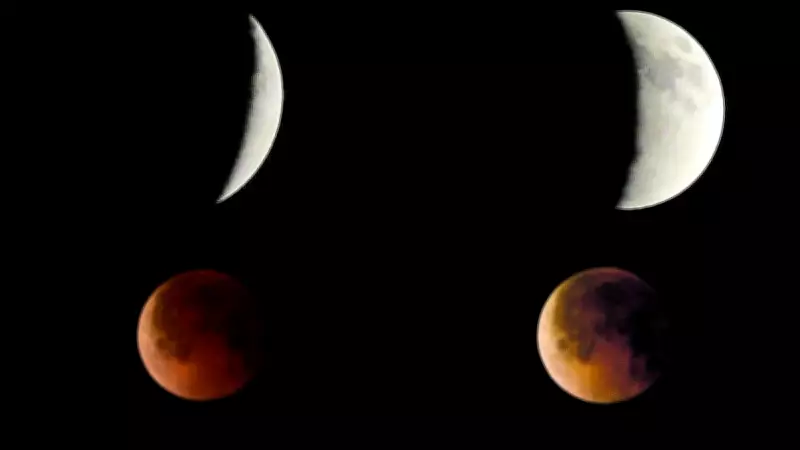
Total Lunar Eclipse 2026: A Celestial Event for India
The year 2026 will bring a spectacular total lunar eclipse, an astronomical phenomenon that captivates skywatchers across the globe. In India, this event holds particular interest due to its varying visibility across different regions. Understanding when and how to observe it can enhance the experience for enthusiasts in cities like Bengaluru.
Visibility Across India
According to astronomical predictions, the total lunar eclipse of 2026 will present a unique viewing scenario for India. The totality phase, where the Moon is completely immersed in Earth's shadow, will be visible exclusively in the North Eastern part of the country. This includes states such as Assam, Arunachal Pradesh, and neighboring areas, where observers can witness the full transition into a Blood Moon, characterized by a reddish hue.
For the rest of India, including major cities like Bengaluru, Mumbai, Delhi, and Chennai, the eclipse will only be visible as a partial lunar eclipse. This means that only a portion of the Moon will be covered by Earth's shadow, offering a different but still fascinating spectacle. The partial phase will be observable from these regions, allowing residents to see a segment of the Moon darken without the complete transformation seen in the North East.

How to Watch from Bengaluru
For those in Bengaluru planning to view the partial lunar eclipse, preparation is key to a successful observation. Here are some tips to make the most of this event:
- Timing: Check local astronomical resources or apps for the exact timing of the eclipse in Bengaluru. The event is expected to occur in the early hours, so set alarms accordingly.
- Location: Choose a spot with an unobstructed view of the western horizon, as the Moon will be setting during the eclipse. Parks or open areas away from city lights are ideal.
- Equipment: No special equipment is needed to view a lunar eclipse safely. Binoculars or a telescope can enhance details, but the naked eye is sufficient to observe the partial coverage.
- Weather: Monitor weather forecasts to ensure clear skies. Cloud cover can obstruct the view, so have a backup plan if conditions are unfavorable.
Scientific Significance and Cultural Aspects
Lunar eclipses are not only visually stunning but also hold scientific importance. They provide opportunities for astronomers to study the Earth's atmosphere and the Moon's surface. The reddish color during totality, often called a Blood Moon, results from sunlight filtering through Earth's atmosphere and scattering blue light, leaving red wavelengths to illuminate the Moon.
In cultural contexts, lunar eclipses have been interpreted in various ways across India, from mythological stories to astrological beliefs. Events like these often spark public interest in space and astronomy, encouraging educational outreach and community viewing events.
As the date approaches, stay updated with announcements from space agencies or local astronomy clubs for more detailed information. Whether you're in the North East for the total eclipse or in Bengaluru for the partial view, this celestial event promises to be a memorable experience for all sky enthusiasts.






