Karnataka Legislative Council Resumes Business After Chairman's Stern Warning
The political deadlock in the Karnataka Legislative Council over the governor's address finally concluded on Friday, following a firm intervention by Chairman Basavaraj Horatti. The chairman explicitly warned members that he would impose penalties for any unruly conduct to enforce discipline within the House, effectively breaking the impasse that had paralyzed proceedings for several days.
End of Stalemate and Resumption of Debate
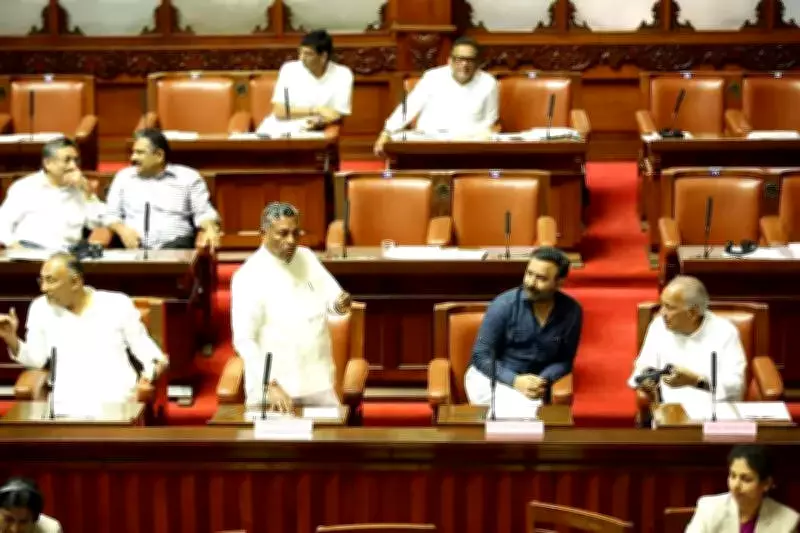
Horatti's assurance paved the way for the resumption of the debate on the motion of thanks to the governor's address. Members from both the treasury benches and the opposition participated actively, marking a return to normal legislative business. This development came after the council had witnessed three consecutive days of washed-out proceedings, with the House being adjourned without transacting any substantive business.
The root of the stalemate lay in Governor Thaawar Chand Gehlot's decision to reduce his speech to merely two lines before walking out during a joint sitting of the legislature the previous week. This unprecedented move had triggered widespread discontent and led to a series of disruptions in the council.

Opposition Demands and Chairman's Appeal
As soon as the House convened on Friday morning, the principal opposition party, the BJP, rose in unison to reiterate their demands. They insisted that Leader of the House NS Bose Raju apologize for his remark that the government condemns the governor's speech. Additionally, Leader of the Opposition Chalavadi Narayanaswamy demanded the suspension of Congress member BK Hariprasad for allegedly making derogatory remarks against the governor, which have since been expunged from the official record.
In response, Chairman Horatti reminded members of the ruling he had delivered on Thursday and made a heartfelt appeal to both sides to put the contentious issue to rest. He pointed out that Hariprasad had already expressed regret for his remarks, urging members to move forward in the interest of legislative decorum.
Escalation and Historical Context
The row had escalated significantly a day earlier amid heated exchanges between members. During these confrontations, BJP member DS Arun alleged that Hariprasad had gestured disrespectfully toward the governor while he was delivering his address. In response, Hariprasad is alleged to have made a derogatory remark that sparked fresh uproar in the House.
Senior member AH Vishwanath attempted to cool tempers by recalling a similar incident from 1981, when R Gundu Rao served as chief minister. He recounted how former minister CM Ibrahim had made an unsavoury remark against then Leader of the Opposition in the assembly, D Devaraj Urs, drawing objections from both the governing Congress and the opposition parties.
"It may have been an unintended mistake since a senior like Hariprasad never meant to talk in that tone," Vishwanath remarked. "It is a language not spoken in the House. The chair has the responsibility to ensure the dignity of the House."
Chairman's Commitment to Order
Responding to these concerns, Chairman Horatti reaffirmed his commitment to maintaining order. "I had given my ruling yesterday to put the issue to rest," he stated. "Now I appeal to members to cooperate to ensure smooth proceedings. I will take responsibility and ensure no repetition of such incidents. If any member indulges in such unruly behavior, appropriate action will be taken."
Return to Normalcy and Continued Debate
Following the chairman's decisive intervention, members from both sides relented, allowing the debate on the governor's address to resume. Congress member Ivan D'Souza continued his speech, with other notable participants including BJP's YM Satish and nominated member K Shivakumar. The resumption of proceedings signaled a return to constructive legislative engagement, highlighting the importance of parliamentary discipline in upholding democratic norms.