

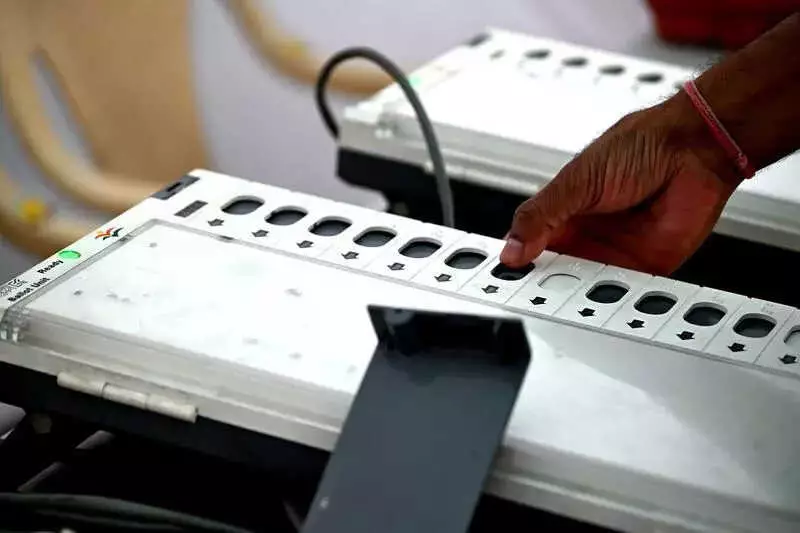
A survey commissioned by the Karnataka Chief Electoral Officer (CEO) to assess public trust in Electronic Voting Machines (EVMs) has ignited a major political controversy, forcing the Congress-led state government into a defensive stance. The report, which concluded that a majority of voters believe Indian elections are free and fair, was abruptly removed from a state website hours after it went viral on Friday.
Survey Findings and Swift Removal
The now-removed study was titled 'Lok Sabha Elections 2024: Evaluation of endline survey of KAP (Knowledge, Attitude and Practice) of Citizens'. It was conducted by the Karnataka Monitoring and Evaluation Authority (KMEA) under the planning department at the Election Commission's request. The survey covered 5,100 respondents across 102 assembly segments in Bengaluru, Belagavi, Kalaburagi, and Mysuru divisions.
Its key finding was high public confidence in the electoral process. The report stated that over 83.6% of respondents expressed trust in EVMs and the electoral process, while more than 81.3% recognized the importance of each vote. It also noted high EPIC card possession (99.02%) and voter list inclusion (98.1%). However, it flagged persistent concerns about inducements and the influence of money and muscle power, particularly in regions like Kalaburagi.

Political Backlash and Allegations of Bias
The report's publication triggered sharp reactions from the ruling Congress. Chief Minister Siddaramaiah took to social media platform X to clarify that the survey was merely an administrative end-line evaluation of voter awareness under the SVEEP programme, conducted in May 2025. He argued it was not a political opinion poll certifying electoral integrity.
Siddaramaiah pointed out that Congress leader Rahul Gandhi's allegations of organised voter list manipulation, termed "Vote Chori," were raised in August 2025, based on material that emerged later. He questioned the survey's limited sample size and flagged a potential conflict of interest involving the NGO that executed it.
Minister Priyank Kharge launched a more direct attack, alleging the survey was biased. He claimed the CEO, through KMEA, engaged an NGO run by an individual "closely linked to the Prime Minister's Office." "The survey was conducted by a Modi's man who works in the PMO," Kharge alleged, accusing the BJP of falsely presenting it as a state government survey. He also said the BJP must answer for alleged voter fraud in Aland, Kalaburagi, where a police SIT has filed a massive 22,000-page chargesheet in a voter deletion case.
The Methodology and the Fallout
The evaluation was undertaken by the Grassroots Research and Advocacy Movement, Bengaluru, founded by Balasubramaniam. It used a mixed-methods approach, including structured questionnaires, 23 in-depth interviews, 57 focus group discussions, and 16 booth-level case studies across urban, semi-urban, and rural areas.
Despite its removal, the episode has intensified the debate on electoral trust in Karnataka. The state government has not provided an official explanation for taking down the report from the KMEA website. Officials describe KMEA as a statutory body for independent evaluation of public programmes to aid evidence-based policymaking. The controversy underscores the deep political divisions over the integrity of India's electoral machinery, with the Congress dismissing the survey as an attempt to "sing paeans" about the Election Commission, while the BJP likely views it as validation of a transparent process.






