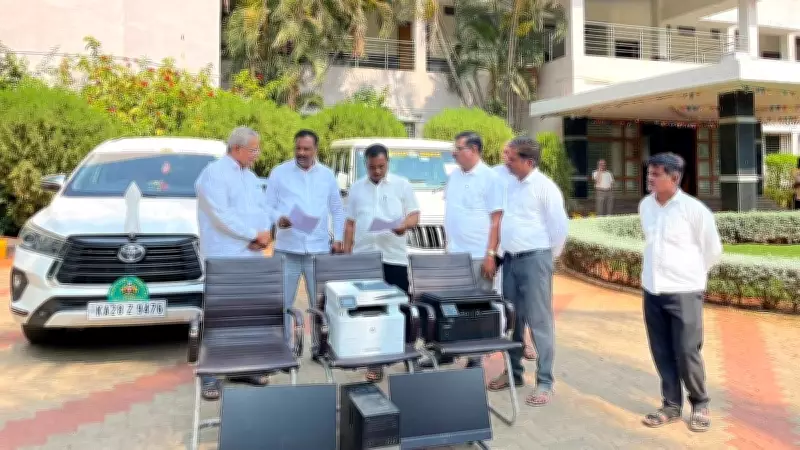
Karnataka Farmers' Dues: Properties Confiscated from KBJNL MD's Office
In a significant move to address long-pending farmer grievances, authorities have confiscated properties from the office of the Managing Director of Karnataka Bhagya Jal Nigam Limited (KBJNL). This action aims to recover outstanding dues owed to farmers for land acquisition related to irrigation projects across the state.
Details of the Confiscation
The confiscation involved seizing assets, including office equipment and furniture, from the KBJNL Managing Director's office. This step was taken following persistent delays in compensating farmers for their land, which was acquired for various water management and irrigation initiatives under KBJNL's purview. The move underscores the government's commitment to resolving farmer issues and ensuring timely payment of dues.
Background on Farmer Dues
Farmers in Karnataka have been awaiting compensation for years after their lands were acquired for KBJNL projects. The outstanding dues have led to widespread protests and legal battles, highlighting the financial strain on agricultural communities. The confiscation is part of a broader effort to enforce accountability and expedite the payment process, with authorities leveraging legal provisions to recover the funds.

Impact on KBJNL and Farmers
This development is expected to pressure KBJNL to prioritize settling farmer dues, potentially improving the agency's operational transparency. For farmers, it offers hope for receiving their rightful compensation, which could alleviate economic hardships and support agricultural sustainability. The case also sets a precedent for similar disputes in other states, emphasizing the importance of adhering to land acquisition norms.
Government and Legal Response
State officials have emphasized that the confiscation aligns with legal frameworks designed to protect farmer interests. They assure that further actions will be taken if dues remain unpaid, including potential audits and stricter enforcement measures. This incident highlights ongoing challenges in balancing infrastructure development with fair compensation for affected landowners.