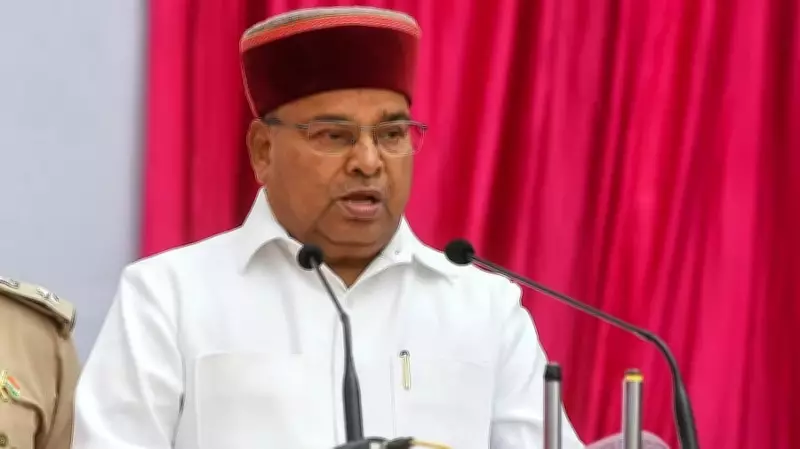
Karnataka Governor Grants Assent to Internal Reservation Legislation
In a significant development for Karnataka's social justice framework, Governor Thaawarchand Gehlot has officially approved the internal quota bill. This legislative action follows intense political engagement and places the next steps squarely in the hands of the state government.
Urgent Appeal Leads to Gubernatorial Approval
The governor's assent was secured after a high-level delegation, comprising Scheduled Caste (SC) and Scheduled Tribe (ST) Ministers, made an urgent visit to the Lok Bhavan. The delegation was led by Home Minister G Parameshwara, who personally emphasized the critical need for the bill's immediate clearance. This direct intervention underscored the political and social urgency attached to the legislation.
The meeting focused on explaining the bill's provisions and its importance for ensuring equitable distribution of reservation benefits among various sub-groups within the SC and ST communities. The delegation's persuasive efforts were pivotal in expediting the governor's decision-making process.
Bill Returns to State Government for Implementation
With the governor's formal approval now in place, the legislative ball is effectively back in the court of the Karnataka state government. The administration must now proceed with the necessary administrative and legal steps to implement the internal reservation system as outlined in the bill.
This development marks a crucial phase in Karnataka's ongoing efforts to refine its reservation policies. The internal quota system aims to address long-standing demands for more granular and fair allocation of reserved seats and benefits, particularly within the SC and ST categories, to prevent dominance by more advanced groups.
The approval comes after considerable deliberation and public discourse on the matter. It is expected to have wide-ranging implications for educational admissions, government job allocations, and political representation across the state. Stakeholders from various communities are now closely watching the government's next moves to ensure transparent and effective execution.
As the process moves forward, the focus will shift to how the state government operationalizes the bill, including potential guidelines, monitoring mechanisms, and timelines for rollout. This step is seen as a milestone in Karnataka's commitment to social justice and inclusive development.