

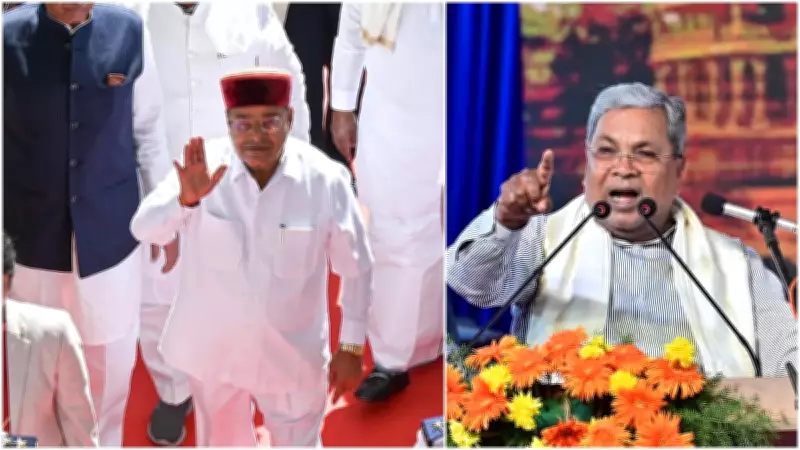
Governor Gehlot Challenges Karnataka's Hate Speech Legislation Citing Supreme Court Precedents
In a significant constitutional standoff, Karnataka Governor Thaawar Chand Gehlot has raised strong objections to the state government's proposed hate speech bill, flagging it for potential legal inconsistencies. The Governor's opposition is grounded in an extensive review of judicial history, as he referenced a substantial body of Supreme Court jurisprudence to bolster his critique.
Legal Grounds for Opposition: Vagueness and Arbitrariness
Governor Gehlot formally cited the bill for exhibiting "vagueness, overbreadth, manifest arbitrariness and repugnancy" to existing laws. This critical assessment was not made lightly; it draws upon a deep legal foundation. Specifically, the Governor invoked 18 separate Supreme Court judgments to support his position, highlighting a consistent thread in Indian constitutional law that emphasizes clarity and fairness in legislation.
Notably, this judicial reference includes two landmark rulings dating back to 1950, underscoring long-standing principles that the Governor argues the bill contravenes. By reaching back to the early years of the Republic, Gehlot's move signals a concern that the proposed law might undermine foundational legal standards established over decades.

State Government's Counter-Argument and Political Context
In response, the Karnataka state government, led by Chief Minister Siddaramaiah, has presented its own legal defense. Officials have brought up two Supreme Court orders in support of the bill, aiming to counter the Governor's extensive citations. This sets the stage for a heated debate between the state's executive branch and the gubernatorial office, with each side leveraging judicial authority to justify their stance.
The confrontation occurs against a backdrop of heightened political tensions in Karnataka, where issues of free speech, communal harmony, and legislative overreach are fiercely contested. The bill itself seeks to address hate speech, a sensitive topic in the region's diverse social fabric, but its provisions have now become mired in legal and procedural disputes.
Implications for Governance and Future Proceedings
This deadlock has broader implications for state-center relations and legislative processes in India. Governor Gehlot's use of Supreme Court precedents to block the bill reflects an assertive role by the Governor's office, potentially setting a precedent for how similar legislation might be handled in other states. It raises questions about the balance of power between elected state governments and appointed Governors, especially in matters of lawmaking.
As the standoff continues, stakeholders from legal experts to political analysts are closely watching how this will unfold. The next steps could involve further legal reviews, potential amendments to the bill, or even judicial intervention if the impasse persists. This episode underscores the complex interplay between politics, law, and governance in India's federal structure, with Karnataka at the epicenter of a national conversation on hate speech regulation.






