Karnataka Administration Takes Decisive Action Against Caste-Based Discrimination in Haircut Services
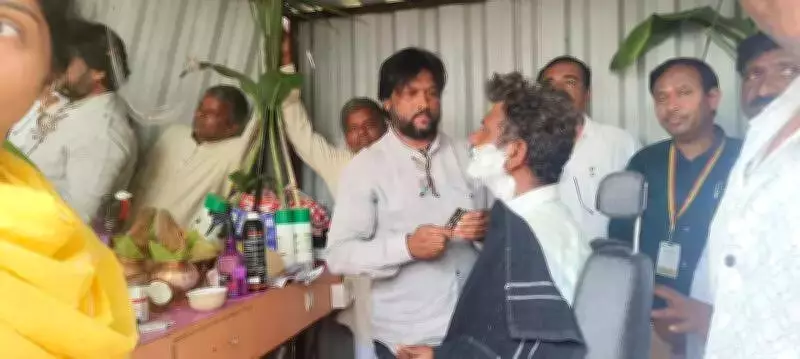
In a significant move to address deep-rooted caste discrimination, the Mundargi taluk administration in Gadag district, North Karnataka, has established a groundbreaking 'Souharda Salon' in Singatalur village. This initiative comes as a direct response to repeated instances where Dalits were systematically denied basic hair-cutting services by local barbers, despite multiple official interventions.
Persistent Discrimination Prompts Government Intervention
According to Uday Kumar Yeliwal, assistant director of the Social Welfare Department (SWD), barbers in the region had consistently refused services to Dalit community members. "We conducted numerous meetings with barbers, Dalits, and other community representatives," Yeliwal explained. "Official notices were issued, and shops were ordered to shut down temporarily. However, the discriminatory practices continued unabated, forcing us to escalate the matter to higher authorities."
The administration's investigation revealed that barbers were facing indirect pressure and threats from upper-caste groups. "While these upper-caste elements never came forward openly, they effectively blackmailed barbers by refusing services from any barber who served Dalit customers," disclosed highly placed district administration sources. This covert intimidation created an environment where barbers felt compelled to maintain discriminatory practices.
Multi-Departmental Collaboration for Social Equality
The 'Souharda Salon' represents a collaborative effort involving the taluk administration, taluk panchayat, social welfare department, police department, and the Sri Shivasharana Hadapad Appanna community. Nanda Hanabaratti, deputy director of the SWD in Gadag, emphasized that the salon's primary objective is "to spread a powerful message of social equality among all communities."
Mundargi Tahsildar PS Yerriswamy reinforced the legal stance against such discrimination, stating unequivocally, "Denying haircuts, access to hotels, or entry to temples to Dalits is completely illegal. We will take stringent legal action against anyone found perpetuating these discriminatory practices."
Community Leadership and Innovative Solutions
The breakthrough came when officials approached Devu Hadapad, state president of the Akhil Karnataka Sri Shivasharana Hadapad Appanna Samaj Seva Sangh in Bengaluru. Hadapad successfully convinced his cousins to establish a salon that would serve all community members without discrimination. "For decades, Dalits in Singatalur were denied basic services," Hadapad revealed. "The indirect pressure from upper castes had become so severe that village barbers were considering abandoning their family profession altogether. Now, with support from all communities, we have established a harmonious salon that welcomes everyone."
Krishna Hadapad of the Gadag District Savita Samaj hailed the Singatalur initiative as "the first of its kind in the entire state." He proposed that the government should recognize barbers as honorary employees and provide them with subsidies, loans, and other facilities. "Only through such comprehensive support can barbers play a crucial role in maintaining social equality, particularly in rural areas where these discriminatory practices are most entrenched," he argued.
A Model for Social Transformation
The 'Souharda Salon' initiative represents more than just a practical solution to a specific problem—it serves as a symbolic and practical model for combating untouchability and promoting social harmony. By bringing together government agencies, community leaders, and local residents, the administration has created a template that could be replicated across other regions facing similar challenges.
This proactive approach demonstrates how targeted interventions, combined with community engagement and legal enforcement, can begin to dismantle long-standing social barriers. As the salon begins operations with support from diverse community segments, it stands as a testament to the possibility of creating inclusive spaces in traditionally divided social landscapes.