

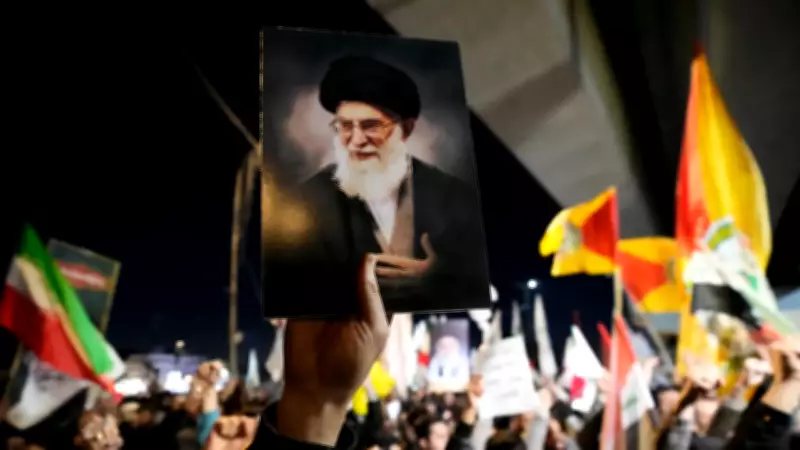
Iran's Leadership Transition Plans Activated Amid US-Israeli Military Strikes
Before the coordinated American and Israeli bombing campaign commenced on Saturday, Iran's Supreme Leader Ayatollah Ali Khamenei had established comprehensive protocols for a potential transition of power. The authoritarian figure, who has been the central pillar of Iran's theocratic regime for nearly four decades, had prepared detailed succession arrangements in anticipation of his death.
Immediate Aftermath of the Attacks
The Iranian government announced on Sunday that the US-Israeli military operations had resulted in the death of Ayatollah Khamenei. Shortly after this declaration, the state-controlled news agency IRNA confirmed that Iran's president, the head of the judiciary, and a jurist from the Guardian Council would assume temporary control during the transition period, though specific details about subsequent steps remained undisclosed.
This development represents the first real-world test of Iran's carefully constructed succession mechanisms, which were designed to ensure regime continuity despite external pressures and internal power struggles.

Pre-Identified Succession Candidates
During the 12-day conflict with Israel in June, when Ayatollah Khamenei was operating from secure locations, he identified three primary candidates who could be rapidly appointed to succeed him. According to interviews with six senior Iranian officials and two clerics who requested anonymity, these preferred candidates included:
- Gholam-Hossein Mohseni-Eje'i, the current head of Iran's judiciary
- Ali Asghar Hejazi, Ayatollah Khamenei's chief of staff
- Hassan Khomeini, a moderate cleric from reformist political circles and grandson of Ayatollah Khomeini
The Israeli military has since reported that Ali Asghar Hejazi was killed during the recent hostilities, potentially altering the succession landscape.
Controversy Surrounding Hereditary Succession
Ayatollah Khamenei's son Mojtaba, who has operated as a powerful behind-the-scenes figure, has garnered support from certain political factions. However, Khamenei explicitly informed his followers that he opposed making the supreme leader position hereditary. Mojtaba's current status remains uncertain following the attacks; while his wife was confirmed killed in Saturday's strikes, there has been no definitive information regarding his own fate.
Pre-Attack Preparations and Delegations
In anticipation of potential military action, Ayatollah Khamenei implemented precautionary measures to safeguard both the nation and the regime's survival. He delegated substantial governing authority to Ali Larijani, a veteran politician who heads Iran's national security council and has effectively marginalized President Masoud Pezeshkian from key decision-making processes.
"We will make the Zionist criminals and the dishonourable Americans regret it," Larijani declared on Saturday. "The brave soldiers and the great nation of Iran will give the international tyrants who are going to hell an unforgettable lesson."
Multi-Layered Succession Framework
Khamenei had authorized a select group of political and military allies to make critical decisions in the event of his death. According to senior Iranian officials, he established four distinct layers of succession for senior military and political positions that he personally appointed. This framework included:
- His chief of staff, Ali Asghar Hejazi
- Brigadier General Mohammad Bagher Ghalibaf, speaker of parliament and former commander of the Revolutionary Guards Corps
- General Yahya Rahim Safavi, his top military adviser and former commander-in-chief of the Guards
As of early Sunday, it remained unclear exactly which individuals or groups had assumed operational control following the reported death of Iran's supreme leader.
The succession plan requires that any new supreme leader must be a senior Shia cleric and scholar formally appointed by the Assembly of Experts, a committee of clerics responsible for selecting Iran's highest religious authority. The activation of these pre-arranged mechanisms represents a critical moment for Iran's political stability and regional influence.






