

Karnataka Assembly Approves Historic Shift to Ballot Papers for Local Body Elections
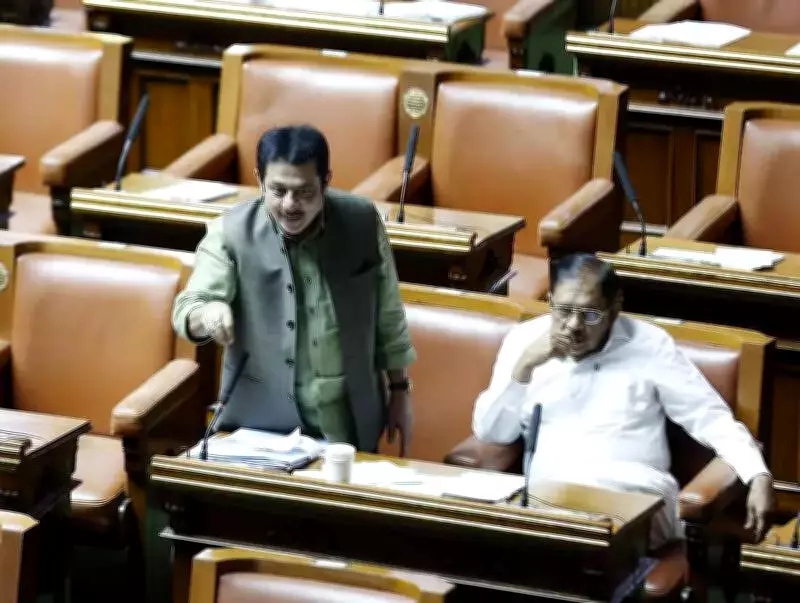
In a session marked by intense opposition protests and a dramatic walkout, the Karnataka legislative assembly on Monday passed the landmark Gram Swaraj and Panchayat Raj (Amendment) Bill, 2026. This significant legislation mandates the use of traditional ballot papers instead of electronic voting machines (EVMs) for all local body elections across the state, representing a major departure from current electoral practices.
Minister Cites EVM Reliability Concerns as Key Motivation
Rural development and panchayat raj minister Priyank Kharge, who introduced the bill, emphasized that growing public and institutional doubts about EVM reliability necessitated this change. He detailed six specific amendments to election processes aimed at enhancing transparency and trust. Kharge pointed to data from recent Maharashtra assembly elections, alleging unexplained discrepancies in voter turnout figures, particularly a sharp and suspicious increase in votes recorded between 5 PM and 9 PM on polling day.
"Similar concerns have been raised in Haryana and Madhya Pradesh," Kharge stated, "and numerous organizations have questioned EVM integrity, yet responses from the Election Commission of India have been insufficient and unsatisfactory."

BJP Opposition Labels Move a "Tughlaq-like Decision"
The Bharatiya Janata Party mounted fierce criticism against the bill. Opposition leader R Ashoka condemned it as a "Tughlaq-like decision" that contradicts the Congress party's own legacy, noting that EVMs were originally introduced during Rajiv Gandhi's tenure as prime minister. Ashoka argued that the Supreme Court has consistently upheld the validity and security of EVMs, questioning the government's sudden policy reversal.
BJP legislator Sunil Kumar alleged the bill primarily benefits the Congress party rather than the public, warning of potential misuse and a regression to practices like booth capturing. "This move undermines Karnataka's progressive 'Brand Bengaluru' image and raises serious concerns about electoral integrity," Kumar asserted.
Another BJP member, Suresh Kumar, opposed the legislation, claiming it was driven by political interests rather than public welfare. He called for introspection instead of blaming electoral systems.
Minister Defends Bill as Essential for Transparency
Minister Priyank Kharge vigorously defended the legislation, arguing that ballot papers ensure greater transparency and public confidence. "Irregularities in EVMs are far harder to detect and verify compared to physical ballot papers," he contended, emphasizing that the change is necessary to restore trust in the democratic process at the grassroots level.
The debate grew increasingly heated, with opposition members accusing the government of taking the state "back to the stone age," while Congress legislators insisted the reform was crucial for electoral credibility. Ashoka's remark that Congress had no right to sit in the assembly if it distrusted EVMs triggered uproar, culminating in a BJP walkout.
Assembly Clears Three Additional Significant Bills
Alongside the electoral reform bill, the assembly passed three other important pieces of legislation:
- The Karnataka Freedom of Choice in Marriage and Prevention and Prohibition of Honour and Tradition Bill, 2026 (known as the Eva Nammava bill), aimed at curbing honour killings and caste-based violence related to inter-caste and interfaith marriages. Law and parliamentary affairs minister HK Patil explained the bill addresses crimes beyond murder arising from so-called honour linked to marriages.
- The Karnataka Tax on Profession, Trades, Callings and Employments (Amendment) Bill, updating professional tax regulations.
- The Karnataka Jnana Bhandar Manuscripts and Digitisation Bill, which establishes an authority to survey, preserve, and digitize at least five lakh manuscript pages annually.
BJP members opposed the honour killings bill, arguing existing laws are sufficient, but Patil assured the government would consider all suggestions during rule framing.

This legislative session underscores deep political divisions over electoral methodology while advancing significant social and cultural reforms in Karnataka.





