The Karnataka legislature has made history by passing the country's first dedicated legislation aimed at curbing hate speech and hate crimes. The Karnataka Hate Speech and Hate Crimes (Prevention) Bill, 2025, was approved by both the Legislative Assembly and the Council during the recent winter session. However, the parliamentary discussions were marked more by partisan sound and fury than by a deep examination of the complex balance between free speech and social harmony.
A Partisan Clash in the Legislature
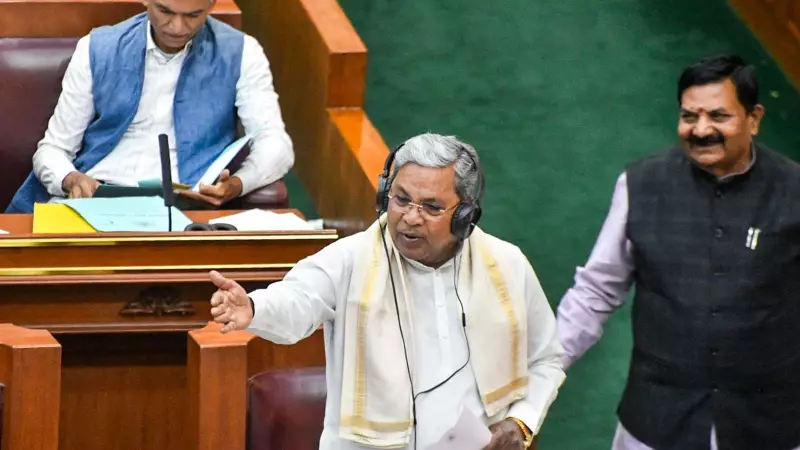
The debate unfolded along predictable political lines. The ruling Congress government, led by Chief Minister Siddaramaiah, championed the Bill as an urgent and necessary tool to combat a rising tide of hate, particularly amplified by social media. State Home Minister G Parameshwara, who piloted the legislation, argued it was needed to "curb and prevent dissemination, publication or promotion of hate speech and hate crimes" that cause societal disharmony.
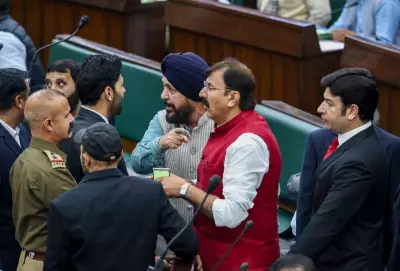
In stark opposition, the Bharatiya Janata Party (BJP) mounted a fierce attack, branding the proposed law as "vague, unconstitutional and draconian." BJP leaders warned it was vulnerable to blatant misuse for political vendetta, drawing parallels to the excesses of the Emergency era. The Opposition's protests in the Assembly led to a short-lived debate there, pushing the substantive arguments to the Legislative Council.
Key Provisions and Heated Objections
Two specific provisions of the Bill became major flashpoints. First, it prescribes imprisonment of up to seven years for repeat offenders, a penalty far more stringent than comparable sections in the Bharatiya Nyaya Sanhita (BNS), 2023. Second, all offences under this new law are classified as non-bailable, a significant departure from existing frameworks where bail is more common due to lighter maximum punishments.
BJP leaders like R Ashoka, the Leader of the Opposition in the Assembly, alleged the law aimed to "make Hitlers out of the police." In the Council, BJP MLC C T Ravi cited landmark Supreme Court judgments on free speech, arguing the Bill's "emotion-based" definitions of hate speech would give the administration a "free licence to target rivals." He even cautioned that ordinary citizens forwarding content on WhatsApp could inadvertently face prosecution.
The Government's Defence and Civil Society Concerns
The Congress defended the Bill by invoking Article 19(2) of the Constitution, which permits reasonable restrictions on free speech for public order and morality. Home Minister Parameshwara also referenced a May 2025 Supreme Court order emphasizing the need for effective legal mechanisms against hate speech. Senior Congress MLC B K Hariprasad linked the legislation to protecting secularism, a basic feature of the Constitution, and cited cases of activists like Umar Khalid and Sanjiv Bhatt to question the BJP's stance on rights.
Outside the political arena, civil society groups offered a mixed response. Organizations like the Campaign Against Hate Speech welcomed the legislative intent to protect marginalized communities but criticized the lack of clear definitions and a consultative process. They warned that vague language could also be used to stifle legitimate dissent and criticism.
The Data Behind the Push and What Comes Next
The government's push is backed by stark police data showing a dramatic rise in cases, especially from online platforms. In Karnataka, social media-linked cases surged from 130 in 2020 to 994 by November 30, 2025. Hate speech-specific cases doubled from 39 in 2022 to 84 in 2024. The coastal region, a frequent hotspot, accounted for 320 of the 994 cases in 2025.
The Bill now awaits the assent of the Governor, with the BJP urging him to withhold approval. Given the intense opposition and constitutional concerns raised, it is widely anticipated that the law will face immediate legal challenges in court if enacted. The debates, while heated, have set the stage for a crucial judicial examination of where India draws the line between free expression and hateful conduct in the digital age.