Karnataka's Decades-Long Stalemate on SC Internal Reservation
In Bengaluru, a contentious proposal to implement internal reservation within the Scheduled Castes (SC) quota has remained in political limbo for more than four decades. Successive state governments have hesitated to act, fearing backlash from competing SC factions broadly categorized as 'Left' and 'Right' groups.
Historical Demand and Political Paralysis
The demand for sub-categorization dates back to the 1980s, primarily championed by SC 'Left' communities such as the Madigas. These groups argue that reservation benefits have disproportionately favored relatively advanced communities like the Holeyas, often referred to as SC 'Right'. Despite numerous studies and commissions, implementation has been repeatedly delayed on both legal and political grounds.
M Gurumurthy, state convener of the Dalit Sangharsh Samiti (DSS), expressed frustration: "Despite many comprehensive studies, no government has demonstrated the political will to implement internal reservation, though all administrations have made lofty promises."

Commission Reports and Failed Implementation Attempts
The issue gained significant momentum during SM Krishna's tenure as chief minister from 1999 to 2004, with organizations like the DSS advocating for proportional allocation. In 2005, the Congress-JD(S) coalition government led by Dharam Singh established the AJ Sadashiva Commission to examine the matter.
The commission submitted its report in 2012 during BJP chief minister DV Sadananda Gowda's administration, documenting disparities among SC sub-castes. However, the findings were never translated into policy. More recently, the BJP government under Basavaraj Bommai attempted to advance implementation ahead of the 2023 assembly elections by increasing the SC reservation to 17%.
This move pushed overall reservation beyond the Supreme Court's 50% cap, resulting in legal challenges. The political landscape shifted in August 2024 when the Supreme Court upheld states' authority to create sub-categories within SC quotas, prompting the current government to examine fresh data including recommendations from the Justice Nagamohan Das Commission.
Recent Developments and Escalating Tensions
A special cabinet meeting scheduled last week was deferred to April due to the model code of conduct for April 9 bypolls. The agenda included dividing the previous 15% SC quota among 101 sub-castes to ensure more equitable access to government jobs and educational opportunities.
The government proposed a tentative formula splitting the 17% quota into three segments: 6% each for two major groups and 5% for others. This proposal immediately triggered divisions within communities and even within the cabinet itself.
In an attempt to provide legal backing, the government passed The Karnataka Scheduled Castes (Sub-classification) Bill, 2025. However, the high court stayed its implementation in recruitment processes in October 2025, further complicating the situation.
Growing Protests and Political Calculations
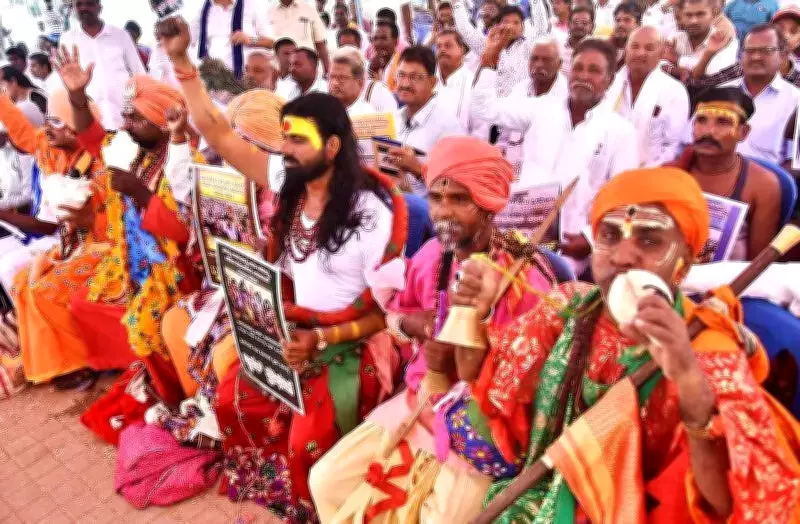
Protests have intensified as smaller and nomadic SC groups express concerns about potential exclusion from the proposed framework. Jagadguru Immadi Siddarameshwara Swami of the Bhovi Gurupeeta warned that several communities risk being sidelined and called for an expert panel representing all 101 sub-castes.
Community representatives have also raised alarms about the roster system in government hiring, cautioning that post-wise allocation could result in all vacancies in a recruitment cycle going to a single sub-category.
In February, the government decided to fill over 56,000 posts using the earlier 15% SC quota framework pending judicial clarity, but this decision sparked protests from SC 'Left' groups. Demonstrations in Dharwad and a recent protest in Kalaburagi by unemployed youth have added to mounting political pressure.
Vishwas Shetty, a political commentator, explained the government's hesitation: "Any decisive move is likely to trigger backlash from one faction or another, potentially impacting the 2028 assembly elections. This political calculation explains why successive administrations have delayed implementation for decades."

Complex Legal and Social Dimensions
The internal reservation debate encompasses multiple dimensions:
- Legal challenges regarding the 50% reservation cap and constitutional validity
- Political considerations affecting electoral outcomes and party support bases
- Social justice concerns about equitable distribution among historically disadvantaged groups
- Administrative complexities in implementing sub-categorization across 101 communities
As Karnataka approaches another election cycle, the decades-old question of internal reservation within SC quotas remains unresolved, caught between competing claims of social justice, political expediency, and legal constraints.