Karnataka Waqf Minister Clarifies Encroachment Issues, Highlights Muslim Majority in Land Disputes
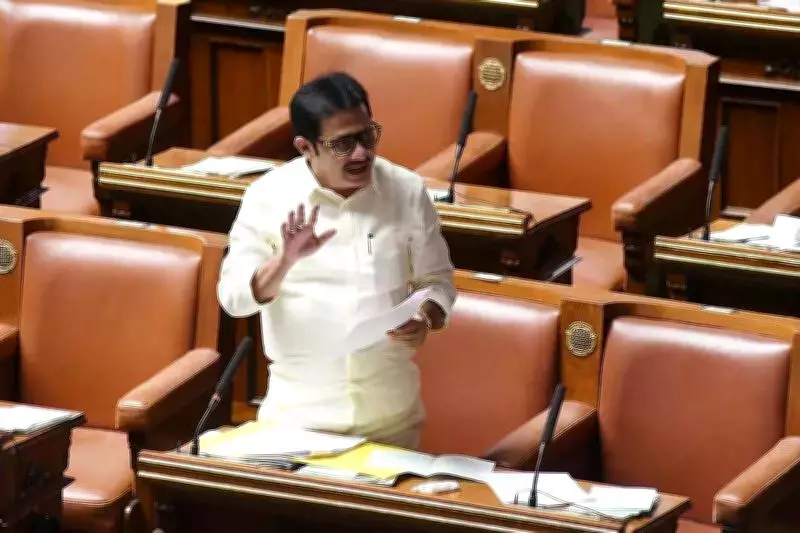
In a significant statement in the Karnataka assembly, Waqf Minister BZ Zameer Ahmed Khan addressed concerns over encroachments on waqf properties, revealing that the majority of such encroachments are by members of the Muslim community, not by temple managements or educational institutions. The minister emphasized that the Waqf Board's focus remains solely on removing encroachments by private parties, without interfering with properties attached to temples or schools.
Detailed Breakdown of Waqf Land Statistics
Responding to a question from MLA MY Patil, Minister Zameer provided comprehensive data on waqf properties in the state. He stated that waqf lands span a total of 1,12,860 acres, all donated by private individuals for community welfare, not by the government. Of this vast area, 17,969 acres have been encroached upon, with the minister noting that most of these encroachments are by the Muslim community. He clarified that only 24,054 acres remain under the direct control of the Waqf Board.
Further land distribution includes:
- 17,580 acres encroached upon by private parties.
- 47,263 acres affected by Inam abolition laws.
- 23,627 acres falling under the Land Reforms Act.
To address these issues, the government established waqf Lok Adalats in 2023 to identify and recover encroached properties, a move that has sparked controversy amid allegations from the BJP.
Political Controversy and BJP Allegations
The issue gained traction after the BJP accused the Waqf Board of issuing notices to farmers, claiming thousands of acres of farmland as waqf property. MLA MY Patil raised specific concerns about properties in and around Afzalpur in Kalaburagi district, which are recorded as waqf land but are in private possession. Patil highlighted the practical challenges, stating, "We cannot launch government projects on this land and have to look for private land. But private parties currently possess these properties. They are not under the control of either the Waqf Board or government."
Opposition leader R Ashoka countered the minister's claims, arguing that the BJP's objection is not about Muslims encroaching on waqf land but about the board allegedly claiming public and temple properties as waqf. Ashoka advocated for farmers' rights, saying, "Earlier, temple and waqf land was donated to farmers and they have been tilling the land for generations. If farmers are in possession of the land, it should be left to them irrespective of whether they are Hindu or Muslim."
Specific Case: Windsor Manor Hotel Probe Demanded
Ashoka also called for an investigation into alleged encroachments on waqf property in Bengaluru, specifically mentioning the famous Windsor Manor hotel. He accused Minister Zameer of avoiding the issue, stating, "Let there also be an investigation into the famous Windsor Manor hotel. Mr Zameer, you did not mention this case and instead talked of other issues. You never ever mention it, perhaps because you go there to eat."
In response, Zameer clarified that the dispute regarding the hotel property is currently pending before the Supreme Court, indicating that legal proceedings are underway to resolve the matter.
This assembly discussion underscores the complex and sensitive nature of land disputes involving waqf properties in Karnataka, with political parties presenting differing perspectives on encroachment and ownership issues.