

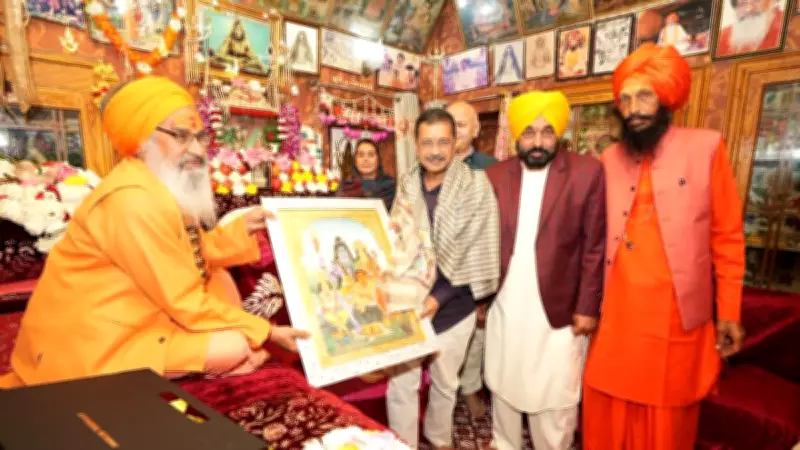
Delhi and Punjab Chief Ministers Offer Prayers at Sangrur's Rakeshwar Temple
In a significant display of political and cultural solidarity, Delhi Chief Minister Arvind Kejriwal and Punjab Chief Minister Bhagwant Mann paid their respects at the revered Rakeshwar Temple in Sangrur, Punjab. This visit underscores the Aam Aadmi Party's deepening engagement with the state's heritage and its strategic focus on strengthening grassroots connections.
A Symbolic Gesture Amidst Political Landscape
The temple visit, which took place on February 15, 2026, is seen as more than a religious observance. It highlights the close alliance between the two AAP leaders and their shared commitment to leveraging local traditions for broader political outreach. Sangrur, a key district in Punjab, holds historical importance, and this gesture aims to resonate with the electorate by honoring regional sentiments.
Observers note that such visits are part of AAP's ongoing efforts to consolidate its presence in Punjab, where it has been actively working on governance and development initiatives. By engaging with spiritual sites, the party seeks to bridge cultural narratives with its political agenda, potentially influencing public perception ahead of future electoral cycles.

Details of the Temple Visit
During their time at the Rakeshwar Temple, Kejriwal and Mann participated in traditional rituals, offering prayers and seeking blessings. The temple, known for its architectural and religious significance, served as a backdrop for discussions on state affairs and collaborative projects between Delhi and Punjab.
This event was marked by a modest gathering of local supporters and temple authorities, reflecting a focus on authenticity rather than grand spectacle. The leaders emphasized themes of unity and progress, aligning the visit with AAP's broader message of inclusive governance.
Broader Implications for AAP's Strategy
The visit to Sangrur is not an isolated incident but part of a series of engagements by AAP leaders in Punjab. It signals a deliberate move to reinforce the party's image as one that values regional culture while addressing contemporary issues. Key aspects of this strategy include:
- Enhancing visibility in rural and semi-urban areas through cultural touchpoints.
- Fostering a sense of shared identity between Delhi and Punjab under AAP's leadership.
- Countering opposition narratives by showcasing active involvement in local traditions.
As political dynamics evolve, such visits are likely to play a role in shaping AAP's electoral fortunes in Punjab, where it faces competition from established parties. The emphasis on temples and heritage sites could appeal to a broad demographic, blending spirituality with socio-political messaging.
In summary, the obeisance at Rakeshwar Temple by Kejriwal and Mann is a calculated step to bolster AAP's roots in Punjab, merging cultural reverence with strategic political outreach. This move highlights the party's adaptive approach in a complex political landscape, aiming to secure long-term influence in the state.






