Kerala's ASHA Honorarium Increase Announcement Confronts Significant Budgetary Discrepancy
The Kerala state government's recent declaration of a Rs 1,000 monthly honorarium enhancement for Accredited Social Health Activists (ASHAs) has encountered intense examination following a detailed analysis of the 2026-27 budget documents, which uncovered a substantial funding deficit.
Budget Speech Versus Actual Allocation
Finance Minister K N Balagopal, during his budget address, proclaimed that the monthly honorarium for ASHA workers would be elevated from Rs 8,000 to Rs 9,000. However, the actual budgetary allocation under the specific head 'Allowance for ASHA Workers' (2210-06-112-98-34, Non-Plan) presents a contradictory narrative.
For the financial year 2026-27, the government has designated Rs 250.80 crore for ASHA worker allowances. Based on official state government data indicating 26,125 ASHA workers, this allocation is adequate only to sustain the existing Rs 8,000 monthly honorarium for a full twelve-month period.

Financial Breakdown Reveals Critical Shortage
A fundamental financial analysis demonstrates that disbursing Rs 9,000 per month to 26,125 workers would necessitate an additional Rs 31.35 crore annually—funds that are conspicuously absent from the current budget allocation.
Sources have indicated that the health department has identified this inconsistency and has formally requested an extra Rs 31.35 crore from the finance department to operationalize the hike announced in the budget speech.
Procedural Hurdles and Election Code Complications
The pursuit of additional funding now encounters procedural obstacles as the election process is actively underway. Any new financial sanction at this juncture would mandate prior approval from the Election Commission, due to the enforcement of the model code of conduct.
With the revised honorarium scheduled to become effective from this month, it is increasingly apparent that the financial responsibility for implementing the increase will likely fall upon the incoming government, prompting further inquiries regarding the timing and practicality of the initial announcement.
Discrepancy Amplified by Central Data
The inconsistency becomes even more pronounced when considering central government data. According to the National Health Systems Resource Centre under the National Health Mission, the number of ASHAs in Kerala is recorded at 26,448.
If this higher figure is taken into account, the currently allocated Rs 250.80 crore would be insufficient to even maintain the existing Rs 8,000 monthly honorarium across all workers for the entire fiscal year.
Questions Over Financial Planning and Intent
The divergence between the budget speech and the actual fiscal provisioning raises critical questions about the government's financial planning and underlying intentions. It remains ambiguous whether the hike was announced prematurely without securing the necessary budgetary support, or if a supplementary allocation is being strategized behind the scenes.
For the thousands of ASHAs who constitute the backbone of Kerala's primary healthcare system, this discrepancy is not merely a statistical anomaly but directly impacts their already modest earnings and financial stability.
Background of Sustained Protests and Demands
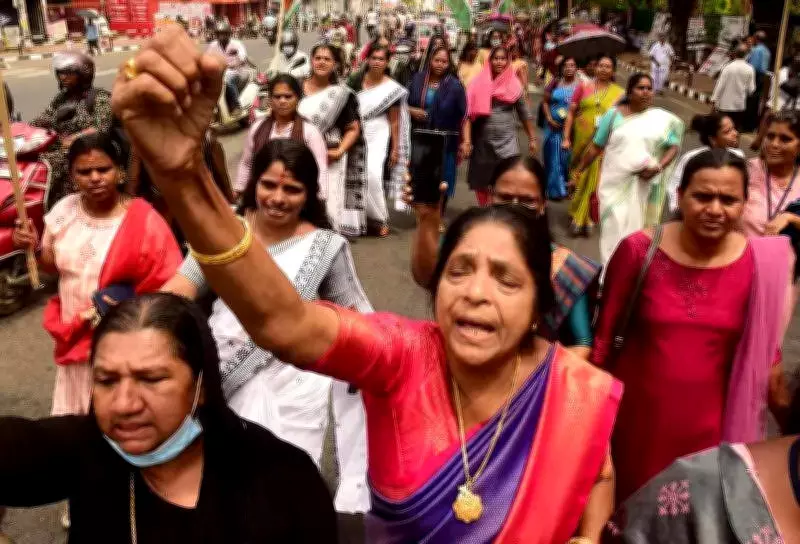
Kerala has been witnessing persistent protests by ASHA workers for over a year, with thousands mobilizing across various districts to demand a substantial increase in their monthly honorarium, timely payment disbursements, and formal recognition as government employees.
The agitation, spearheaded by multiple ASHA unions, has consistently emphasized that the existing Rs 8,000 honorarium is grossly inadequate given their expanding responsibilities in primary healthcare delivery. These duties range from disease surveillance to field-level implementation of public health programs.
Despite numerous rounds of discussions and assurances from the state government, the protests have continued, evolving into a politically sensitive issue amid mounting pressure to address wage disparities and enhance working conditions for these essential healthcare workers.