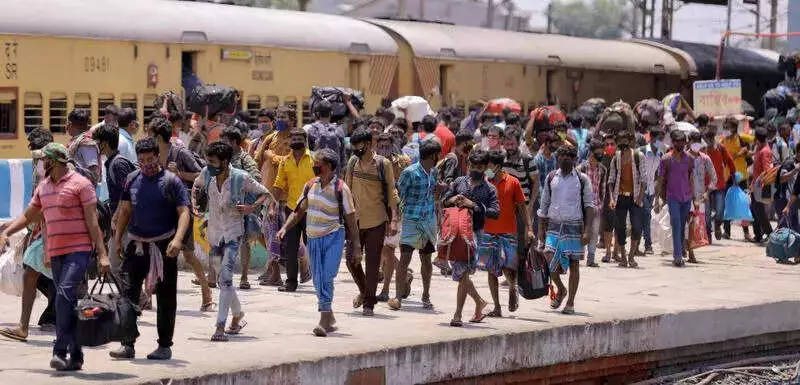
In the industrial belts of Kerala, particularly around Kochi, a silent crisis brews as lakhs of migrant workers face systemic exploitation, with a glaring lack of political will from local bodies to intervene. The root cause? Over 95% of these workers are not enrolled as voters in the state, rendering them politically invisible and allowing landlords and contractors to operate with impunity.
The Vote-Less and Voiceless: A Cycle of Neglect
Deprived of local voting rights, migrant labourers remain outside the formal safety net, controlled by contractors and often lacking valid documents. This political disenfranchisement directly enables their exploitation. Local self-government institutions, from panchayats to municipalities, rarely take proactive steps to safeguard migrant rights. Ward members show little interest in intervening in cases of wage theft, harassment, or workplace accidents.
More critically, these bodies fail to regulate housing owners, leading to dire living conditions. Workers are packed into cramped, unsanitary facilities where landlords charge exorbitant individual rents, despite the complete absence of proper sanitation and waste disposal mechanisms.

Political Calculus Over Human Welfare
Former Perumbavoor municipality chairman Abdul Salam, who also runs a factory, pinpointed the political reluctance. He stated that while a ward member could initiate dialogue with a problematic house owner, they almost never do. The fear of losing the votes of the owner's family—often decisive in hyper-local civic polls—paralyses action. "It's true that a ward member can intervene, but they always have one eye on the next election," Salam said, adding that change requires members with firm resolve, ready to face electoral consequences.
Rajendra Naik, vice-president of the National Migrant Workers' Union (AITUC), argued the situation would be different if migrants had votes. A major hurdle is the lack of rent agreements, which prevents workers from getting enlisted in voter rolls. Naik dismissed the fear that demanding agreements would raise rents, pointing out that exploitation is already rampant. "If a migrant worker is paying Rs 1,500 as rent and is made to share the house with 10 others, then the rent of that small house is already 15,000," he explained.
Documentation, Welfare, and a Glimmer of Change
Naik emphasised that mandatory rent agreements would bring discipline, improve living conditions, and resolve a documentation crisis. Currently, the constant movement of workers without records even hampers public health efforts, like ASHA workers tracking children's immunisation schedules. Most workers, Naik noted, do not vote anywhere due to the cost and difficulty of travelling home, and they fear shifting votes to Kerala might cut their families' benefits back home.
Migration expert S Irudaya Rajan stressed the need for awareness. He urged educating migrants that they can shift their votes to Kerala and revert when they return. "Once they are part of the voting pool here, the elected civic body rulers will take the migrants' welfare more seriously," Rajan asserted.
A minority, like Kanak Mondal and her husband Abhijit who bought land in Maradu, have integrated and secured voting rights. Kanak, who plans to vote before work, represents a potential shift, stating she evaluates candidates on merit. Their inclusion in the electoral process highlights the transformative power of the vote, a right still denied to the vast majority of Kerala's crucial migrant workforce, leaving them vulnerable in plain sight.