

Kerala's Political Evolution Mirrors the Great Indian Hornbill's Life
Nestled deep within the lush Western Ghats of India, the Great Indian Hornbill, the official state bird of Kerala, exhibits a remarkable way of life. These majestic birds prefer to reside on the tallest trees, showcasing their grandeur and resilience. During the critical nesting season, male hornbills diligently feed the females, who confine themselves to crevices inside branches and trunks for months. This dedicated confinement is to protect their eggs and chicks from predators, ensuring the survival of the next generation.
Parallels Between Hornbill Behavior and Kerala's Political Journey
Interestingly, Kerala's political landscape, which has evolved in diverse and profound ways over the past 69 years, reflects the hornbill's way of life. It is characterized by a sharp focus on equality, empathy, and a spirit of adventure. Beginning with a radical political experiment, Kerala made history by electing India's first communist government. This bold move set the stage for transformative land reforms and significant social reforms that reshaped the state's fabric.
The state introduced landmark education and health initiatives, positioning itself as a role model for other Indian states. Today, Kerala's health indices, including infant mortality rates and average lifespan, are on par with those of developed nations. This achievement underscores the state's commitment to public welfare and progressive policies.

Pioneering Political Coalitions and Economic Shifts
Kerala was a pioneer in enduring political coalitions, with the formation of sub-regional parties whose aspirations found representation in the state assembly. The political system evolved into a duopolistic structure, where two major political constituents are elected by turns to govern every five years. Despite this, the state ensures that all forms of dissent are given adequate space, highlighting the salutary traditions of civil democratic discourse.
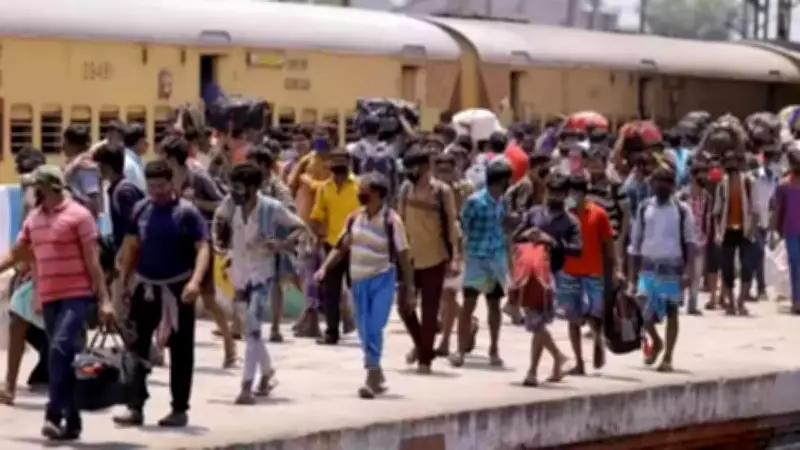
Coinciding with this political shift was the large-scale migration of Keralites to the Gulf region. This migration transformed Kerala into a remittance-based economy, where funds from abroad significantly boosted local economic activity. However, this created a gap in local resources and capacity, which began to be bridged by inward migration of labor from other states.
Demographic and Economic Transformation
The upshot of these changes is a seemingly inexorable transformation of Kerala's demography and a boom in economic activity. The state has witnessed a dynamic shift in its population composition and economic structure, driven by both outward and inward migration patterns. This evolution has defined God's Own Country, making it a unique case study in political and social development.
Over the 69-year timeline, Kerala has been dotted with political milestones and epochal social signatures that have continuously transformed and redefined the state. From its early days of radical governance to its current status as a beacon of health and education, Kerala's journey is a testament to resilience and innovation, much like the Great Indian Hornbill's dedicated nesting habits.






