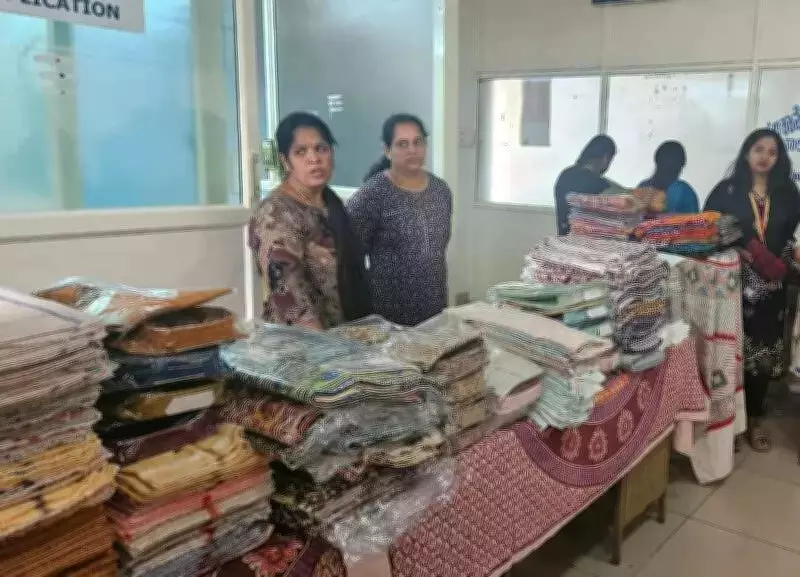
Karnataka's Khadi Mandate Raises Alarm Over Counterfeit Fabric Proliferation
In Hubballi, a new government directive has taken effect, requiring state employees to don khadi attire on the first Saturday of each month, starting February 7. While this move was intended to promote the iconic hand-spun fabric, it has ironically stirred deep concerns among traditional khadi artisans and activists across Karnataka.
Rather than celebrating a potential revival, khadi proponents are watching with apprehension as government staff enthusiastically post photos in khadi on social media. The fear is that this sudden spike in demand will open the floodgates for counterfeit khadi, a persistent issue tracing back to the era of Mahatma Gandhi himself.
Genuine Makers Struggle Amid Fake Shop Proliferation
Authentic khadi producers argue they lack the capacity to handle the abrupt surge in orders. Compounding the problem, fake khadi outlets have reportedly mushroomed around key government buildings like Vidhana Soudha in Bengaluru. Activists emphasize that the government failed to consult khadi associations before rolling out the order, missing a crucial step to safeguard the fabric's integrity.

Shivanand Mathapati, secretary of the Karnataka Khadi Gramodyoga Samyukta Sangh (KKGSS) in Hubballi, expressed mixed feelings. "We wholeheartedly welcomed the initiative as it promises to boost sales," he stated. "However, our worry is that government employees might opt for fake khadi, which often appears more fashionable and is sold at lower prices."
Mathapati noted that while the chief secretary's order explicitly mandates purchases from 176 Khadi Sanghas registered with the State Khadi Board, employees are already being deceived by counterfeit shops. "Though the government set an effective date of April 24, staff began buying and wearing khadi from February 7, with most purchases originating from fake khadi shops," he revealed.
Deep-Rooted Issues in the Khadi Sector
Santosh Koulagi, a khadi worker from Melukote, highlighted even more troubling issues. He pointed out that much cloth certified by the khadi commission is "suspicious." "Many Khadi Sanghas send yarn to mills in Tamil Nadu and purchase milled cloth from there. Genuine khadi production is minimal in Karnataka; only handloom khadi is authentic. The remaining 80% is fake," Koulagi asserted.
He recalled that Mahatma Gandhi himself distributed pamphlets in Ahmedabad to educate people about genuine khadi. "Khadi organisations should have been consulted. Providing an opportunity for fake khadi is an insult to Gandhi's legacy," Koulagi emphasized.
A former member of the State Khadi Advisory Committee described the current sector as "filled with confusion." "Many handlooms have ceased operations in the state, and the next generation of khadi handloom workers has shifted to other professions. Consequently, mill-made khadi dominates the market. It shouldn't be labeled as khadi since it's merely cotton cloth," the former member explained.
He urged both state and Union governments to demonstrate genuine concern by ensuring minimum wages are increased to Rs 800 per day for handloom khadi workers, thereby supporting sustainable production.
How to Identify Authentic Khadi
To combat counterfeit products, experts recommend checking for these key characteristics of genuine khadi:
- Border Texture: The border is typically zigzag and uneven, not perfectly straight.
- Fabric Feel: The cloth has a rough texture, unlike smoother machine-made alternatives.
- Color Variety: Fewer color options are available compared to mass-produced fabrics.
- Absorbency: Highly absorbent due to fibres not being compressed by machines.
As Karnataka embraces khadi in government offices, the challenge lies in ensuring that this revival honors the fabric's heritage rather than undermining it through counterfeit proliferation.