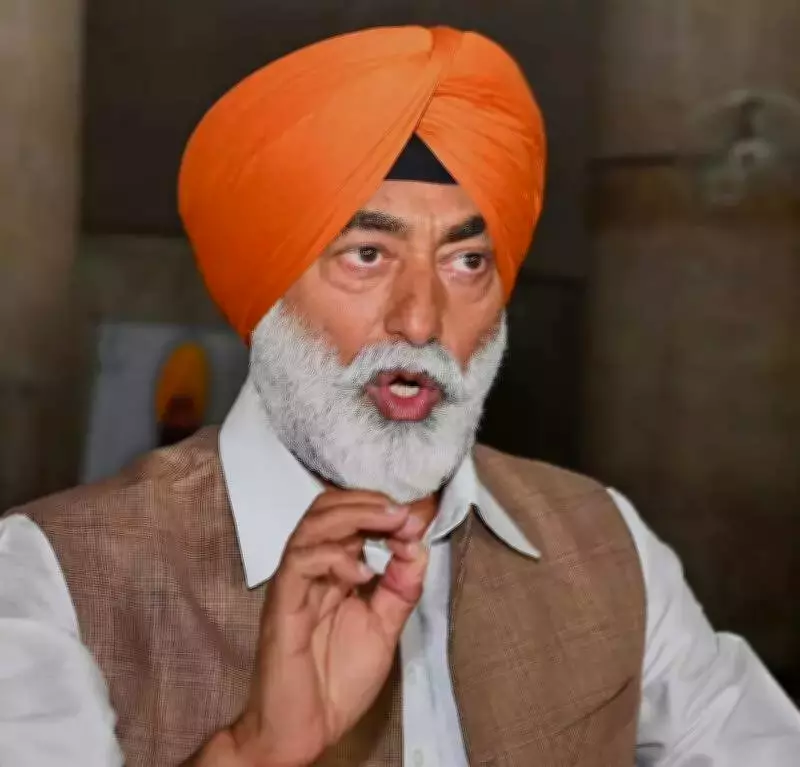
Congress MLA Accuses AAP Government of Political Data Collection in Punjab
In a significant development from Chandigarh, Congress leader and Bholath MLA Sukhpal Singh Khaira has formally written to Prime Minister Narendra Modi, seeking immediate intervention regarding what he describes as the alleged misuse of administrative machinery by the Aam Aadmi Party government in Punjab. The senior politician has raised serious concerns about a proposed data collection exercise that he claims could have far-reaching political implications.
Allegations of Intrusive Data Collection Under Census Guise
In his detailed letter addressed to the Prime Minister, Khaira has made startling claims that the Punjab government is exerting undue pressure on the office of the chief secretary to collect extensive personal data of voters across the entire state. This initiative is reportedly being conducted under the official pretext of conducting a comprehensive "Caste and Drug Census," but Khaira argues the actual purpose may be more politically motivated.
According to the Congress MLA's allegations, the proposed exercise involves seeking responses to as many as 127 detailed questions from ordinary citizens. The questionnaire reportedly covers a remarkably broad spectrum of personal information, including sensitive details related to Aadhaar and PAN cards, caste affiliations, religious beliefs, visits to religious deras, views on the government's ongoing campaign against drugs and gangsters, and satisfaction levels with various welfare schemes such as the free electricity program.

Khaira has emphasized that the nature of the information being sought appears intrusive and excessive, extending well beyond what might be considered legitimate administrative or welfare requirements. He contends that such extensive personal data collection raises significant privacy concerns and could potentially be misused for purposes other than genuine governance.
Pilot Project in Three Villages Sparks Statewide Concerns
The MLA has revealed that, based on information available to him, three specific villages have already been selected for a pilot exercise preceding any potential statewide rollout. These locations include:
- Lalru in the Malwa region
- Amritpur in Sultanpur Lodhi in the Doaba region
- Kotli Shah in Ajnala in the Majha region
Khaira has expressed serious apprehension that this pilot project could soon be expanded into a comprehensive statewide survey. He specifically worries that the collected data might be utilized to build a sophisticated political database ahead of the crucial 2027 Punjab assembly elections, thereby giving the ruling party an unfair advantage in electoral preparations.
Alleged Misuse of Civil Services and Public Funds
Characterizing the initiative as a "grave misuse" of civil services and public funds, Khaira has highlighted that senior officers of the Indian Administrative Services are constitutionally bound to maintain strict political neutrality. He argues that any administrative direction compelling bureaucrats to undertake what appears to be politically aligned data collection would fundamentally undermine public trust in the administrative system and violate established norms of bureaucratic impartiality.
The senior Congress leader has specifically urged the Union government to examine this matter with utmost urgency. His key demands include ensuring that:
- Civil servants are not assigned tasks that serve partisan political interests
- No personal or sensitive data is collected without proper legal sanction and adequate safeguards
- The constitutional neutrality of the civil services is strictly upheld in Punjab
This development comes at a time when data privacy and political neutrality of administrative machinery have become increasingly important topics in Indian governance discourse. The allegations, if proven true, could have significant implications for how state governments conduct surveys and collect citizen data, particularly in the lead-up to important electoral cycles.