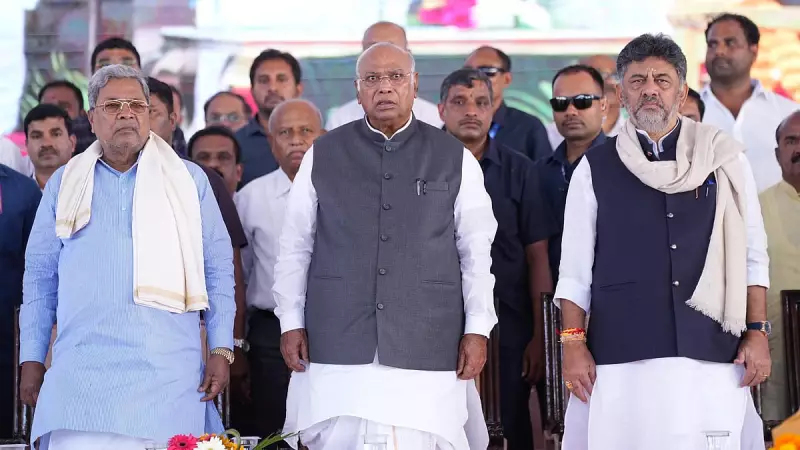
Congress President Mallikarjun Kharge has stepped in to address the simmering discontent within the party's Karnataka unit, attributing the ongoing confusion over leadership to local-level issues rather than any directive from the top brass. His comments come amid reports of internal friction and a perceived lack of clarity regarding the state's political direction following the assembly elections.
Kharge's Clear Message to State Leaders
In a significant statement made on 21 December 2025, Kharge emphasized that the responsibility for resolving internal disputes lies squarely with the local leadership. He urged them to take ownership of the situation instead of shifting blame to the party's high command. This directive underscores a push for greater accountability and problem-solving at the state level.
The Congress President's remarks are seen as an attempt to streamline decision-making and foster unity within the crucial southern state unit. By delineating the scope of the problem as local, Kharge aims to redirect focus towards collective resolution among state functionaries.
Context of the Internal Disputes
The Karnataka Congress has been navigating a complex political landscape, balancing the aspirations of its various senior leaders and factions. The lack of a singular, unchallenged face for the state unit has occasionally led to public disagreements and strategic confusion, impacting the party's cohesion.
Kharge's intervention highlights the high command's desire to see state leaders collaborate more effectively. The message is clear: while the central leadership provides broad guidance, day-to-day management and conflict resolution must be handled locally. This approach is intended to empower state units while also making them answerable for their internal dynamics.
Implications for Congress in Karnataka
This clarification from the top has several immediate implications. Firstly, it puts pressure on Karnataka Congress leaders to present a united front and settle their differences behind closed doors. Secondly, it absolves the national leadership of direct blame for the state's organizational hiccups, framing them as growing pains best managed internally.
The move is strategically vital for the Congress as it seeks to consolidate its position in Karnataka and present itself as a stable alternative to the ruling party. Internal stability is paramount for mounting effective opposition and planning for future electoral battles. Kharge's statement serves as both a reminder and a warning for the state unit to prioritize the party's collective interest over individual ambitions.
As the political scene in Karnataka evolves, all eyes will now be on how the local Congress leadership heeds this advice and works towards resolving its internal disputes without waiting for directives from Delhi.