

Kolkata Auto-LPG Crisis: Supply Crunch Sparks Panic Buying and Transport Disruption
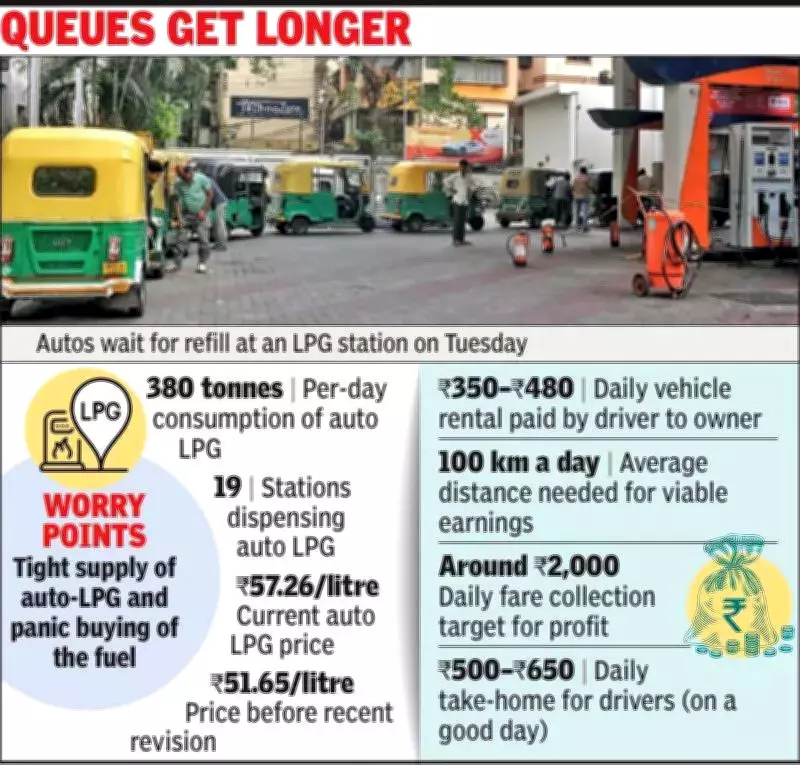
A critical shortage of auto-LPG, commonly known as auto-gas, has triggered widespread panic buying and severely disrupted auto-rickshaw services across Kolkata and its suburban areas. Operators report that vehicles are queuing for hours at fuel pumps, with the number of autos on key routes plummeting by nearly 30%. This supply-demand imbalance has left passengers stranded during peak hours, exacerbating the city's transport woes.
Fuel Pumps Running Dry Amid Restricted Supply and Panic Buying
Drivers and union leaders confirm that fuel pumps are depleting auto-LPG stocks rapidly due to a combination of restricted supply and frenzied purchasing. Ashok Chakraborty, a leader of the Trinamool Congress-led auto union in south Kolkata, explained, "Since auto-gas is not available at all pumps, concentrated demand in specific areas is creating massive queues that stretch for hours." This logistical bottleneck has forced many autos off the roads, directly impacting daily commuters who rely on this affordable mode of transport.
Illegal 'Kaata Gas' Supply Also Shrinks, Doubling in Price
Compounding the crisis, many autos in Kolkata still depend on illegally diverted domestic LPG, locally termed 'kaata gas'. With domestic LPG supplies tightening and prices soaring, the availability of this illicit fuel has drastically reduced. An auto operator revealed, "Kaata gas prices have doubled in just the last two days, making it increasingly unaffordable for drivers already struggling with legitimate fuel shortages." This dual supply shock has left operators in a precarious financial position.

Drivers' Earnings Plunge as Operational Costs Skyrocket
Auto drivers across the city report that rising LPG costs are severely eroding their daily earnings. Shankar Mondal, an auto driver on the Garia-Gariahat route, lamented, "Gas pumps are running dry quickly, and queues are getting longer. If we spend hours waiting for fuel, how will we earn our livelihood?" The economic strain is palpable, with drivers like Bireswar Sahu on the Ranikuthi-Jadavpur route ending shifts early after barely covering expenses. Sahu detailed, "By 5 pm, I drove about 61 km but collected only Rs 368 in fares, which is insufficient after accounting for vehicle rental and fuel costs."
Fare Hike Proposals Face Political Hurdles Ahead of Elections
While auto unions are actively considering fare revisions to offset rising operational costs, any decision appears politically sensitive. Most unions in Kolkata and suburbs operate under INTTUC, the labour wing of the ruling Trinamool Congress, and with state assembly elections approaching, a fare hike could have significant electoral implications. A union representative for a suburban route noted, "As LPG prices increased, the cost of running autos surged, but a fare revision in the city remains uncertain due to political considerations."
Suburban Routes Already Witness Unofficial Fare Increases
Despite official fares remaining unchanged within Kolkata city limits, passengers on several suburban routes report paying higher charges. Drivers argue that the economics of operating autos have become untenable even without an official fare hike. Tanmoy Hazra, who drives on the Taratala–Thakurpukur route, warned, "If gas prices increase further, we will have no option but to raise fares to survive." Operators typically need to run at least 100 km daily and collect around Rs 2,000 in fares to achieve a reasonable profit, but current conditions make this target elusive.
Daily Struggles and Future Uncertainties for Auto Operators
The financial toll on auto drivers is stark, with many barely breaking even. Shubhajit Sarkar, an auto driver from Jadavpur, shared, "On a decent business day, we might take home Rs 500 to Rs 650, but that's not guaranteed. If gas prices climb again, we will practically starve." The crisis underscores the fragile balance between operational costs, driver livelihoods, and affordable public transport in one of India's major metropolitan areas.






