Kolkata Earthquake Splits Freshly-Laid Behala Road, Exposing Subsoil Instability
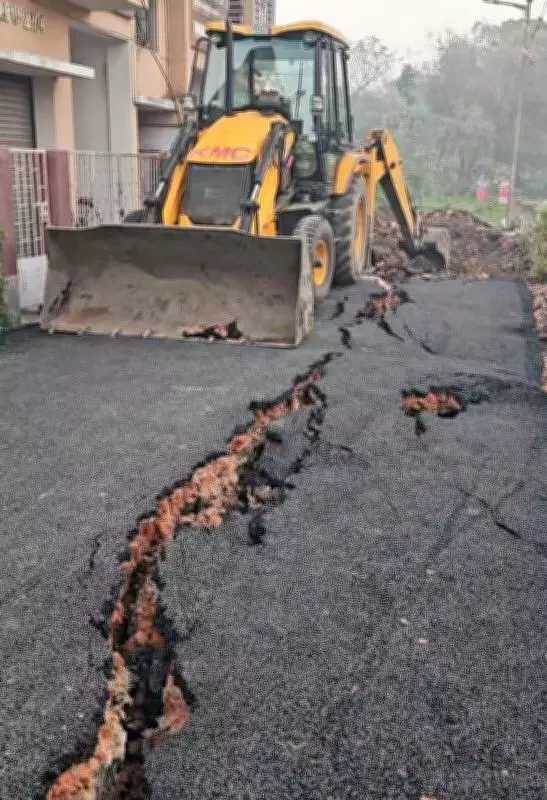
A 15-foot-wide alley on Sagar Manna Road in Behala, Kolkata, which had been repaired and freshly laid with asphalt only the previous day, dramatically split into two halves during the earthquake that struck the city on Friday. The seismic event caused a crack stretching nearly 12 meters to develop, with the surface sinking in parts, leaving residents stunned and highlighting underlying vulnerabilities in the area's infrastructure.
Residents Stunned by Sudden Road Collapse
As tremors shook the city, residents rushed out of their homes, only to be met with the shocking sight of the road cleaved in two. The subsidence occurred at Mannapara near Behala Parnashree, approximately 1.5 kilometers from Behala Police Station. Visuals of the damage evoked memories of devastating earthquakes in Gujarat in 2001 and Nepal in 2015, though no major structural damage was reported elsewhere in Kolkata.
Raj Jaiswara, a bank employee living near the affected stretch, described the moment: "I was leaving home for some work when the earthquake struck. I rushed out only to find the road in front of my house split in halves. This was something I could have never imagined." Jaiswara added that he was frightened by the damage and immediately called his family members, fearing further cracks could develop.
Another resident, Pramod Kumar, expressed concerns about building safety: "I asked my family to step out and stand at a distance until engineers confirmed that the building was safe. I was worried that the subsidence might weaken the building's foundation."
Historical Water Body and Soil Destabilization
Residents revealed that the damaged stretch was once part of a large water body, which had been filled over the years to develop multi-storey residential buildings. The earthquake caused the railing separating the pond from the road to tilt, exacerbating the instability.
Sanchita Mitra, the local councillor, reported that civic body teams reached the spot shortly after the incident. An earthmover was deployed to excavate the fissure. An official from the Kolkata Municipal Corporation's engineering department explained: "The immediate impact of the earthquake led to the collapse of the wall by the side of the waterbody. This destabilised the soil, and consequently, the road developed a crack within minutes."
Civic Authorities Launch Safety Inspections
In response to the incident, civic authorities have begun inspecting other vulnerable stretches across the city. The KMC official added: "A special survey is being conducted to identify similar risk zones and prevent further incidents." This proactive measure aims to address potential hazards in areas with similar geological histories, ensuring public safety in the wake of seismic activity.
The event underscores the critical need for thorough geological assessments in urban development, particularly in regions prone to earthquakes. As Kolkata continues to grow, lessons from this incident may inform future construction practices to mitigate risks associated with filled water bodies and unstable subsoils.