

Kolkata Voters Face Uncertainty as Judicial Scrutiny Creates Electoral Divide
In a significant development ahead of the upcoming elections in West Bengal, judicial scrutiny has inadvertently created a new divide among approximately 60 lakh electors, separating those confirmed to vote from those left in limbo. Despite the announcement of poll dates on Sunday, a substantial number of voters placed under adjudication remain uncertain about their ability to exercise their franchise, casting a shadow over their voting rights.
Electoral List Publication and Phase-Wise Challenges
Under Election Commission (EC) rules, the electoral list can be published up until the last date for filing nominations. With elections in Bengal scheduled to be held in two phases, this necessitates that supplementary lists be issued before the nomination deadlines for each respective phase and the assembly constituencies involved. This procedural requirement adds a layer of complexity to an already tense electoral environment.
High-Profile Electors Caught in the Crossfire
The adjudication process has ensnared several notable figures, including World Cup-winning wicketkeeper-batter Richa Ghosh, former footballer Mehtab Hossain, and state ministers Shashi Panja and Ghulam Rabbani. Their inclusion in this group highlights the widespread impact of the scrutiny, affecting individuals from diverse backgrounds and professions.

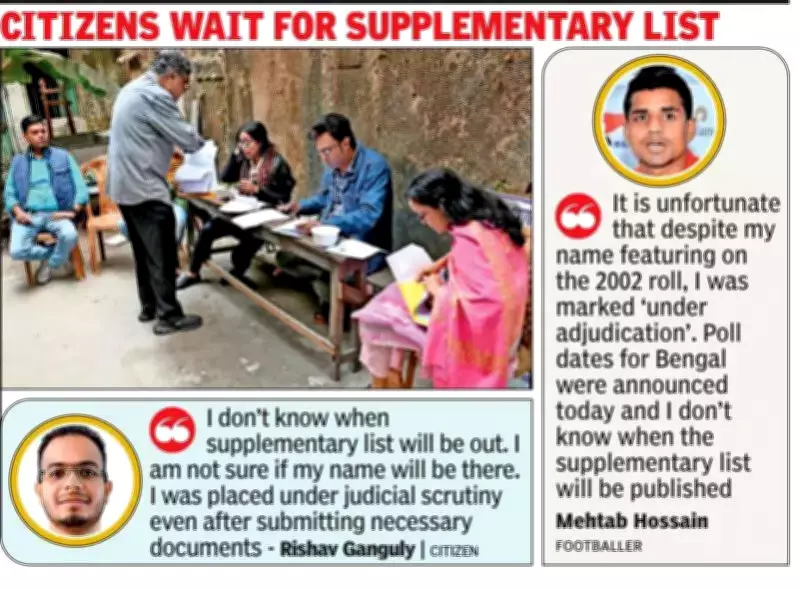
Expressing his frustration, footballer Mehtab Hossain lamented, "It is unfortunate that despite my name featuring on the 2002 electoral roll, I was marked under adjudication. The poll dates have been announced and I don't know any specific date when the supplementary list will be published. I am waiting and don't know how long this wait will linger." His sentiments echo the anxiety felt by many in similar situations.
Personal Stories of Voter Distress
Scott Lane resident Rishav Ganguly shared his apprehensions, stating, "I don't know when the supplementary list will be published. Even if it is published, I cannot be sure that my name will be there. My name was placed under judicial scrutiny even though I submitted an affidavit from court to resolve the SIR discrepancy related to surname mismatch." Such cases underscore the personal toll of bureaucratic and judicial delays on ordinary citizens.
Progress and Pending Cases in Judicial Scrutiny
As of Friday, judicial officers have disposed of about 15 lakh cases out of the roughly 60 lakh pending cases marked under adjudication. However, sources indicate that around 40% of the 15 lakh cases reviewed so far failed to pass scrutiny, suggesting a high rate of disqualification or further investigation needed.
A senior EC official commented on Sunday, revealing that a supplementary list might be published within the next 3 to 4 days. He added, "The EC gave a few proposals and, once the Calcutta High Court approves them, the software will be developed. The supplementary lists will then be published." This timeline offers a glimmer of hope but remains tentative.
Legal Framework and Appellate Tribunals
According to the latest order from the Supreme Court, decisions made by judicial officers in scrutiny cases will not be subject to appeal before any executive or administrative officer. In a move to streamline the process, the SC on March 10 directed that the Calcutta High Court Chief Justice may request former Chief Justices and judges—preferably from the Calcutta High Court or neighboring states—to serve as appellate tribunals for hearing such appeals.
EC sources have indicated plans to establish a tribunal in each district to handle appeals from individuals whose names are excluded from the supplementary lists. Despite this, there is still no clarity on when these tribunals will be operational, adding to the uncertainty for affected voters.

Broader Implications for Democratic Participation
This situation raises critical questions about electoral integrity and voter inclusion in West Bengal. With a significant portion of the electorate in jeopardy, the delays in publishing supplementary lists and setting up tribunals could impact voter turnout and public trust in the electoral process. As the state prepares for phased polling, the resolution of these adjudication cases remains a pressing concern for both authorities and citizens alike.





