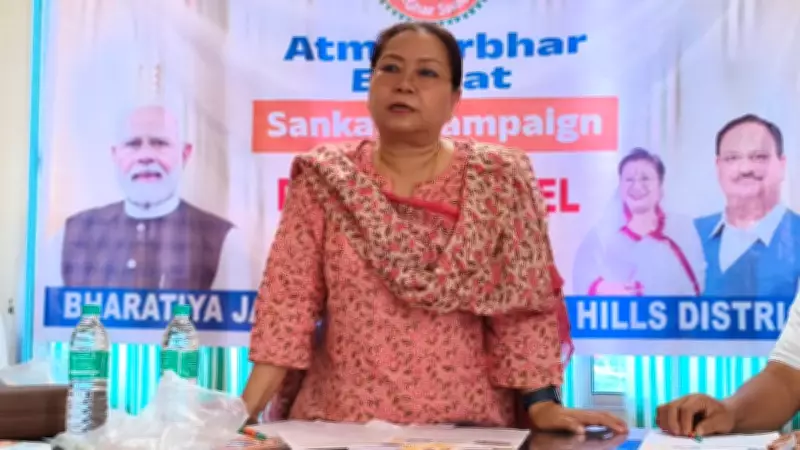
Kuki-Zo Council Holds Manipur Deputy CM Responsible for Government Participation
The Kuki-Zo Council (KZC) has declared that Manipur Deputy Chief Minister Nemcha Kipgen must bear full responsibility for the consequences of her decision to join the state government. This statement comes despite the council's earlier warning against Kuki legislators participating in a popular government without progress on their demand for separate administration.
Breach of Collective Resolution
KZC spokesperson Ginza Vualzong emphasized that Kuki-Zo MLAs, along with Suspension of Operations (SoO) groups, had collectively resolved in Guwahati during early January not to participate in the formation of the Manipur government. Nemcha Kipgen has disregarded this joint resolution and proceeded independently, making her action a personal decision that carries significant implications.
"Her action is therefore a personal decision, and she alone must bear full responsibility for any consequences arising from it," Vualzong stated in an interview with The Indian Express.

Contradiction with Separate Administration Demand
The Kuki-Zo Council has articulated a strong political position demanding separate administration for the hill tribes, citing extensive suffering and displacement. According to Vualzong, over 40,000 Kuki-Zo people have been forcibly driven out of the Imphal Valley, with numerous atrocities committed against them by Meitei communities.
"Having already raised a legitimate demand for separate administration, participating in the formation of the same Meitei-dominated government is both illogical and contradictory," Vualzong explained. The physical separation between Kuki-Zo and Meitei communities has become an irreversible reality, creating deep mistrust that cannot be easily bridged.
Political Consequences and Strategic Implications
Vualzong warned that elected representatives who do not align with the will of their constituents must be prepared to face public backlash. Joining hands with the Meitei government is viewed as aligning with those responsible for Kuki-Zo suffering, making such political moves particularly contentious.
Despite Kipgen's position within the government, the Kuki-Zo Council maintains that this development will not alter their strategic approach. They continue to engage with the Ministry of Home Affairs through political dialogue channels while expressing no trust in the Meitei-led state government.
Deepening Ethnic Divide and Future Prospects
The council believes that the central government's attempt to create a balanced cabinet including Meitei, Naga, and Kuki-Zo representatives will not resolve the fundamental crisis. The wounds from ongoing conflicts are too deep, and mistrust remains too entrenched for such symbolic gestures to achieve meaningful reconciliation.
"The Kuki-Zo people will not return to the Imphal Valley, just as the Meiteis will not move to the hills. The separation is now a lived reality," Vualzong asserted. The council emphasizes that only official recognition of this reality and granting of appropriate administrative arrangements can lead to lasting peace in Manipur.
As political developments continue to unfold in Manipur, the Kuki-Zo Council remains steadfast in its demand for separate administration while holding Deputy Chief Minister Nemcha Kipgen accountable for her decision to participate in the state government against collective resolutions.