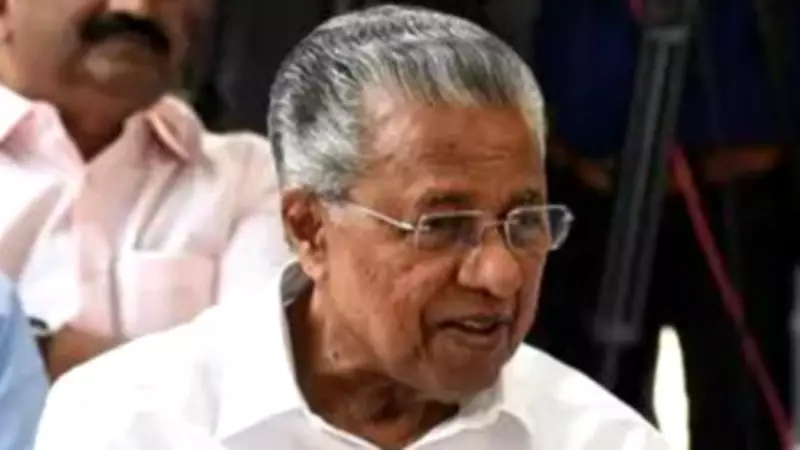
The ouster of the two-term CPI(M)-led Left Democratic Front (LDF) government in Kerala by the Congress-led United Democratic Front (UDF) marks the first time since 1977 that no state in India will have a communist government. The loss in this critical contest presents the Left with its biggest challenge: continuing to be relevant at the national level amid declining electoral influence.
Left's Narrative and Core Support
Despite the setback, the Left's liberal-progressive narrative still appeals to a rights-based framework and is seen spearheading agenda-setting on issues ranging from the environment and livelihoods of marginalized communities to gender and labor issues. However, how far the Left can reinforce itself among its core support groups will be critical. In the Bihar assembly polls last year, the CPI(ML) faced a severe setback, plummeting from 12 seats to just two. This highlighted that although the Left traces its beginnings to mass movements and grassroots mobilization, it is increasingly unable to retain its strongholds, signaling the need to reinvent its outreach and reconnect with its base.
Impact on INDIA Bloc
The defeat in Kerala also raises the possibility of the Left losing some heft in asserting itself within the opposition's INDIA bloc. There is speculation that the poll outcome could pave the way for a realignment within the bloc, with two key allies—the TMC and DMK—also facing challenges in West Bengal and Tamil Nadu. While the BJP remains the primary target of the INDIA bloc, whether the new entrant TVK will join the alliance will also influence power equations within the coalition formed to challenge the BJP-led NDA in the 2024 Lok Sabha elections.

Kerala's High-Stakes Battle
In Kerala, stakes were high for the LDF from the outset due to anti-incumbency and the perception of the election as a referendum on Chief Minister Pinarayi Vijayan. Vijayan made history in 2021 as the first CM in the state to be re-elected after a full five-year term, breaking a four-decade tradition of alternating governments. In a high-pitched battle with a resurgent Congress-led UDF, both sides engaged in scathing attacks. The BJP-led NDA's attempts to expand its footprint beyond traditional pockets also pushed the LDF to the ropes.
Performance in Other States
In West Bengal, the CPI(M), which once governed the state for 34 years, was ahead in just one seat by late evening. In Assam, left parties—CPI(M), CPI, and CPI(ML)—fighting as part of the Congress-led alliance failed to open their account. In Tamil Nadu, left parties allied with the DMK-led alliance looked set to win four seats by late evening.
Party Response
Reflecting on the results, CPI(M) General Secretary, on behalf of the Polit Bureau, stated, "The two major features of the assembly election results are the serious setback to the LDF in Kerala and the victory of the BJP in West Bengal." Alleging that the BJP benefited from several factors in West Bengal, including strong anti-incumbency against the "corrupt" TMC government, he added, "Even in such a polarized situation, the Left could marginally improve its performance." Refusing to view the outcome as a reflection of the Left's growing irrelevance, he acknowledged that despite organizational presence, impact was not converting to electoral support. He claimed the Left remains at the forefront of raising issues of the marginalized and that "in the upcoming Polit Bureau and Central Committee meetings, they will introspect on the reasons for the defeat in Kerala and take corrective measures."