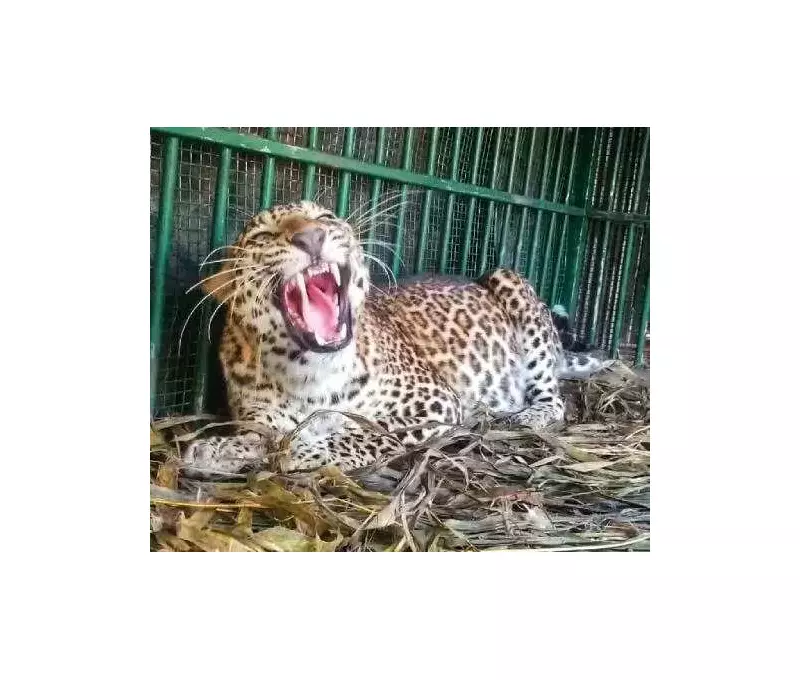
A 65-year-old woman sustained injuries after being attacked by a leopard in a village in Maharashtra's Satara district on Tuesday evening. The incident has reignited concerns over rising man-animal conflicts in the region.
Details of the Leopard Attack
The attack occurred in Bhalekarwadi village, located in Patan tehsil. The victim, identified as Malan Khashaba Bhalekar, a resident of the same village, was cutting grass in a field when the big cat launched its assault. According to officials from the Dhebewadi forest range, the leopard was concealed in nearby bushes before it pounced on the woman.
Rescue and Immediate Aftermath
Hearing Malan's cries for help, people working on nearby farms rushed to her aid. As the crowd gathered at the spot, the leopard retreated and fled towards the forest. The injured woman was promptly admitted to the Rural Hospital for treatment. A forest official confirmed that her condition is now stable and that a panchnama (official spot report) of the incident has been recorded.

The official further appealed to farmers in the area to remain vigilant while working in their fields, especially during early morning and late evening hours.
Rising Fear and Calls for Action
The attack has instilled fear among the local residents of Bhalekarwadi. Narmada Kumbhar, a village resident, voiced the community's anxiety, stating that incidents of man-animal conflict have increased in Patan tehsil in recent times.
Residents are urging the forest department to take immediate preventive measures. Their primary demands include:
- Increased patrolling in and around village peripheries.
- Close monitoring of leopard movements to anticipate and prevent future encounters.
- The implementation of robust safety protocols to protect villagers working in agricultural fields.
This latest incident underscores the ongoing challenge of human-wildlife coexistence in areas bordering forest ranges and highlights the urgent need for proactive strategies from the authorities.