
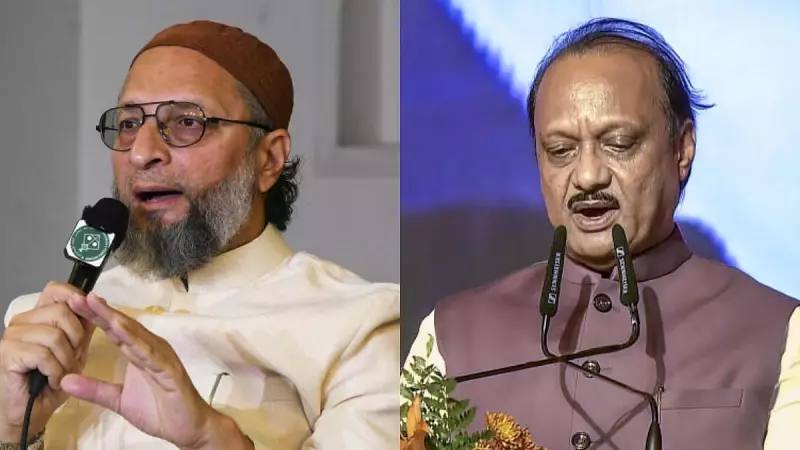
The leadership of the Bharatiya Janata Party's (BJP) Maharashtra unit has stepped in decisively to put a stop to attempts by some of its local units to forge electoral alliances with traditional rivals, the Congress and the All India Majlis-e-Ittehadul Muslimeen (AIMIM). This move underscores the party's commitment to its core ideology and prevents a significant shift in local political equations.
Local Maneuvers Spark High-Command Intervention
The issue came to a head in the Chandrapur Zilla Parishad, where local BJP leaders were actively negotiating an alliance with the Congress. The objective was to secure the position of Zilla Parishad president by joining forces. Similar attempts were reported from municipal councils in Parbhani and Washim districts, where local BJP functionaries explored partnerships with Asaduddin Owaisi's AIMIM to gain or retain power in local bodies.
These local-level maneuvers, driven by pragmatic calculations for administrative control, triggered immediate concern within the state party leadership. Senior leaders viewed such alliances as a direct contradiction to the party's national stance and its long-standing political narrative, which positions both the Congress and the AIMIM as principal adversaries.
Fadnavis Cracks the Whip on Ideological Grounds
Deputy Chief Minister and state BJP stalwart, Devendra Fadnavis, took a firm stand against these attempts. He made it unequivocally clear that the party would not entertain any alliances or understandings with either the Congress or the AIMIM at any level of governance. The directive from the leadership was unambiguous: such partnerships are ideologically unacceptable.
The state leadership's intervention was swift and authoritative. Instructions were relayed down the chain of command to the district units involved, explicitly ordering them to cease all negotiations and abandon any plans for an alliance. This top-down action highlighted the central command's control over the party's political strategy and its intolerance for deviations that could blur its ideological lines.
Implications for Maharashtra's Political Landscape
This episode reveals a clear tension within political parties between local pragmatism and national ideology. While local units often prioritize immediate electoral gains and administrative power, the central leadership is focused on maintaining a consistent, ideologically pure image across the country.
The BJP's decisive action has several immediate consequences:
- It reinforces the party's official position against the Congress and AIMIM.
- It asserts the authority of the state leadership over district and local units.
- It potentially leaves the local BJP units in these councils to contest independently or explore other alliances.
The incident also throws the spotlight on the complex nature of coalition politics at the grassroots level in Maharashtra, where political loyalties can sometimes be subordinated to the practical needs of running municipal councils and parishads. However, the BJP's firm response indicates that such realpolitik has its limits when it clashes with the party's broader ideological and national political objectives.
This move ensures that the political battle lines in Maharashtra remain clearly drawn, with the BJP maintaining its opposition to both the Congress and the AIMIM, regardless of the potential for local benefit. It signals that the party's central ideological framework will override local electoral compulsions.