The opposition Maha Vikas Aghadi (MVA) in Maharashtra finds itself at a critical juncture, with its constituent parties charting divergent paths ahead of the crucial Brihanmumbai Municipal Corporation (BMC) and other civic polls scheduled for next month. This political realignment, marked by a reunion of the Thackeray cousins and a potential coming together of Nationalist Congress Party (NCP) factions, has left the Congress as the lone party opting for a solo contest, raising fundamental questions about the future of opposition unity in the state.
Allies Drift Apart: Thackeray Reunion and NCP Talks
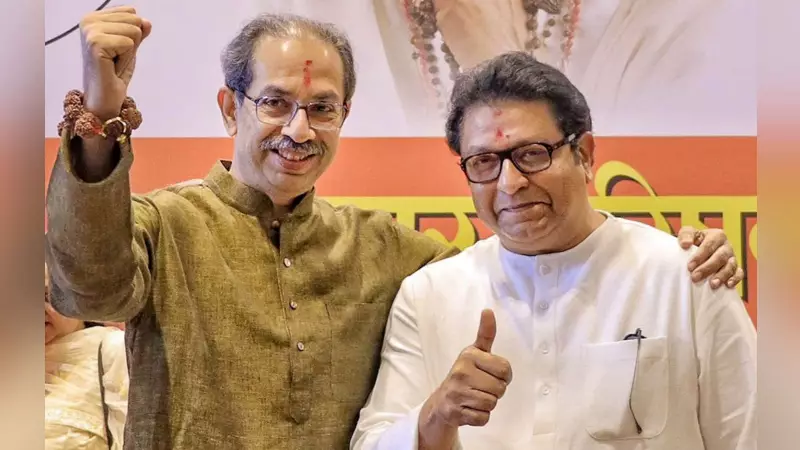
The past week witnessed two significant developments that have reshaped the political landscape. First, Shiv Sena (UBT) chief Uddhav Thackeray and Maharashtra Navnirman Sena (MNS) chief Raj Thackeray have decided to join forces for the upcoming BMC elections. This reunion of the Thackeray cousins is aimed at consolidating the influential Marathi vote bank, which constitutes approximately 26% of Mumbai's electorate.
Simultaneously, the two factions of the Nationalist Congress Party – one led by Deputy Chief Minister Ajit Pawar and the other by party patriarch Sharad Pawar – are engaged in discussions for a potential alliance for the civic body polls in Pune and Pimpri-Chinchwad. These moves indicate a strategic shift where regional allies are prioritizing the protection of their traditional strongholds over a unified opposition front.

The Congress's Calculated Solo Gamble
Amidst these realignments, the Congress has chosen to stand alone. State Congress president Harshvardhan Sapkal and other leaders view this as a pivotal opportunity to rebuild the party's identity and electoral base, which they believe has been overshadowed by its dominant regional partners in the MVA.
"The Congress is the only party which is still pursuing its politics of ideology. In the given political situation, the Congress alone can take on the RSS-BJP, which has left the society divided," asserted Sapkal. A section within the party leadership advocates for this "pragmatic politics," emphasizing flexibility, while another urges a return to core ideology and consolidation.
The party's strategy hinges on protecting its traditional support bases among Muslim, Dalit (each 11%), and North Indian migrant communities in Mumbai. Congress leaders, including Vijay Waddetiwar, point to the party's performance in the first two phases of local body elections, where its tally exceeded that of allies Shiv Sena (UBT) and NCP (SP), even as the BJP-led Mahayuti dominated by winning over 200 of 288 councils.
Challenges and the MNS Conundrum
The Congress's solo path is not without significant challenges. The party lacks a cohesive and strong state-level leadership team, with individual leaders often pursuing independent agendas. Furthermore, its decision creates a risk of splitting the anti-BJP vote in multi-cornered contests, potentially benefiting the ruling Mahayuti alliance.
A major point of contention is the inclusion of Raj Thackeray's MNS in the Thackeray alliance. Mumbai Congress chief Varsha Gaikwad is a staunch opponent, stating, "The Congress cannot endorse politics of hate. It cannot support the MNS, which has been anti-migrant." The party believes the MNS's blend of Hindutva and nativist politics would alienate crucial segments of the opposition's voter base.
Shiv Sena (UBT) leaders, however, argue that a united opposition including the MNS is essential to prevent fragmentation of the secular vote. Senior Sena (UBT) leader Sanjay Raut has reportedly tried to persuade the Congress high command to reconsider its stance, emphasizing that the BMC polls are a "battle for Mumbai’s identity."
As the election date approaches, the MVA's internal contradictions have been laid bare. The Thackeray reunion and NCP negotiations signify a scramble for survival among regional players, while the Congress's gamble on a solo run is a high-stakes attempt at political rejuvenation. The outcome of the civic polls will not only decide control of urban local bodies but also redefine the equations within Maharashtra's opposition space for the foreseeable future.