Maharashtra's Political Equilibrium Shattered by Ajit Pawar's Untimely Death
Maharashtra's political arena has always been characterized by turbulence and dramatic shifts, but the sudden and tragic demise of Deputy Chief Minister Ajit Pawar in a January plane crash has introduced unprecedented challenges to the coastal state's already fragile political balance. The loss of Ajit 'Dada' Pawar extends far beyond emotional devastation, as it has exposed deep-seated fractures that appeared to have been sealed following the Maharashtra local body elections, which had seemingly stabilized the constant realignments witnessed since 2019.
Sunetra Pawar's Ascension and the New Political Reality
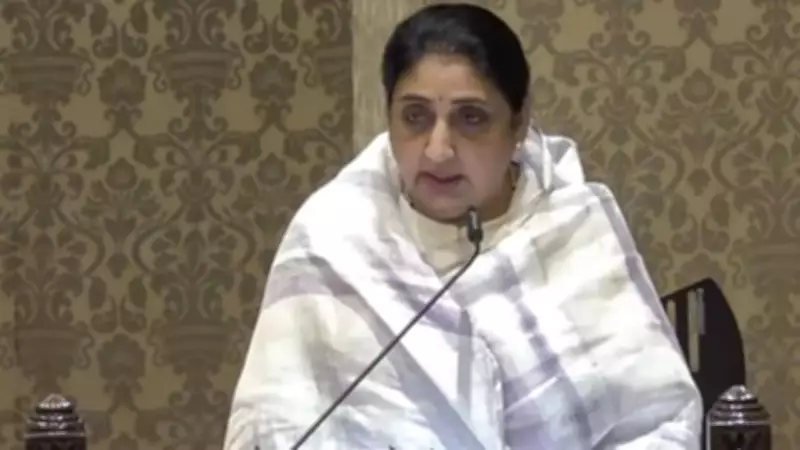
With Sunetra Pawar, Ajit Pawar's wife and a Rajya Sabha member, being sworn in as deputy chief minister on Saturday, Maharashtra has formally entered a new and uncertain phase shaped by the vacuum left by her husband's passing. While her elevation has filled the immediate constitutional void, it has simultaneously brought to the forefront larger, unresolved questions about the Nationalist Congress Party's future trajectory, the stability of the ruling Mahayuti alliance, and the direction state politics will take without one of its most influential power brokers.
The 'Aamdar' of Baramati: More Than Just a Mass Leader
Ajit Pawar was not merely a mass leader from Baramati or a powerful scion of the Pawar political dynasty. For both allies and adversaries, he represented a political manager considered par excellence, a skilled negotiator who understood the intricate language of power, and a crucial bridge between rival camps that otherwise struggled to trust one another. His absence now raises fundamental questions about political management in Maharashtra, with Sunetra Pawar positioned at the center of this unfolding narrative.

Her rise, propelled by tragedy, sympathy, and political necessity, comes at a critical juncture when the NCP itself stands at a crossroads, caught between the possibilities of reunification and reinvention.
Historical Context: Ruptures and Realignments
The significance of the current moment becomes clearer when examining the arc of Maharashtra politics, which has trudged through multiple ruptures and realignments over recent years. The first major fracture occurred after the 2019 assembly elections, when the longstanding BJP-Shiv Sena alliance collapsed over disagreements regarding the chief ministership.
That same year, in November, Ajit Pawar stunned the political spectrum by taking oath as deputy chief minister alongside rival Devendra Fadnavis in a pre-dawn ceremony, even as negotiations were underway for the formation of the Maha Vikas Aghadi coalition comprising the Shiv Sena, Congress, and NCP. Although this government lasted less than four days, the episode marked the first visible rupture between Ajit Pawar and his uncle Sharad Pawar.
However, Ajit eventually returned to his uncle and, interestingly, took oath again as deputy chief minister under the Maha Vikas Aghadi banner—an ideologically unlikely coalition of the Shiv Sena (then undivided), Congress, and the Sharad Pawar-led NCP that emerged following the Sena-BJP split.
The Twin Splits That Reshaped Maharashtra Politics
That power-sharing experiment ended dramatically in June 2022 when Eknath Shinde led a rebellion within the Shiv Sena, bringing down the Uddhav Thackeray government. A year later, in July 2023, Ajit Pawar engineered a similar split within the NCP, taking a majority of MLAs with him into the BJP-led National Democratic Alliance.
The Election Commission subsequently recognized Ajit Pawar's faction as the legitimate NCP, awarding it the party's name and the 'clock' symbol. These twin splits fundamentally altered Maharashtra's political landscape, shifting power decisively toward the BJP, which emerged as the principal pole around which regional actors revolved.
Ajit Pawar's Centrality to Power Dynamics
Ajit Pawar's political journey was marked by ambition, controversy, and resilience. Over three decades, he built an image as a decisive administrator and uncompromising leader, particularly in western Maharashtra's cooperative and sugar belt. Even his critics conceded that he possessed unmatched command over the bureaucracy and maintained a reputation for keeping his word.

Within the Mahayuti alliance, Ajit Pawar played a unique role. For the BJP, he served as both an ally and a counterweight. His presence ensured that the Shinde faction of the Shiv Sena did not emerge as the sole regional power broker within the alliance. For Chief Minister Devendra Fadnavis, Ajit was a partner who could deliver numbers, manage legislators, and absorb political shocks.
His death has therefore created a void that is not easily filled. While the government remains numerically secure, the internal balance within the Mahayuti has been disrupted. The critical question now is whether any other leader can replicate Ajit Pawar's ability to straddle competing interests without destabilizing the alliance.
Sunetra Pawar: From Political Margins to Center Stage
It is within this competitive political landscape that Sunetra Pawar's elevation has become a focal point of Maharashtra politics. Married into the Pawar family in 1985, she spent decades away from active politics, focusing primarily on social work in and around Baramati. Her initiatives in sanitation, women's self-help groups, and rural development earned her quiet respect but limited public visibility.
Her entry into electoral politics came only in 2024 when Ajit Pawar fielded her against cousin Supriya Sule from the bastion Baramati Lok Sabha constituency. The contest was as much about family and symbolism as it was about politics. Sunetra lost by a significant margin of over 1.5 lakh votes, reaffirming both Supriya Sule's entrenched base and the limits of Sunetra's political reach at that time.
However, her subsequent nomination to the Rajya Sabha provided her with formal political exposure. Now, following Ajit Pawar's death, she finds herself at the center of a leadership transition driven by sympathy, continuity, and the Pawar family legacy.
The Merger Question: Inevitability or Illusion?
Ajit Pawar's death has revived discussions around reunification of the two NCP factions. Even before the tragedy, there were signs of a thaw. The two factions had contested recent local body polls together under the NCP symbol, and leaders on both sides acknowledged that prolonged division had weakened the party.
Several leaders have claimed that reunification was Ajit Pawar's last wish, part of a longer-term strategy to secure the NCP's relevance ahead of the 2029 elections. His reported discussions with Sharad Pawar and other senior leaders suggested that a merger was not merely tactical but deeply personal, aimed at healing family and political rifts.
If the merger does materialize, it will raise an immediate and delicate question: Who leads the united NCP? Sharad Pawar's stature remains unmatched, but his advancing age makes a return to active organizational leadership unlikely. This opens up the possibility of a generational transition, potentially pitching Sunetra Pawar against Supriya Sule.
Mahayuti Without Its Key Balancer
For the BJP, Ajit Pawar's absence significantly alters the internal dynamics of the Mahayuti alliance. He was widely seen as the BJP's leverage against the Shinde-led Shiv Sena, ensuring that no single ally could dominate the alliance. Without him, the BJP will need to recalibrate its strategy.
One scenario suggests the BJP might consolidate its position further, reducing dependence on strong regional partners. Another possibility is that the Shinde faction seeks greater autonomy and bargaining power, potentially leading to friction within the alliance. Sunetra Pawar's elevation could partially mitigate this imbalance, but only if she can command authority within the NCP and negotiate effectively with allies—capabilities she has yet to demonstrate.
A Moment of Political Reckoning
Ajit Pawar's death has transformed Maharashtra politics in ways that continue to unfold. It has reopened questions many believed had been settled, including:
- The future identity and direction of the NCP
- The durability of the Mahayuti alliance
- The balance between ideology and pragmatism in state politics
For Sunetra Pawar, this moment represents both an opportunity and a formidable test. Whether she emerges as a commanding leader or remains a transitional figure will depend on how she navigates the competing pressures of legacy, alliance politics, and organizational discipline.
For the NCP, the coming months may determine whether it reclaims its identity as a united regional force or continues to function as a collection of pragmatic power centers. And for Maharashtra—a state accustomed to political upheaval—Ajit Pawar's absence marks the end of an era and the beginning of an uncertain new phase where old equations no longer hold and new ones are still being written.