Maharashtra Legislative Assembly Passes Bill to Repeal 80 Archaic Laws
The Maharashtra legislative assembly on Tuesday passed a significant bill to repeal roughly 80 of the 100-odd outdated laws that have remained on the statute book. These laws persisted despite constitutional changes, state reorganisation, and the enactment of new legislation over the decades.
Historical Laws Struck Down in Sweeping Cleanup
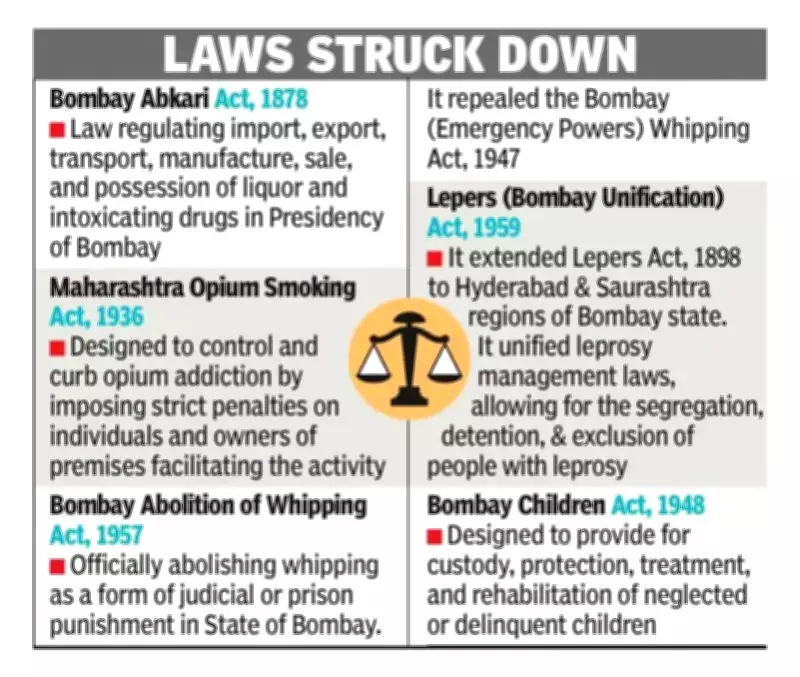
The laws being repealed include several colonial-era and post-independence acts that are no longer relevant or in use. Notable examples are:
- The Maharashtra Opium Smoking Act of 1936
- The Bombay Abolition of Whipping Act of 1957
- The Lepers (Bombay Unification) Act of 1959
- The Bombay Abkari Act of 1878
- The Borstal Schools Act of 1929
Starting with a law dating back to 1799, many statutes predate India's independence in 1947. Under British colonial rule, Bombay was a Presidency, and the Governor as well as the pan-India Governor General held legislative powers over it. In 1861, a provincial legislature was established to make laws for Bombay, serving as the predecessor to today's legislative assembly.

Report Highlights Persistence of Obsolete Legislation
A recent report by the Vidhi Centre for Legal Policy found that 125 such laws were still in force in Maharashtra, underscoring the need for this legislative cleanup. The bill was introduced by BJP minister Ashish Shelar, who stated that obsolete laws were being repealed based on recommendations from a good governance committee. This panel, set up in 2022, was led by former chief secretaries and included Suresh Kumar.
Opposition Raises Concerns Over Community Rights
Congress MLAs Nana Patole and Nitin Raut opposed the bill, arguing that a 'wholesale' repeal of laws could adversely affect the rights of communities governed by these statutes. Patole highlighted that many laws being repealed originate from the former Central Provinces and Berar state, impacting regions like Nagpur and Vidarbha. Raut demanded that the bill be sent to a joint select committee for a thorough review to ensure no unintended consequences.
Minister Assures Rights Remain Intact
In response, Shelar clarified, "Laws specifically from periods of 1799 to 1947, and 1947 to 1960 are being repealed. Following the formation of the state in 1960, we enacted our own laws; and under the framework of these laws, all existing rights remain fully intact." The bill targets Bombay enactments, Bombay Regulations, Bengal Regulations, Central Provinces and Berar Acts, Hyderabad Acts, and Madhya Pradesh Acts that are no longer in use.
Certain Archaic Laws Still Pending Repeal
However, some obsolete laws dealing with hereditary titles, honours, and privileges have not been included in this repeal. Examples include the Baronetcy Acts and the Bombay Hereditary Offices Act of 1874. 'Baronets' were titles awarded by the British Crown to commoners, and the Hereditary Offices Act addressed 'watandars' who enjoyed special land rights in Maratha territories. These remain on the books for now, indicating that further legislative action may be needed in the future.
This move by the Maharashtra assembly represents a significant step towards modernizing the state's legal framework, removing redundant laws while aiming to preserve essential rights and governance structures.