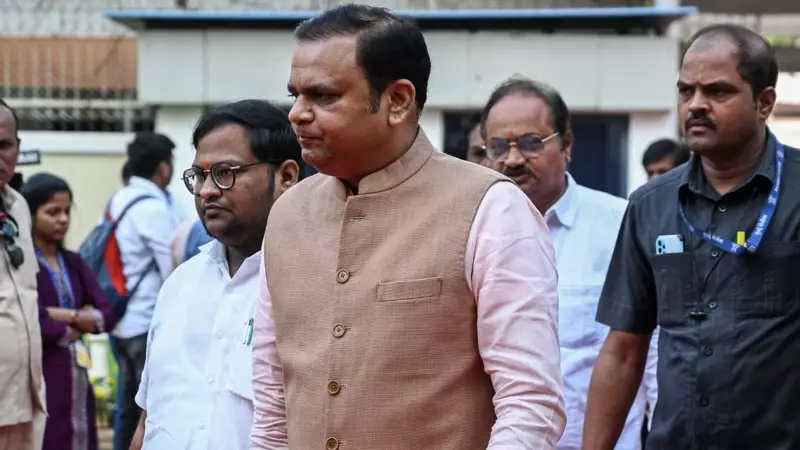
A major political storm has erupted in Maharashtra over the upcoming municipal corporation elections, with the loudest accusations directed at Assembly Speaker Rahul Narwekar. The central allegation is that Narwekar interfered in the nomination process to ensure his three family members contesting for Brihanmumbai Municipal Corporation (BMC) wards face minimal opposition, with some wards seeing candidates elected almost uncontested.
Opposition Unites Against Speaker
On Monday, January 6, 2026, a coalition of Opposition parties including the Congress, Shiv Sena (UBT), Maharashtra Navnirman Sena (MNS), Aam Aadmi Party, and several Independents filed a formal complaint with the State Election Commission (SEC). They demanded a re-examination of the nomination process in three specific BMC wards from where Narwekar's relatives are running. This action followed an earlier complaint by the Congress, which prompted the SEC to seek a report from BMC Commissioner Bhushan Gagrani.
The controversy casts a long shadow over Narwekar's tenure, which has already been marked by disputes, particularly concerning his handling of disqualification petitions after the splits in the Shiv Sena and NCP. Shiv Sena (UBT) chief Uddhav Thackeray has explicitly called for Narwekar's resignation as Speaker over the current allegations.
The Core of the Controversy: Family Tickets and Rejected Nominations
The heart of the dispute lies in Ward Numbers 225, 226, and 227 in the Colaba area, which Narwekar represents as an MLA. His brother and former councillor, Makrand Narwekar, is contesting from Ward 226 and now faces only one Independent opponent. Makrand's wife, Harshita Narwekar, a sitting councillor, is in the race from Ward 225 against two rivals from Shiv Sena factions. The Speaker's sister, Gauri Shivalkar, is contesting from Ward 227 with just one opponent from the Shiv Sena (UBT).
Critics point out that this level of minimal opposition is highly unusual. The average number of candidates per ward in the BMC is seven. Across the 2,869 wards in 29 corporations going to polls on January 15, a total of 15,931 candidates are in the fray, averaging six per ward. This election cycle, 69 wards across the state have been won uncontested, a sharp spike from 11 in the last civic polls and 10 in the cycle before that.
The Opposition alleges Narwekar ensured the rejection of nominations of potential rivals in his family's wards. Senior JD(S) leader Haribhau Rathod provided a detailed account, claiming his son was prevented from filing a nomination in Ward 226 on December 30, the last date. Rathod alleges police asked them to wait outside the Returning Officer's (RO) premises, citing overcrowding, only to later declare the 5 PM deadline passed. He accuses Narwekar of pressuring ROs to delay the process and even threatening to withdraw his security privileges.
Defiance and Internal Dissent
Speaker Rahul Narwekar has categorically denied all charges, labeling them "fabricated." He stated, "I did not have any role in the nomination process. I neither intimidated nor stopped anybody from filing nominations." He pointed out that the JD(S) withdrew its official complaint after two of its three candidates' nominations were accepted, suggesting a "fake narrative." Regarding Thackeray's resignation demand, he retorted, "There are old wounds which hurt more in winter."
However, the controversy has also exposed unease within the ruling BJP. The party's directive to avoid giving tickets to relatives of ministers, MLAs, and MPs was seemingly overlooked for Narwekar's family, leading to murmurs of "two sets of rules" at the BJP headquarters. A senior BJP functionary acknowledged the "unrest," though cited "winnability" as a possible factor.
Other serious allegations include Narwekar's presence at the RO's office during nomination filings—considered inappropriate for a Constitutional post meant to be apolitical—and tampering with CCTV footage. Congress president Harshvardhan Sapkal accused Narwekar of undermining his office's autonomy and misusing his staff, claiming 70 officers from his office are actively campaigning.
As the State Election Commission reviews the matter, the political temperature in Maharashtra remains high. The outcome of this complaint could significantly impact the credibility of the civic poll process and the political future of one of the state's most prominent figures.